• How Amazon Logistics Works: A Complete Guide to Its Benefits

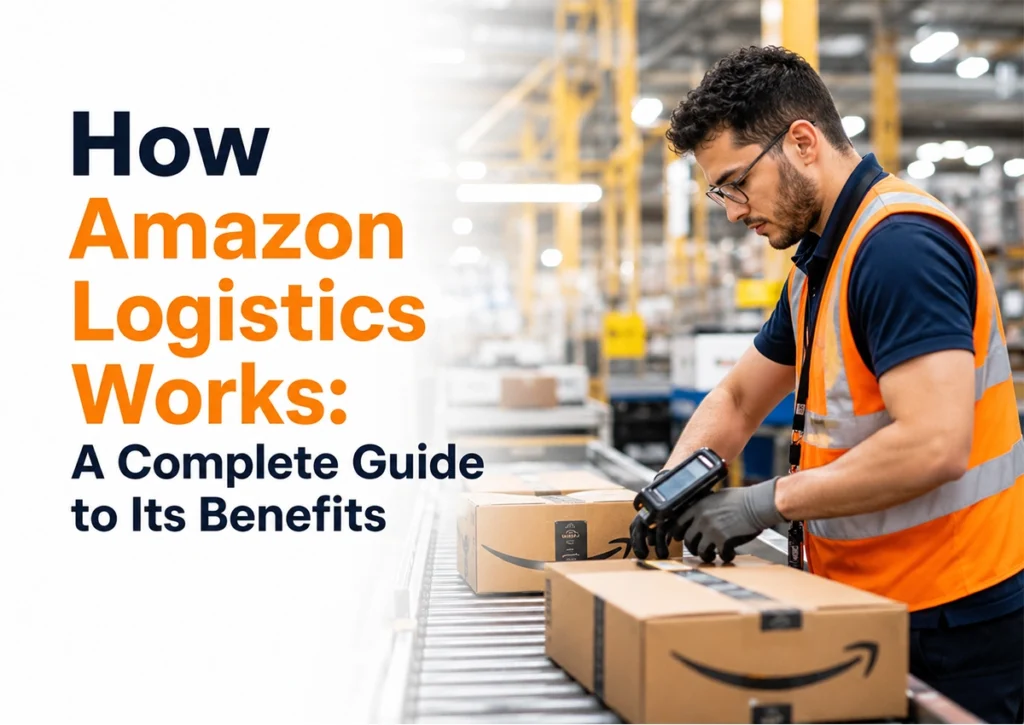
    How Amazon logistics works infographic showing a warehouse worker scanning Amazon packages in a fulfillment center, explaining the logistics process and benefits for sellers and customers.

    Introduction

    Amazon has transformed modern eCommerce not only through its marketplace but also through its advanced delivery ecosystem. Today, sellers and customers alike increasingly encounter terms such as โ€œshipped with Amazon Logisticsโ€ or โ€œAmazon shippingโ€ while tracking orders.

    However, many businesses still wonder: what is Amazon Logistics, and how does it actually
    work?
    In simple terms, Amazon Logistics is Amazonโ€™s in-house delivery and transportation network designed to improve shipping speed, efficiency, and customer satisfaction. Accordingly, Amazon now handles a major portion of its own package deliveries rather than relying entirely on third-party carriers.

    As Amazon continues expanding globally, understanding Amazon logistics meaning becomes increasingly important for sellers aiming to improve delivery performance, customer experience, and operational scalability.

    At Krolog, we help brands align Amazon logistics, Amazon FBA, advertising, and marketplace strategies so they can scale more efficiently across Amazonโ€™s competitive ecosystem.

    ย 

    What Is Amazon Logistics?

    Amazon Logistics is Amazonโ€™s proprietary shipping and delivery system used to transport products from fulfillment centers directly to customers. In other words, instead of depending solely on UPS, FedEx, or USPS, Amazon has built its own transportation infrastructure.

    This network includes:

    • Fulfillment centers
    • Delivery stations
    • Amazon Flex drivers
    • Air cargo operations
    • Last-mile delivery services
    • Regional transportation hubs

    Consequently, Amazon controls a larger portion of the customer delivery experience from warehouse to doorstep.
    When customers see โ€œshipped with Amazon Logistics,โ€ it means Amazon itself is handling the transportation and final delivery process.

    What Does โ€œShipped With Amazon Logisticsโ€ Mean?

    Many shoppers frequently ask, โ€œWhat does shipped with Amazon Logistics mean?โ€

    It simply means Amazon is managing the shipment using its internal logistics network instead of an external courier. Typically, the package moves through Amazonโ€™s fulfillment centers and delivery stations before reaching the customer through Amazon delivery partners or Flex drivers.

    As a result, Amazon gains greater control over:

    • Delivery timelines
    • Route optimization
    • Customer tracking
    • Shipping costs
    • Last-mile delivery efficiency

    Above all, this allows Amazon to improve Prime delivery promises and customer satisfaction.

    How Does Amazon Logistics Work?

    Understanding how Amazon Logistics works requires looking at the complete fulfillment cycle.

    1. Inventory Storage at Fulfillment Centers

    First, sellers send inventory to Amazon warehouses through FBA (Fulfillment by Amazon). Products are then stored strategically across multiple fulfillment centers.
    This positioning helps Amazon reduce shipping distances and accelerate delivery times.

    2. Order Placement

    When a customer places an order, Amazonโ€™s system identifies the nearest warehouse with available inventory.
    Accordingly, the system automatically prepares the item for picking, packing, and shipping.

    3. Sorting and Transportation

    Afterward, packages move through Amazon transportation hubs and sorting facilities. Here, shipments are grouped based on delivery routes and customer locations.
    At the same time, Amazonโ€™s AI-driven routing systems optimize transportation efficiency.

    4. Last-Mile Delivery

    Finally, the package reaches a delivery station where Amazon Flex drivers or Delivery Service Partners complete the final delivery.
    This last-mile system plays a major role in helping Amazon offer same-day and next-day delivery.

    What Is the Difference Between Amazon FBA and Amazon Logistics?

    Many sellers confuse Amazon FBA with Amazon Logistics. Although closely connected, they are not the same thing.

    Amazon FBA (Fulfillment by Amazon) is Amazonโ€™s complete fulfillment program. It includes:

    • Inventory storage
    • Picking and packing
    • Order fulfillment
    • Customer service
    • Returns management
    • Prime eligibility

    Amazon Logistics, on the other hand, specifically handles the transportation and delivery side of the process. In other words, it is Amazonโ€™s internal shipping network responsible for moving packages from fulfillment centers to customers.

    This network includes:

    • Delivery stations
    • Amazon Flex drivers
    • Last-mile delivery operations
    • Transportation hubs
    • Route optimization systems

    Accordingly, when sellers use FBA, Amazon may also use Amazon Logistics to deliver those orders. However, not every FBA order is necessarily shipped through Amazon Logistics, as Amazon still partners with third-party carriers like UPS, USPS, and FedEx in certain regions.

    Simply put:

    • FBA = Full fulfillment solution
    • Amazon Logistics = Delivery and transportation network within the fulfillment ecosystem

    For customers, products fulfilled through FBA often display:

    • Prime Badge
    • โ€œFulfilled by Amazonโ€
    • Faster shipping timelines
    • Amazon-managed returns and customer service

    Meanwhile, โ€œShipped with Amazon Logisticsโ€ specifically indicates that Amazon itself handled the delivery process.

    What Is Amazon Shipping?

    Another common question sellers ask is: What is Amazon shipping?

    Amazon Shipping is a delivery service where Amazon transports packages for businesses, even if the order was not placed on Amazon itself. For example, Shopify or DTC brands may also use Amazonโ€™s delivery network.

    Consequently, Amazon is gradually expanding beyond marketplace fulfillment into broader logistics and transportation services.

    Key Benefits of Amazon Logistics for Sellers

    1. Faster Delivery Speeds

    Speed strongly influences conversion rates on Amazon. Faster shipping improves customer trust and increases the likelihood of winning the Buy Box.
    Accordingly, sellers using Amazon Logistics often experience stronger customer engagement and better retention.

    2. Improved Customer Experience

    Customers expect real-time tracking, reliable delivery, and minimal delays. Amazon Logistics supports all three.

    As a result, sellers benefit from:

    • Better customer satisfaction.
    • Lower complaint rates.
    • Improved seller metrics.
    • Higher repeat purchase potential.

    3. Better Prime Eligibility

    Products fulfilled through Amazon Logistics are often eligible for Amazon Prime.
    Prime eligibility significantly improves visibility, click-through rates, and conversion performance.
    In fact, many high-performing sellers rely heavily on Prime-enabled fulfillment strategies to remain competitive.

    4. Stronger Scalability During Peak Seasons

    Peak shopping periods create operational pressure for sellers. However, Amazon Logistics helps brands handle higher order volumes efficiently.

    Whether during Prime Day, Black Friday, or holiday periods, Amazonโ€™s infrastructure supports rapid scaling without overwhelming seller operations.

    Amazon Green Logistics: Amazonโ€™s Sustainability Push

    Amazon has also invested heavily in sustainability initiatives through Amazon Green Logistics.

    This initiative focuses on:

    • Electric delivery vehicles.
    • Reduced packaging waste.
    • Lower transportation emissions.
    • Renewable energy infrastructure.

    Consequently, Amazon aims to reduce its environmental footprint while maintaining fast delivery standards.
    For environmentally conscious consumers, sustainable logistics increasingly influences purchasing decisions.

    What Is PRTM Logistics?

    Some sellers also search for PRTM Logistics while researching Amazon operations.

    PRTM was a supply chain and operations consulting firm that influenced logistics optimization methodologies later adopted across major enterprises, including large-scale fulfillment systems similar to Amazonโ€™s operational framework.

    Although not directly owned by Amazon, PRTM logistics concepts helped shape modern supply chain efficiency models.

    Why Logistics Matter for Amazon Rankings?

    Many sellers underestimate the connection between logistics and visibility.

    However, faster fulfillment directly impacts:

    • Customer satisfaction
    • Conversion rates
    • Seller ratings
    • Return rates
    • Buy Box ownership

    Consequently, logistics performance indirectly influences organic rankings and sales growth.
    In 2026, Amazon increasingly rewards sellers who combine strong logistics, listing optimization, and advertising performance.

    Common Challenges Sellers Face With Amazon Logistics

    Although Amazon Logistics offers major advantages, sellers still face challenges such as:

    • Inventory stockouts
    • Rising FBA fees
    • Delayed inbound shipments
    • Storage limitations
    • Peak season congestion

    Therefore, brands need a structured operational strategy to maintain profitability while scaling efficiently.

    This is where experienced marketplace partners like Krolog help sellers optimize both operational performance and marketplace growth.

    ย 

    How Krolog Helps Brands Scale Beyond Logistics

    At Krolog, we help sellers go beyond basic fulfillment by integrating logistics efficiency with:

    Because logistics alone does not drive growth, successful Amazon brands combine operational efficiency with visibility and conversion-focused execution.
    Our team works closely with brands to build scalable systems that improve profitability, customer experience, and long-term marketplace performance.

    Final Thoughts

    Amazon Logistics has fundamentally changed how eCommerce fulfillment operates. From faster delivery to better customer experience, Amazonโ€™s logistics ecosystem gives sellers significant advantages in todayโ€™s competitive marketplace.

    As Amazon continues investing in automation, AI-driven transportation, and sustainable fulfillment systems, logistics will become even more important for ranking, conversions, and customer retention.

    Accordingly, brands that understand how Amazon Logistics works and align their operational strategy with marketplace growth strategies will be better positioned to scale successfully in 2026 and beyond.

    Whether you are launching new products, improving fulfillment efficiency, or optimizing marketplace performance, combining logistics strategy with expert Amazon growth management can create a stronger foundation for sustainable growth.

    FAQ: Frequently Asked Questions

    Amazon SEO helps listings get indexed through keywords and content structure. Amazon SERP optimization focuses on improving rankings and conversions through stronger click-through rates, visuals, reviews, and shopper engagement.

    ย 

    Check Search Query Performance reports for keywords with strong clicks and purchases. High-impression terms with low conversions need optimization, while high-converting terms should be prioritized in listings and PPC campaigns.

    Use natural language, clear product benefits, strong visuals, and customer-focused bullet points. AI favors listings that clearly explain value instead of stuffing keywords.

    Yes. Positive reviews improve trust and conversions, while Q&A adds relevance and helps Amazon better understand shopper intent.

    ย 

    Low-competition keywords may rank in a few weeks, while competitive terms often take 2โ€“6 months with strong optimization, PPC support, and consistent sales performance.

    Related Article

    How Amazon Logistics Works: A Complete Guide to Its Benefits

    How Amazon Logistics Works: A Complete Guide to Its Benefits

    How Amazon Logistics Works: A Complete Guide to Its Benefits Introduction Amazon has transformed modern eCommerce not only through its…

    How to Master Amazon SERP Optimization and Rank for Top Keywords

    How to Master Amazon SERP Optimization and Rank for Top Keywords

    How to Master Amazon SERP Optimization and Rank for Top Keywords Introduction Selling on Amazon has changed dramatically. Ranking products…

    What Are TikTok Spark Ads? A Complete Guide to How They Work

    What Are TikTok Spark Ads? A Complete Guide to How They Work

    What Are TikTok Spark Ads? A Complete Guide to How They Work Introduction TikTok has completely changed the way brands…

    Ready to Scale Your Amazon Brand?

    If youโ€™re looking for expert-led Amazon advertising strategies, a performance-focused Amazon PPC strategy, and real growth, get in touch with us at Krolog, where Amazon experts will help you build a winning Amazon advertising system tailored to your business.

    Scroll to Top