• How to Master Amazon SERP Optimization and Rank for Top Keywords

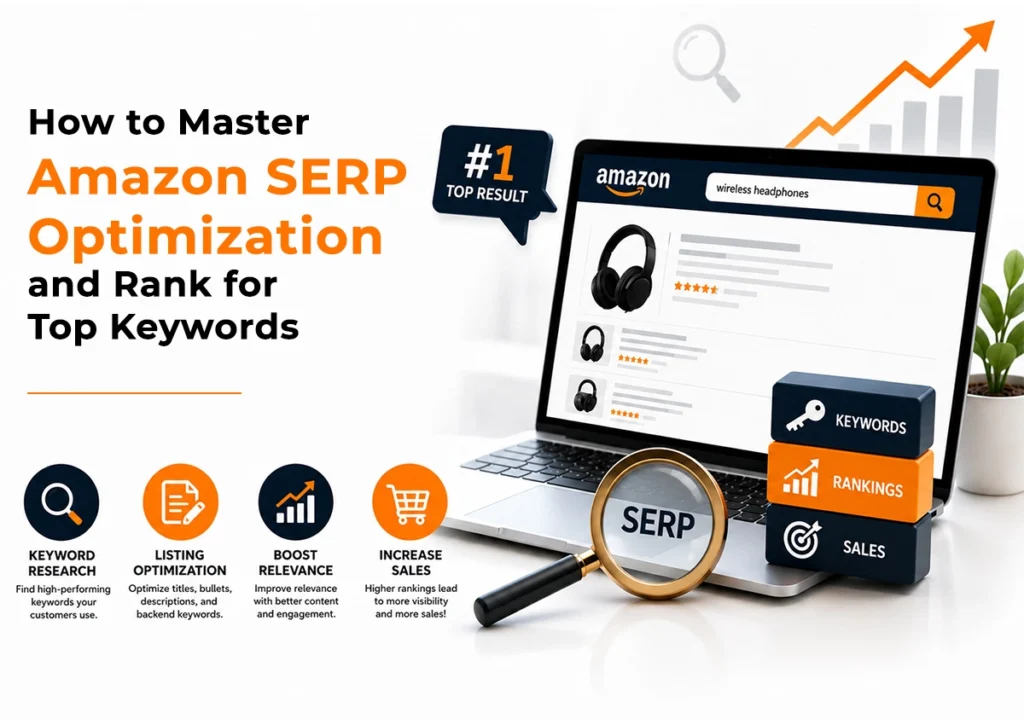
    Amazon SERP optimization guide showing keyword research, listing optimization, and ranking strategies for higher Amazon search visibility

    Introduction

    Selling on Amazon has changed dramatically. Ranking products today is not just about inserting keywords into titles and hoping for visibility.
    At present, success depends on understanding Amazon SERP optimization and adapting listings to match how shoppers search, click, and buy.

    Amazonโ€™s search ecosystem has become increasingly competitive. Consequently, brands that fail to optimize for Amazon SERPs often disappear beneath stronger competitors, regardless of product quality.
    If your products struggle to rank despite active campaigns and solid reviews, your Amazon SERP presence likely needs refinement. The good news is that ranking higher is achievable when you understand how Amazonโ€™s algorithm evaluates performance signals.

    Letโ€™s break down exactly how to master Amazon SERP optimization and consistently rank for top-converting keywords.

    ย 

    What Is Amazon SERP?

    To begin with, Amazon SERP stands for Search Engine Results Page.
    Whenever shoppers search for a product, Amazon displays listings it believes are most relevant and likely to convert.

    Unlike Google, which prioritizes informational relevance, Amazon prioritizes purchase likelihood.
    Accordingly, listings rank higher when they show strong:

    • Keyword relevance
    • Click-through rate
    • Conversion rate
    • Review quality
    • Sales velocity
    • Inventory consistency

    This means your Amazon search engine marketing strategy must align with buyer behavior rather than relying solely on keyword insertion.

    Why Amazon SERP Optimization Matters

    At first glance, ranking might seem like a vanity metric. However, visibility directly impacts revenue.
    Products ranking on page one dominate shopper attention. Meanwhile, listings buried beyond page two receive significantly lower clicks.

    Strong Amazon SERP optimization helps brands:

    • Increase product discoverability.
    • Reduce dependency on paid traffic.
    • Improve conversion opportunities.
    • Strengthen organic keyword positioning.
    • Build sustainable sales growth.

    In other words, if you want long-term profitability, you must learn how to increase SERP visibility organically.

    How Amazon Determines SERP Rankings

    Amazonโ€™s A10 algorithm evaluates performance signals across your listing. Above all, it prioritizes listings that convert consistently.
    Key ranking factors include:

    1.ย  Keyword Relevance

    Your listing must align naturally with shopper searches. This includes:

    • Title optimization.
    • Bullet point keyword placement.
    • Backend search terms.
    • Product descriptions.
    • A+ Content supports relevance.

    Effective SEO for Amazon webstore success begins here.

    2. Click-Through Rate

    If shoppers skip your listing, rankings drop. Strong CTR depends on:

    • Clear product images.
    • Strong pricing competitiveness.
    • Review count and ratings.
    • Optimized titles.
    • No matter how strong your keywords are, poor CTR weakens Amazon SERP optimization efforts.

    3. Conversion Rate

    Amazon rewards products that close sales. To improve conversion:

    • Use benefit-driven copy.
    • Add trust-building visuals.
    • Highlight differentiators.
    • Clarify use cases.

    Listings that convert better climb faster.

    How to Identify Weak SERP Presence Keywords

    One of the biggest ranking mistakes sellers make is targeting obvious keywords while ignoring weak-opportunity terms.

    So how do you identify them?

    1. Look for High Search Volume with Weak Listings

    Search manually and evaluate results. If page-one listings show:

    • Poor imagery.
    • Weak bullet copy.
    • Low review counts.
    • Generic branding.

    Youโ€™ve likely identified weak Amazon SERP presence keywords worth targeting. This is one of the smartest ways to improve rankings faster.

    2. Use an Amazon SERP Tracker

    A quality Amazon SERP tracker reveals:

    • Ranking fluctuations.
    • Competitor movement.
    • Keyword momentum shifts.
    • Visibility opportunities.

    Tracking allows brands to spot ranking gaps before competitors react. At Krolog, this data-driven monitoring helps brands adjust listings proactively rather than reactively.

    3. Analyze Sponsored and Organic Position Gaps

    Sometimes keywords convert profitably in ads but rank poorly organically. This signals optimization opportunities.

    If paid traffic converts but organic visibility lags, strengthen:

    • Listing relevance signals.
    • Backend indexing.
    • Content depth.
    • A+ messaging alignment.

    This bridges ranking gaps quickly.

    Optimize Listings for Search Intent

    Modern Amazon search engine marketing is not about stuffing exact-match phrases everywhere. Instead, optimize for intent.

    Ask:

    • What problem is the shopper solving?
    • What objections might stop the purchase?
    • What benefits matter most?

    Your listing should answer these instantly.
    Strong content clarity improves CTR and conversion simultaneously.

    Strengthen Listing Images for SERP Dominance

    Images influence click behavior heavily. To improve visibility performance:

    • Use clean primary images.
    • Add infographic-style explanations.
    • Show product scale.
    • Include real-world use cases.
    • Highlight benefits visually.

    Better creative often improves rankings faster than copy changes alone.

    Leverage Reviews Strategically

    Reviews influence trust and ranking signals. Encourage more quality reviews by:

    • Delivering better packaging experiences.
    • Improving post-purchase satisfaction.
    • Addressing product friction points.

    Amazon favors listings that shoppers trust.

    Use PPC to Accelerate Organic SERP Growth

    Paid traffic strengthens ranking momentum when managed correctly.
    Strategic PPC:

    • Generates sales velocity.
    • Reinforces keyword relevance.
    • Tests keyword viability.
    • Supports indexing expansion.

    At Krolog, integrated ad and content optimization strategies help brands dominate Amazon SERPs while lowering wasted spend. Paid and organic growth should always work together.

    Common Amazon SERP Mistakes Sellers Make

    Avoid these ranking killers:

    • Keyword stuffing.
    • Ignoring backend terms.
    • Weak image optimization.
    • Generic bullet points.
    • Poor competitor analysis.
    • Neglecting conversion tracking.

    Even strong products struggle when these issues persist.

    Why Brands Trust Krolog for Amazon SERP Optimization

    Mastering Amazon SERP optimization requires constant refinement.
    At Krolog, we combine:

    This ensures brands not only rank but also sustain marketplace visibility.

    Final Thoughts

    Ranking on Amazon is no longer luck but strategy.
    Brands that master Amazon SERP optimization, identify weak opportunity keywords, and continuously refine listing performance create sustainable growth advantages.

    Visibility drives clicks. Clicks drive conversions. Conversions strengthen rankings.
    This cycle ultimately drives growth.

    If your listings are not ranking where they should, now is the time to rethink your Amazon search engine marketing strategy and optimize with precision.

    ย 

    FAQ: Frequently Asked Questions

    Amazon SEO helps listings get indexed through keywords and content structure. Amazon SERP optimization focuses on improving rankings and conversions through stronger click-through rates, visuals, reviews, and shopper engagement.

    ย 

    Check Search Query Performance reports for keywords with strong clicks and purchases. High-impression terms with low conversions need optimization, while high-converting terms should be prioritized in listings and PPC campaigns.

    Use natural language, clear product benefits, strong visuals, and customer-focused bullet points. AI favors listings that clearly explain value instead of stuffing keywords.

    Yes. Positive reviews improve trust and conversions, while Q&A adds relevance and helps Amazon better understand shopper intent.

    ย 

    Low-competition keywords may rank in a few weeks, while competitive terms often take 2โ€“6 months with strong optimization, PPC support, and consistent sales performance.

    Related Article

    How to Master Amazon SERP Optimization and Rank for Top Keywords

    How to Master Amazon SERP Optimization and Rank for Top Keywords

    How to Master Amazon SERP Optimization and Rank for Top Keywords Introduction Selling on Amazon has changed dramatically. Ranking products…

    What Are TikTok Spark Ads? A Complete Guide to How They Work

    What Are TikTok Spark Ads? A Complete Guide to How They Work

    What Are TikTok Spark Ads? A Complete Guide to How They Work Introduction TikTok has completely changed the way brands…

    E-Commerce Trends 2026: How Amazon Is Transforming the Future of Retail

    E-Commerce Trends 2026: How Amazon Is Transforming the Future of Retail

    E-Commerce Trends 2026: How Amazon Is Transforming the Future of Retail Introduction The future of retail is not yet to…

    Ready to Scale Your Amazon Brand?

    If youโ€™re looking for expert-led Amazon advertising strategies, a performance-focused Amazon PPC strategy, and real growth, get in touch with us at Krolog, where Amazon experts will help you build a winning Amazon advertising system tailored to your business.

    Scroll to Top