Nav Preview
  • Amazon PPC Case Study: How We Increased a Brand's Sales by 400%

    Most Amazon sellers don’t fail because of bad products. They fail because they’re spending money on ads that aren’t working.

    We’ve seen it over and over. Campaigns running for months, budgets getting exhausted, clicks coming in; but sales? hardly moving.

    This Amazon PPC case study tells a different story.

    It shows how a struggling art supplies brand transformed its advertising performance through a smarter Amazon PPC strategy, tighter campaign structure, and continuous optimization.Β 

    No overnight hacks, no inflated budgets. Just better decisions backed by data.

    In this case study, you’ll learn what went wrong, what changed, and how a strategic Amazon advertising campaign helped increase sales by 400% while improving efficiency across the account.

    Amazon PPC Case Study
    Amazon PPC Management
    Amazon Advertising Strategy

    Amazon ACoS Strategies

    PPC Performance

    Higher ROAS

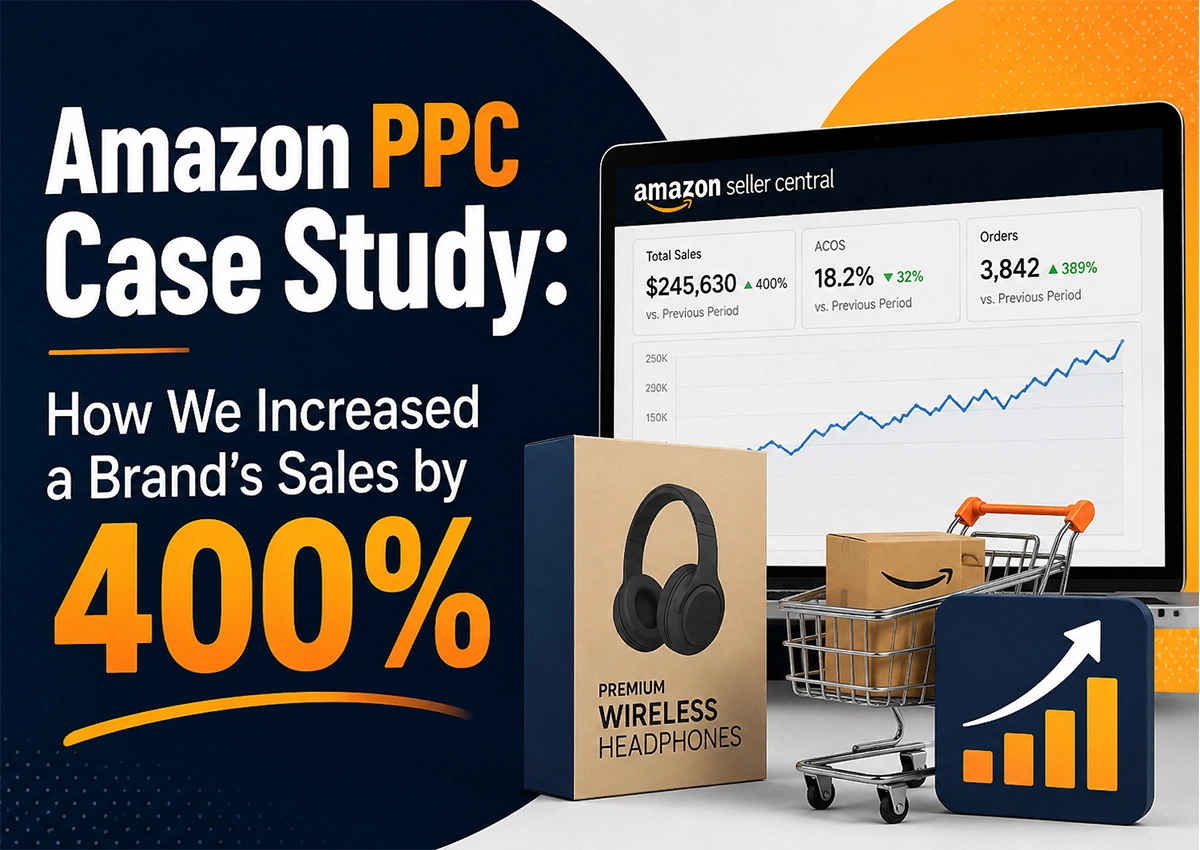
    Amazon PPC case study showing 400% increase in brand sales

    Summary

    Running ads isn’t difficult; making them profitable is.

    This Amazon PPC case study breaks down how Krolog restructured an underperforming account, optimized bidding, improved keyword targeting, and scaled winning campaigns to achieve a 400% increase in sales.Β 

    Along the way, the brand reduced wasted spend, improved campaign efficiency, and built a stronger foundation for long-term growth.

    Whether you’re managing ads yourself or looking for an experienced Amazon PPC agency, this case study highlights the strategies that consistently deliver measurable results.

    Key Takeaways

    Better Structure Creates Better Results

    A well-organized Amazon PPC campaign is easier to optimize, scale, and measure.

    Data Beats Guesswork

    Every optimization was backed by performance data, not assumptions.

    Small Changes Compound

    Bid adjustments, search term cleanup, and campaign segmentation created significant improvements over time.

    Scaling Requires Strategy

    Higher ad spend only works when campaigns are already profitable.

    Entity Overview

    Category: Amazon Advertising Success Story

    Related Entities:

    Β 

    What You'll Learn From This Amazon PPC Case Study?

    Every successful campaign has a story. Sometimes the biggest wins don’t come from spending more; they come from fixing what’s already broken.

    This case study walks through our complete Amazon PPC management process.Β 

    From the initial audit to campaign restructuring, keyword refinement, bid optimization, and scaling.

    You’ll also see where most sellers lose money, how to improve Amazon PPC performance quickly, and why working with an experienced Amazon PPC agency often produces better long-term returns than simply increasing your daily budget.

    Client Background: A Good Product. Poor Advertising.

    The brand wasn’t new.Β 

    • Customers liked the products.
    • Reviews were healthy.Β 
    • Listings looked decent too.

    Still, growth had stalled. Sales moved, but not enough to scale.

    The team had already invested in Amazon Sponsored Ads. They’d even tried different campaign types. Yet the account kept spending more while profitability slipped.

    Something wasn’t adding up.

    That’s when they reached out to Krolog for an Amazon PPC audit. We weren’t asked to “increase the budget.”

    We were asked to find out why the existing budget wasn’t working. And honestly, that’s usually the better question.

    The Initial Amazon PPC Audit

    The first audit revealed everything. The account wasn’t beyond saving. It was simply carrying months of small mistakes that had quietly become expensive.

    We found:

    • Broad keywords consuming most of the spend.
    • High-performing search terms buried inside automatic campaigns.
    • Manual campaigns competing against one another.
    • Little separation between branded and non-branded traffic.
    • Bids based on guesswork instead of performance data.
    • Low-converting keywords running far longer than they should have.

    None of these issues were majorly problematic on their own. Together? They were draining the advertising budget every single day.

    Why Sales Plateaued?

    Many sellers think increasing ad spend automatically means increasing sales. It rarely works that way.

    This account had reached a point where every extra dollar produced smaller returns. The problem wasn’t traffic, but the traffic quality. The campaigns were attracting clicks, not enough buyers.

    Until that changed, spending more would’ve only increased waste.

    That’s why our Amazon PPC strategy focused on improving efficiency first. Scaling came later.

    Expert Observation

    One pattern we’ve noticed after managing hundreds of Amazon accounts is surprisingly consistent.

    Most brands don’t have a bidding problem. They have a structure problem.

    • Campaigns overlap.
    • Keywords compete against each other.
    • Search terms never graduate into dedicated campaigns.

    Eventually, Amazon starts spending money where it finds impressions, not necessarily where conversions happen.

    Fixing the account structure often improves performance faster than raising the budget ever could.

    Common Mistakes Before Hiring an Amazon PPC Agency

    Before working with an Amazon PPC management agency, many sellers unknowingly repeat the same mistakes:

    • Treating automatic campaigns as permanent instead of using them for keyword discovery.
    • Optimizing bids while ignoring campaign structure.
    • Measuring clicks instead of profitability.
    • Leaving non-converting keywords active for months.
    • Scaling campaigns before proving they can generate consistent Amazon ROAS.

    Ready to Grow Your Amazon Sales With Smarter PPC?

    See how a data-driven Amazon PPC strategy can improve ad performance and drive sustainable sales growth.

    Our Amazon PPC Strategy: Fix Before You Scale

    We didn’t start by increasing the budget. That would’ve only made the problems bigger.

    First, we cleaned the account, then we rebuilt it. Only after the campaigns became profitable did we begin scaling.

    Simple approach. Big difference.

    Step 1: Rebuild the Campaign Structure

    The existing setup had become difficult to manage.

    • Keywords overlapped.
    • Campaigns competed with each other.
    • Performance data was scattered.

    We reorganized the account into a cleaner Amazon PPC campaign strategy. Each campaign had one job.

    • Automatic campaigns discovered new search terms.
    • Manual campaigns captured proven keywords.
    • Branded and non-branded traffic stayed separate.

    That gave us clearer reporting and far better control over spend.

    Step 2: Keyword Harvesting and Amazon PPC Optimization

    Automatic campaigns are great for research. They’re not where winning keywords should stay forever.

    Every week, we reviewed search term reports.Β 

    • High-converting terms moved into dedicated manual campaigns.
    • Poor performers were paused or added as negative keywords.

    Gradually, the budget shifted toward search terms that were already proving they could generate sales.Β 

    That’s where real Amazon PPC optimization begins.

    Step 3: Smarter Bid Management

    Not every keyword deserves the same bid. Some consistently generated profitable sales, others attracted clicks with very little return.

    Instead of applying blanket bid increases, we adjusted bids based on actual performance.

    Winning keywords received more visibility; underperforming ones were reduced or paused.

    This improved efficiency without increasing unnecessary spend.

    Step 4: Continuous Search Term Refinement

    Amazon PPC isn’t something you optimize once. It’s an ongoing process.

    Every week we looked for:

    • New converting search terms.
    • Irrelevant traffic to block.
    • Seasonal keyword opportunities.
    • Changes in customer search behavior.
    • Opportunities to improve Amazon ACoS and Amazon ROAS.

    Small optimizations stacked up over time. That’s usually how the biggest gains happen.

    Practical Example

    One search term had generated multiple sales inside an automatic campaign.

    Yet it was competing against dozens of unrelated keywords for the same budget.

    • We moved it into its own exact-match campaign.
    • Adjusted the bid.
    • Added negative keywords to prevent overlap.

    Within weeks, that single keyword became one of the account’s strongest revenue drivers.

    No new product, no bigger budget; just better campaign management.

    Expert Observation

    Many sellers believe Amazon PPC success comes from finding the “perfect keyword.”

    It doesn’t.

    The biggest wins usually come from managing good keywords properly. A well-structured account almost always outperforms a messy account with a larger advertising budget.

    That’s one lesson we’ve seen repeated across hundreds of Amazon accounts.

    The Results: 400% Sales Growth Without Wasting Ad Spend

    The numbers told the story. Not an overnight success, but month after month, performance kept improving. The account became healthier, campaigns became more efficient, and revenue followed.

    Metric Before After
    Sales Baseline 400% Increase
    Amazon ACoS High and inconsistent Significantly improved
    Amazon ROAS Low Strong, sustainable growth
    Campaign Structure Disorganized Fully optimized
    Keyword Targeting Broad and overlapping Intent-driven and refined

    Why Do These Results Matter?

    Anyone can increase sales by doubling ad spend; that’s easy. The challenge is growing revenue while keeping advertising efficient. Our strategy focused on both: higher visibility, better conversions, and smarter spending.

    That combination improved overall profitability instead of simply increasing traffic.

    What We Learned?

    Every successful Amazon advertising strategy follows the same principle. Data first, decisions second.

    We didn’t guess; we tested, measured, optimized, and repeated.

    Those small improvements eventually created a result that looked dramatic from the outside.

    Common Mistakes That Slow PPC Growth

    We’ve audited hundreds of Amazon accounts. The same issues appear again and again.

    • Scaling budgets before campaigns are profitable.
    • Ignoring search term reports.
    • Running automatic campaigns without optimization.
    • Measuring clicks instead of conversions.
    • Looking only at Amazon ACoS while ignoring overall profitability.

    Avoid those mistakes, and performance usually improves much faster.

    Emerging PPC Trends for 2026

    Amazon advertising keeps evolving. Winning brands are adapting. Some of the biggest shifts include:

    • AI-assisted bid optimization.
    • Greater use of first-party customer signals.
    • More sophisticated audience targeting.
    • Smarter placement optimization across Amazon Sponsored Ads.
    • Continuous testing instead of one-time campaign setups.

    The brands growing fastest aren’t reacting once a quarter; they’re optimizing every week.

    Expert Observation

    A 400% increase didn’t happen because of one campaign or one keyword. It happened because dozens of small optimizations worked together.

    That’s what effective Amazon PPC management looks like.

    • Consistent improvements.
    • Measured decisions.
    • Long-term thinking.

    Not shortcuts.

    Is Amazon PPC Worth It?

    For most brands, yes. But only when it’s managed correctly.

    A poorly optimized campaign burns the budget.

    A well-managed one becomes one of the fastest ways to grow sales, improve visibility, and increase market share.

    We’ve seen brands cut wasted spend while growing revenue at the same time. That’s the goal.

    Not spending more; earning more.

    How to Improve Amazon PPC Ad Performance Quickly?

    If you’re looking for faster results, start here:

    • Audit your campaigns regularly.
    • Separate branded and non-branded keywords.
    • Add negative keywords every week.
    • Optimize bids based on conversion data.
    • Refresh product listings before increasing ad spend.
    • Scale only profitable campaigns.

    Small changes often create the biggest gains over time.

    Ready to Grow Your Amazon Sales With Smarter PPC?

    See how a data-driven Amazon PPC strategy can improve ad performance and drive sustainable sales growth.

    Frequently Asked Questions

    About the Author

    Sandeep K., Founder & CEO of Krolog Inc., has over 10 years of experience helping brands scale through Amazon SEO, PPC, listing optimization, and marketplace strategy. His data-driven approach has helped businesses across multiple categories improve visibility, reduce advertising costs, and achieve sustainable growth.

    Why Do Brands Choose Krolog?

    Every account tells a different story. Some need better targeting, others need campaign restructuring. Many simply need a fresh strategy backed by data.

    Our team combines Amazon PPC management, listing optimization, keyword research, and marketplace consulting into one growth-focused approach.

    No generic templates, no guesswork. Just strategies built around your products, margins, and long-term goals.

    If you’re ready to reduce wasted spend, improve Amazon ROAS, and build a PPC engine that keeps growing month after month, Krolog is ready to help.

    Related Article

    Can You Merge Amazon Accounts? A Step-by-Step Guide for 2026

    Can You Merge Amazon Accounts? A Step-by-Step Guide for 2026

    Can You Merge Amazon Accounts? A Step-by-Step Guide for 2026 Can you merge Amazon accounts? Not exactly. That’s where most…

    What Happens After You Hire a Shopify Agency? A 4-Step Process Explained

    What Happens After You Hire a Shopify Agency? A 4-Step Process Explained

    What Happens After You Hire a Shopify Agency? A 4-Step Process Explained Most brands think the hard part is deciding…

    Amazon PPC Case Study: How We Increased a Brand’s Sales by 400%

    Amazon PPC Case Study: How We Increased a Brand’s Sales by 400%

    Amazon PPC Case Study: How We Increased a Brand’s Sales by 400% Most Amazon sellers don’t fail because of bad…

    Scroll to Top