How to Build a Shopify Email List That Converts: From 0 to 5,000 Subscribers
How to Build a Shopify Email List That Converts: From 0 to 5,000 Subscribers E-commerce traffic is expensive, but email…

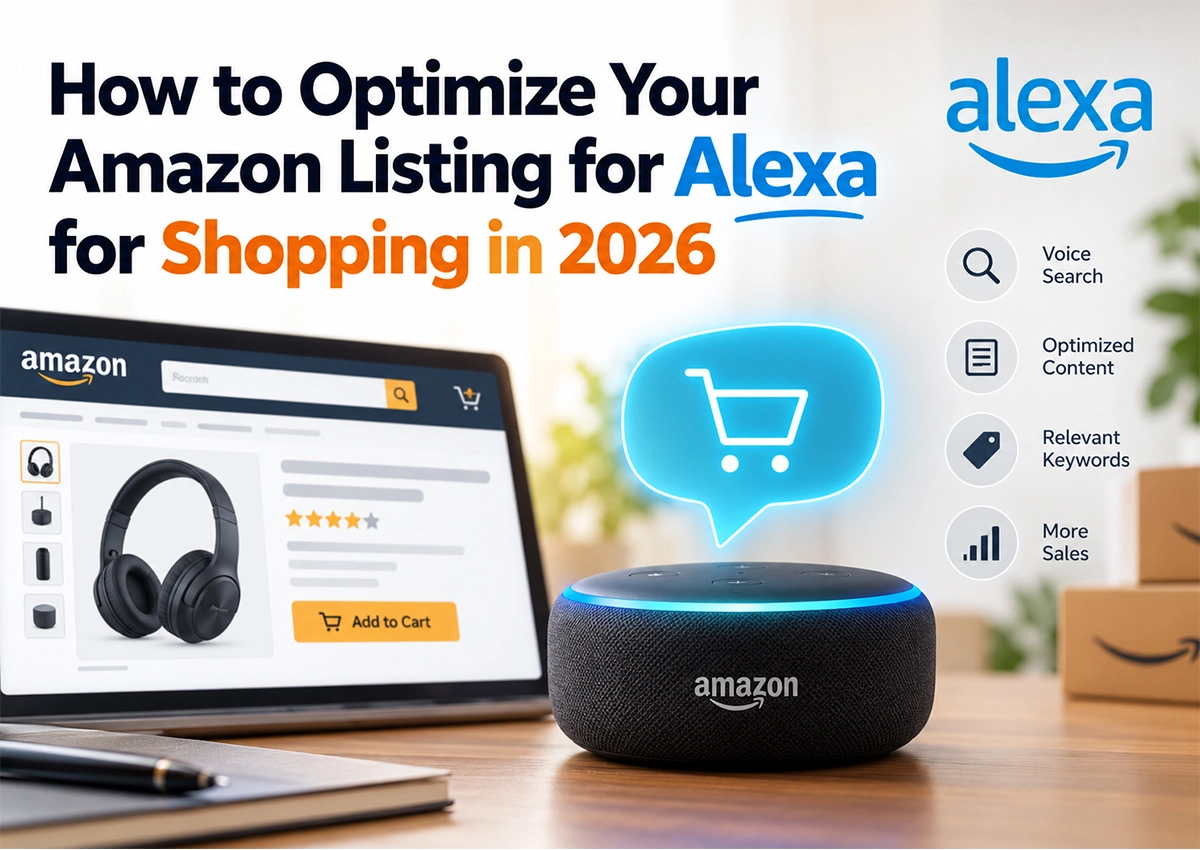
Shoppers aren’t typing “collapsible silicone food container” anymore. They’re saying, “Alexa, order me a BPA-free collapsible lunch container for meal prep.”
That’s exactly why Amazon Alexa shopping matters in 2026. Customers ask questions; Alexa understands intent, and then Amazon’s AI shopping assistant recommends products that best match those requests.
If your listing is only optimized for typed searches, you’re already behind. Voice commerce, Buy with Alexa, and AI-driven recommendations are changing product discovery across Amazon.
This guide explains how to improve Amazon listing optimization, Amazon listing SEO, and Amazon product page optimization so your products are easier for Alexa to find, understand, and recommend before the next peak season Amazon rush.
Amazon Alexa shopping isn’t traditional search anymore. Alexa evaluates product titles, bullets, descriptions, reviews, pricing, inventory, and product attributes before recommending products through voice search.
That means Amazon product listing optimization now focuses on answering customer questions naturally. The better Amazon understands your listing, the better Alexa can surface it during conversational shopping and repeat purchases through Buy with Alexa.
Customers speak naturally; design your listing around that.
Titles, bullets, backend keywords, and product attributes help Alexa understand products.
Prime eligibility, reviews, inventory, and accurate product information improve recommendation potential.
Clear, contextual content now matters as much as keyword placement.
Amazon Alexa shopping lets customers discover and purchase products using voice commands through Alexa-enabled devices.
Shopping behavior has changed. Instead of searching “water bottle stainless steel,” customers ask “Alexa, what’s the best stainless steel water bottle for travel?”
Alexa interprets intent instead of matching exact keywords. It considers relevance, reviews, fulfillment, pricing, and listing quality before recommending products.
That’s why Amazon listing SEO is becoming more conversational. Sellers need listings that answer customer questions, not just rank for search terms.
At Krolog, we often see listings overloaded with keywords but missing clear product benefits. Voice search rewards listings that explain products naturally and solve customer problems.
Alexa doesn’t randomly recommend products. It evaluates several signals together.
Key ranking signals include:
For example, if someone asks, “How to buy with Alexa for meal prep containers?” Alexa looks for listings that clearly explain size, material, leakproof design, and everyday use.
Accordingly, Amazon product page optimization is about giving Amazon enough context to understand what your product does and who it’s for.
Think about how people speak to Alexa. They describe needs, not keywords. Your listing should mirror that.
A strong title includes:
Keep it readable. Amazon product title optimization is about clarity, not stuffing every keyword into one line.
Optimize your Amazon listings for better visibility, conversions, and AI-powered shopping experiences. Get expert help from Krolog to create listings built for both shoppers and intelligent assistants.
Your title is only one piece of the listing. Bullet points should answer questions.
Instead of “Leakproof Lid,” write “Leakproof lid keeps meals secure during travel and office commutes.”
Descriptions should sound conversational: Explain benefits first, then specifications. Use real-life use cases and natural language throughout.
Backend keywords still matter: Include synonyms, alternate spellings, and long-tail phrases customers might say during voice searches. Avoid repeating keywords already used in visible copy.
Alexa evaluates the complete listing.
| Listing Element | Why It Matters |
|---|---|
| Product Title | Defines category and customer intent. |
| Bullet Points | Explain benefits conversationally. |
| Product Description | Provides context for AI recommendations. |
| Product Attributes | Help Alexa answer detailed customer questions. |
| Reviews & Ratings | Build trust during voice recommendations. |
A common mistake we see is optimizing for search volume instead of customer intent. Listings rank for broad terms but struggle during voice searches because they don’t answer real shopping questions.
Before Prime Day, Black Friday, or holiday sales:
Small updates before peak season on Amazon often improve both visibility and conversions.
Even experienced sellers make these mistakes.
The Amazon AI shopping assistant now summarizes products, compares reviews, and recommends options before customers open listings. What’s changing?
Successful Amazon listing optimization combines strong titles, conversational copy, complete product data, and consistent fulfillment.
Amazon Alexa shopping is becoming another major discovery channel inside Amazon. The goal is to create listings that work for customers and Amazon’s AI shopping assistant at the same time.
Focus on conversational Amazon product listing optimization, stronger Amazon listing SEO, complete product attributes, and real customer use cases. Those changes make your listing easier to understand, easier to recommend, and easier to convert.
At Krolog, we help brands optimize listings for AI-driven shopping experiences, combining Amazon SEO, listing optimization, PPC, and marketplace strategy to improve long-term visibility and sales.
Amazon Alexa shopping allows customers to discover and purchase products using voice commands through Alexa-enabled devices.
Improve product titles, bullet points, descriptions, backend keywords, product attributes, and reviews so Alexa can understand and recommend your product.
Buy with Alexa lets customers reorder previous purchases or buy eligible products using simple voice commands.
Yes, it evaluates listing relevance, reviews, product information, fulfillment, and customer intent alongside traditional SEO signals.
Yes, backend keywords capture synonyms, alternate spellings, and long-tail search variations without cluttering visible copy.
Any seller can optimize for Amazon Alexa shopping, although Brand Registry provides additional optimization tools like A+ Content and Brand Analytics.
Alexa considers listing quality, reviews, pricing, Prime eligibility, inventory, product attributes, and purchase history before recommending products.
Yes, eligible products can be reordered through Buy with Alexa if inventory is available.
Sandeep K., Founder & CEO, Krolog Inc.
Sandeep has over 10 years of experience helping brands improve Amazon SEO, PPC, listing optimization, and marketplace growth across the US and Canada.
Voice commerce is changing how customers shop on Amazon. Krolog helps brands improve Amazon listing optimization, Amazon product page optimization, Amazon SEO, PPC, and AI shopping readiness with data-backed marketplace strategies.
Request a free Amazon listing audit and discover opportunities to improve rankings, voice search visibility, and conversions before the next peak season.
How to Build a Shopify Email List That Converts: From 0 to 5,000 Subscribers E-commerce traffic is expensive, but email…

How to Optimize Your Amazon Listing for Alexa for Shopping in 2026 Shoppers aren’t typing “collapsible silicone food container” anymore.…

Amazon Seller’s Guide to Shopify Ads: Meta, Google & Shopping Strategies Selling on Amazon gets you visibility; selling on Shopify…
Krolog was born from a simple yet powerful idea: to empower businesses with the tools and strategies needed to thrive in the ever-evolving digital marketplace. Our journey is a testament to the transformative impact of strategic E-commerce solutions.


Copyright Β© 2026 All Right ReservedΒ