How Amazon Sellers Can Drive Traffic to Their Shopify Store in 2026
How Amazon Sellers Can Drive Traffic to Their Shopify Store in 2026 Selling on Amazon is exciting. Sales come fast,…
Getting traffic is exciting. Watching visitors leave without buying? Not so much.
That’s where Amazon’s conversion rate changes everything. You can rank well, spend thousands on ads, and still struggle if your listing doesn’t convince shoppers to click “Buy Now.”
In 2026, conversion isn’t just another metric. It’s one of Amazon’s strongest signals for ranking, advertising efficiency, and long-term profitability.
This guide explains how to calculate Amazon conversion rate, what a good Unit Session Percentage looks like, why conversions drop, and the practical changes that actually improve them.
A high Amazon conversion rate means more shoppers become buyers. It lowers advertising costs, improves organic rankings, and increases profitability.
From optimizing listings and pricing to improving images, A+ Content, reviews, and PPC strategy, every small improvement compounds over time. The brands that grow fastest rarely chase more traffic first; they convert existing traffic better.
Higher Amazon conversions usually lead to better rankings, stronger PPC performance, and more sales without increasing traffic.
Your Amazon Unit Session Percentage shows exactly how well your product page converts visitors into customers.
The best-performing sellers continually test pricing, creatives, keywords, and content instead of assuming a listing is “finished.”
Fast-loading images, compelling copy, competitive pricing, and strong reviews work together to improve conversion rates.
Category: Amazon Marketplace Performance Metric
Related Entities: Amazon Seller Central , Amazon Business Reports, Unit Session Percentage, Amazon PPC, Amazon A+ Content, Amazon SEO, Amazon Brand Analytics, Amazon Rufus, Amazon Product Detail Page, Buy Box
Traffic is nice; sales are better.
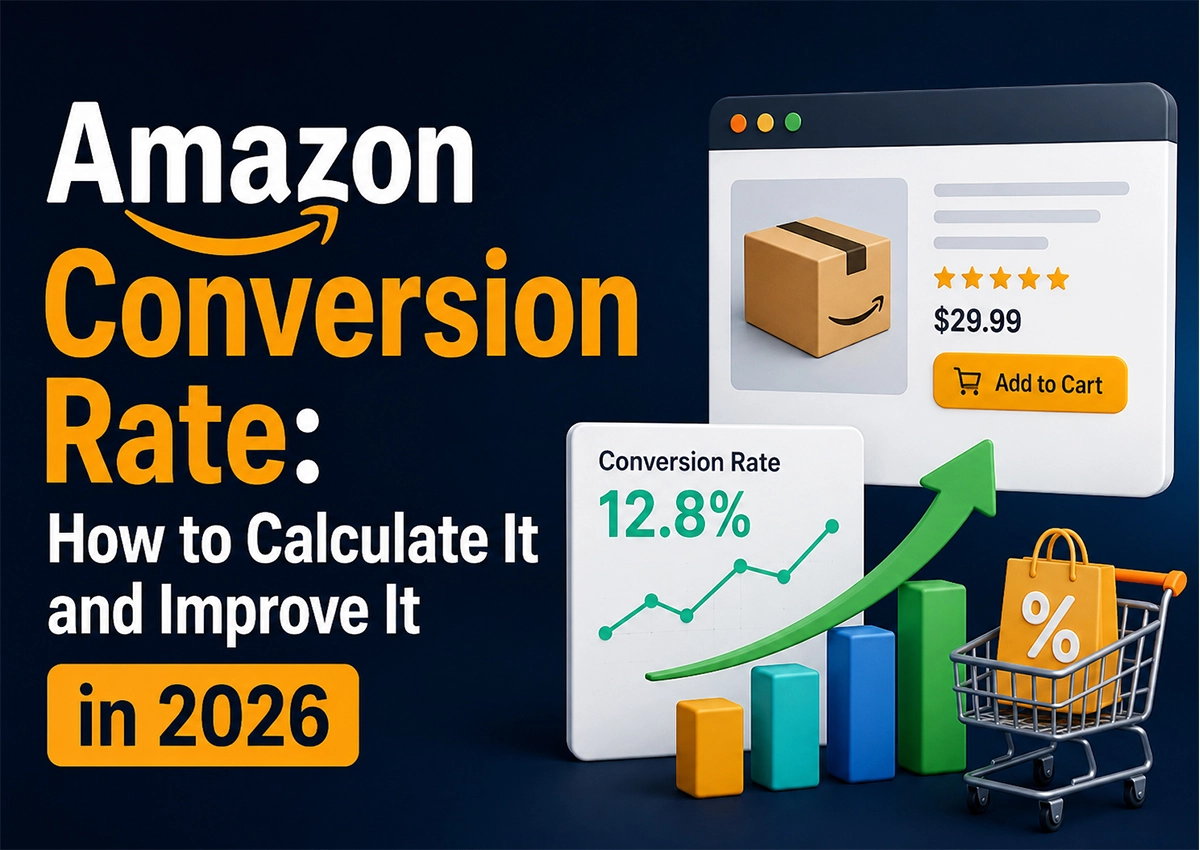
That’s exactly what Amazon conversion rate measures. It tells you how many shoppers actually purchased after visiting your product page.
Amazon tracks this metric as Unit Session Percentage inside Seller Central. In simple terms, it compares the number of units sold against the number of sessions your listing receives.
Conversion Rate = (Units Ordered Γ· Sessions) Γ 100
If 1,000 shoppers visit your listing and 150 buy your product, your amazon conversion rate is 15%.
Unlike traditional ecommerce stores, Amazon shoppers usually arrive with strong buying intent. They aren’t casually browsing, butΒ looking for a solution. That’s why even small improvements in conversion can generate a noticeable lift in revenue.
Think about it. You could spend more on ads to drive another thousand visitors. Or, you could improve your listing and convert more of the traffic you already have.Β
Most profitable brands choose the second option.
At Krolog, we often see sellers obsess over rankings while ignoring conversions. Ranking first doesn’t guarantee more sales. If shoppers don’t trust your listing, they’ll scroll, compare, and buy from someone else.
A higher conversion rate tells Amazon your product satisfies customer intent. Over time, that can also improve organic visibility.
Fortunately, you don’t need any advanced analytics tools.
Amazon already provides the data inside Business Reports in Seller Central.
Here’s the formula again:
Amazon Conversion Rate = (Units Ordered Γ· Sessions) Γ 100
Let’s say your product generated:
Calculation:
(325 Γ· 2,500) Γ 100 = 13%
Your listing converts 13% of visitors into buyers.
That’s a healthy number for many categories. But context matters. Some products naturally convert higher than others because of pricing, competition, or purchase frequency.
Finding your amazon conversion rate only takes a minute.
That’s your conversion rate.
Many sellers ask, “What is Unit Session Percentage Amazon?” It’s simply Amazon’s name for conversion rate. Likewise, if you’re wondering about the Amazon unit session percentage definition seller central, it refers to the percentage of sessions that resulted in at least one unit being purchased.
There isn’t one universal benchmark.
Generally:
| Unit Session Percentage | Performance |
|---|---|
| Under 8% | Needs improvement |
| 8β12% | Average |
| 12β18% | Strong |
| Above 20% | Excellent for many categories |
Premium brands with optimized listings often exceed 20%. Highly competitive categories, however, may average much lower.
Don’t chase someone else’s numbers.
A kitchen accessory, luxury skincare product, and industrial tool will all have different conversion benchmarks. Compare your listing against similar products, not against Amazon as a whole. That’s where the real insight is.
Sometimes the product isn’t the problem; the listing is.
We’ve audited hundreds of Amazon accounts over the years. A pattern shows up again and again. Sellers blame traffic, PPC, or competition.
Then we look closer:Β
Little things that quietly hurt Amazon conversions.Β
Here are the biggest reasons conversion rates stay low.
Your main image earns the first impression. If shoppers scroll past it, nothing else matters.
Blurry photos, poor lighting, cluttered backgrounds, or missing lifestyle images reduce clicks and sales almost immediately.
Many listings describe features; customers want outcomes.
Instead of saying “Made with stainless steel,” explain why it matters.
“Keeps drinks cold for 24 hours. Doesn’t leak inside your backpack.” Simple, human, and much more convincing.
Trust sells. Products with consistent positive reviews naturally convert better because shoppers feel less risk before purchasing.
You can’t fake reviews. But you can improve customer experience, follow up correctly, and resolve recurring complaints before they affect future buyers.
The cheapest rarely wins. Most shoppers compare price against quality, reviews, shipping speed, and brand reputation.
If your listing communicates more value, buyers often pay more without hesitation.
A+ Content shouldn’t exist just because Brand Registry allows it. Good A+ Content tells a story. It answers objections before customers even ask them.
The best-performing brands explain benefits visually instead of adding another wall of text.
One listing we reviewed had excellent traffic but barely converted. The problem wasn’t advertising.
After refreshing the creative assets and rewriting the listing, conversion increased by over 25% within weeks. No extra ad budget, just better communication.
Turn more clicks into sales with expert Amazon listing optimization and conversion-focused strategies.
These two metrics get confused all the time. They’re connected, but they measure completely different stages of the customer journey.
| Metric | Measures | Why It Matters |
|---|---|---|
| Click-Through Rate (CTR) | Percentage of shoppers who click your listing after seeing it | Indicates how attractive your title, image, and price are |
| Amazon Conversion Rate | Percentage of visitors who actually purchase | Shows how effectively your listing turns traffic into buyers |
Think of it this way. CTR gets shoppers through the front door; conversion convinces them to stay and buy.
A listing with high CTR but poor conversion usually creates curiosity but fails to build confidence. Meanwhile, a listing with a lower CTR and a strong conversion rate often has better product-market fit.
The goal isn’t simply attracting more visitors. It’s attracting the right visitors and giving them every reason to purchase once they arrive.
Improving conversion rarely happens because of one big change. It’s usually dozens of small improvements working together.
At Krolog, these are the Amazon conversion rate optimization data-driven strategies we prioritize:
Turn more clicks into sales with expert Amazon listing optimization and conversion-focused strategies.
Amazon shopping is changing fast, and winning listings are evolving too. Some of the biggest trends include:
The biggest shift? Conversion optimization is becoming less about selling harder and more about helping customers decide faster.
Most sellers think low conversions mean they need more traffic. Usually, they don’t.
They need a better listing.
After working with hundreds of Amazon brands, we’ve noticed the same mistakes appear again and again. Small issues, big impact, and surprisingly easy to fix.
1. Chasing Traffic Before Fixing the Listing: More clicks won’t automatically create more sales. If your listing converts at 7%, doubling traffic simply doubles wasted opportunities. Smart sellers improve conversion first and then scale PPC.
2. Ignoring Mobile Shoppers: More than half of Amazon shoppers browse on mobile.
They all hurt the shopping experience.Β
Mobile-friendly listings almost always perform better.
3. Competing Only on Price: Dropping prices isn’t a long-term strategy. Customers compare value, not just numbers. Better branding, stronger content, faster shipping, and higher review quality often justify premium pricing.
4. Forgetting Inventory Health: Running out of stock hurts more than immediate sales.
It can reduce keyword rankings, interrupt advertising momentum, and make recovery much harder later.
5. Making Changes Without Measuring Results: Changing titles, images, pricing, and PPC all at once creates confusion. Instead, test one variable at a time. Give Amazon enough data, and then decide what actually worked.
Every listing tells a story; the numbers simply reveal where that story breaks.
At Krolog, we don’t focus on conversion rate alone; we evaluate the complete buying journey before recommending changes.
Our framework includes:
This data-first approach helps us identify what’s limiting growth instead of relying on assumptions.
Amazon conversion rate isn’t just another KPI. It’s one of the clearest indicators of marketplace health.
A higher Amazon conversion rate means your listing connects with shoppers, your pricing feels competitive, your content answers questions, and your product earns trust.
That’s exactly where sustainable growth begins.
We’ve seen brands increase revenue without increasing ad spend.Β
Small changes accumulate to create a big difference.
At Krolog, we combine Amazon conversion rate optimization, SEO, PPC management, listing strategy, and continuous performance analysis to help brands convert more visitors into customers, because attracting traffic is only half the job; turning that traffic into profitable sales is where real growth happens.
Of course, every project is different.
A small catalog with a premium theme launches much faster than a custom-built ecommerce experience with advanced integrations.Β
Planning saves time; skipping discovery usually adds it back.
Indirectly, yes. PPC itself doesn't increase conversions, but it brings qualified shoppers to your listing. If your product page is optimized, conversion rates typically improve because you're attracting more relevant traffic.
Absolutely. Main images influence clicks, while lifestyle images, infographics, and videos help customers understand the product faster. Better visuals often lead to stronger purchase confidence and higher conversions.
Yes, A+ Content provides richer visuals, comparison charts, and detailed product information. It builds trust, answers common questions, and often increases conversions, especially for branded products.
There's no fixed number. Consistent positive reviews matter more than volume alone. However, products with at least 50β100 quality reviews generally earn greater buyer confidence than listings with only a few ratings.
Several factors work together, including product images, pricing, reviews, keyword relevance, A+ Content, delivery speed, and customer trust. Improving these elements collectively usually delivers the biggest conversion gains.
Pricing directly influences buying decisions. Products priced too high without clear value often lose conversions, while strategic pricing, coupons, and bundles can significantly improve purchase rates.
Sandeep K., Founder & CEO of Krolog, has over 10 years of experience helping brands grow across Amazon marketplaces through marketplace strategy, listing optimization, Amazon SEO, PPC management, conversion optimization, and profitability consulting.
His data-driven business approach has helped improve visibility, increase conversion rates, and scale sustainable ecommerce growth.
Getting more traffic is only part of the equation. The real opportunity lies in converting more of the visitors you already have.
Whether you need Amazon Conversion Rate Optimization, Amazon product listing, A+ Content, PPC management, or a complete marketplace growth strategy, Krolog helps brands identify conversion speedbreakers and turn them into measurable revenue gains.
Request a free Amazon account audit today and discover practical opportunities to improve your conversion rate, increase sales, and grow profitably.
How Amazon Sellers Can Drive Traffic to Their Shopify Store in 2026 Selling on Amazon is exciting. Sales come fast,…
How Much Does Amazon Advertising Cost in 2026? (CPC, Budgets & ROI Explained) Advertising on Amazon isn’t expensive; poor advertising…
Amazon Is Offering 30 Days of Free Storage in China. Hereβs What Sellers Need to Know. Introduction Amazon announced on…
Krolog was born from a simple yet powerful idea: to empower businesses with the tools and strategies needed to thrive in the ever-evolving digital marketplace. Our journey is a testament to the transformative impact of strategic E-commerce solutions.


Copyright Β© 2026 All Right ReservedΒ