Shopify Store Speed Optimization: Why It Matters for Conversions in 2026
Shopify Store Speed Optimization: Why It Matters for Conversions in 2026 Shopify store speed optimization is no longer just a…
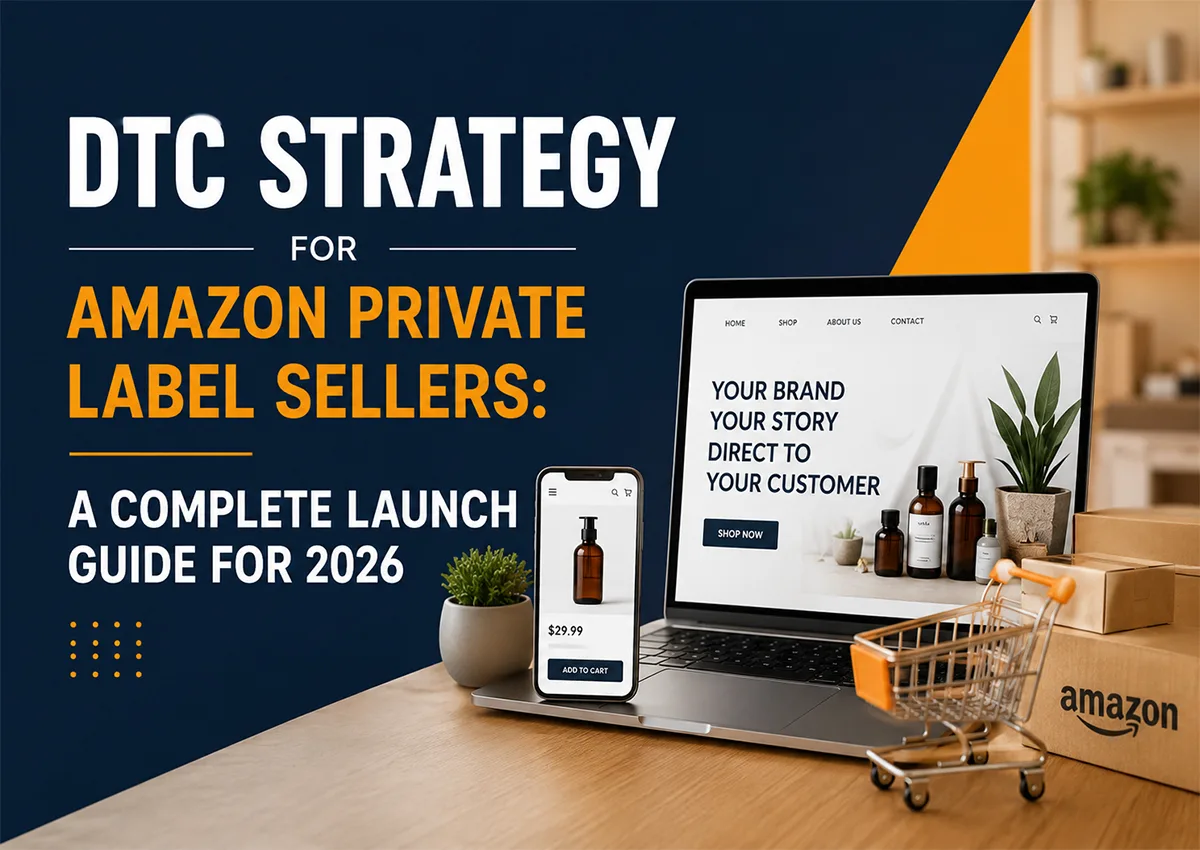
Amazon can build your brand. But it shouldn’t be the only place your brand lives.
That is where a strong DTC strategy comes in.
For Amazon private label sellers, launching a Shopify or ecommerce store isn’t simply about having another sales channel. It’s about building an owned customer journey around the marketplace business you’ve already created.
Amazon brings massive shopper intent. Your DTC store gives you more control over branding, merchandising, customer experience, and first-party business insights. Together, they can create a stronger growth engine.
This guide explains how Amazon sellers can build a practical DTC strategy in 2026 without disrupting the Amazon business that already works.
Amazon + DTC isn’t an either-or decision. It’s a smarter channel strategy.
A DTC model can help Amazon private label sellers reduce channel dependence while building a stronger brand ecosystem. The right approach connects:
However, don’t launch a DTC store just because competitors have one; launch it for a reason.
Your Amazon sales data can reveal which products, keywords, features, and customer problems deserve greater investment.
Your own store gives you greater control over merchandising, content, offers, and the shopping experience.
Your DTC store should do something Amazon can’t. Build deeper brand context, bundles, education, community, or a better post-purchase journey.
You need conversion, retention, and repeat purchases. Otherwise, you’re simply paying for another website.
The direct-to-consumer meaning is straightforward: a brand sells directly to customers instead of relying entirely on third-party retailers or marketplaces.
So, what is DTC in marketing?
It is a business model where the brand controls more of the customer journey. That includes acquisition, merchandising, conversion, customer communication, and retention.
For Amazon private label sellers, this creates an interesting opportunity.
Amazon already gives you demand; your DTC channel can give you control.
For example, imagine a skincare brand selling a hero product on Amazon. The seller notices that customers frequently buy two related products together.
Instead of selling those products separately on Amazon alone, the brand could create a DTC bundle, add educational content, introduce a subscription option, and build an email retention journey.
Now the store has a purpose. That’s the difference between having a website and having a DTC strategy.
Start with your Amazon data; don’t start with a Shopify theme. Review your:
Amazon gives you a huge amount of market intelligence; use it.
In other words, Amazon becomes your research laboratory. Your DTC store then turns those insights into a controlled brand experience.
Not everything needs to move immediately. Start with products that have a clear reason to exist outside Amazon.
For private label ecommerce, the goal isn’t to duplicate your Amazon catalog, but to build a more strategic product mix.
Take your Amazon private label brand beyond the marketplace with a clear DTC launch strategy designed for 2026.
Shopify can provide the infrastructure. Strategy determines whether the store actually performs.
Your store should make the buying decision easier. That means:
A common mistake? Building a beautiful homepage and spending almost nothing on product-page conversion. Most shoppers don’t need another impressive homepage.
They need answers.
Answer those quickly.
This is where many DTC brands struggle. They launch the store and then wait for traffic.
Nothing happens.
A DTC channel needs an acquisition system.
For example, a kitchen brand could publish recipes, product demonstrations, and meal-preparation ideas. The product becomes part of the content, not the entire content.
The strongest approach usually connects acquisition with retention. Think of the journey:
Each stage needs a different message.
Accordingly, your direct-to-consumer marketing strategy shouldn’t end at checkout; the sale is where retention begins.
This is one of the biggest advantages Amazon sellers already have. You aren’t starting from zero.
Amazon data can reveal:
Your reviews are particularly valuable. Look for repeated phrases.
Those phrases can influence:
As a result, your Amazon research can improve your entire DTC ecommerce operation.
This is the question most established sellers eventually ask.
The answer is differentiation.
Don’t simply move the same customer from Amazon to Shopify. Give customers reasons to engage with each channel.
For example:
Amazon:
DTC:
In this model, Amazon remains an acquisition and sales channel while DTC becomes a deeper brand ecosystem.
That is a much healthier approach than trying to force every customer away from Amazon.
Several shifts deserve attention. A few emerging trends to stay updated on include:
Take your Amazon private label brand beyond the marketplace with a clear DTC launch strategy designed for 2026.
Building a DTC channel requires more than Shopify development. It needs marketplace knowledge, ecommerce strategy, SEO, paid media, conversion thinking, and ongoing optimization.
That’s where Krolog can support Amazon sellers. Our approach connects your existing Amazon business with a stronger DTC foundation through:
The objective is simple: Don’t build another website; build another growth channel.
Start lean.
Use Amazon sales, reviews, and search data to identify your strongest opportunities.
Create a focused Shopify store around your hero products.
Test Google, Meta, SEO and organic content.
Track conversion rate, CAC, AOV and contribution margin.
Build email, loyalty, replenishment, and repeat-purchase strategies.
Then scale what works; not everything.
For Amazon private label sellers, DTC isn’t about abandoning Amazon. It’s about building something you control alongside it.
Amazon provides reach; your DTC store provides brand ownership.
Amazon provides marketplace demand; your website provides more flexibility.
Together, they can create a stronger ecommerce ecosystem.
The winning strategy in 2026 won’t necessarily be the brand spending the most. It’ll be the brand connecting its channels intelligently.
Start with Amazon data, build around customer needs, and then turn your DTC channel into a real growth engine.
Yes, if they have a clear business reason. A Shopify store can support brand building, bundles, retention, education, and additional customer acquisition.
It can if both channels offer the same experience and incentives. A better approach is to give Amazon and DTC distinct roles within the overall channel strategy.
D2C ecommerce gives the brand greater control over its storefront and customer journey. Amazon provides access to a massive marketplace audience but operates within Amazon's ecosystem and policies.
Costs vary based on Shopify development, creative, technology, paid acquisition, and operational requirements. Start with unit economics rather than a fixed budget.
Sandeep K., Founder & CEO of Krolog Inc., is an Amazon marketplace consultant with 10+ years of experience across Amazon SEO, PPC, marketplace strategy, ecommerce, and digital growth.
He helps brands connect marketplace performance with sustainable ecommerce growth.
Your Amazon business already has the data; now build the DTC channel around it.
Krolog helps Amazon brands develop Shopify stores and connected ecommerce strategies designed for acquisition, conversion, and long-term growth.
Shopify Store Speed Optimization: Why It Matters for Conversions in 2026 Shopify store speed optimization is no longer just a…
Amazon Account Health: The Early Warning System Most Sellers Ignore Amazon Account Health is more than a score sitting inside…
DTC Strategy for Amazon Private Label Sellers: A Complete Launch Guide for 2026 Amazon can build your brand. But it…
Krolog was born from a simple yet powerful idea: to empower businesses with the tools and strategies needed to thrive in the ever-evolving digital marketplace. Our journey is a testament to the transformative impact of strategic E-commerce solutions.


Copyright Β© 2026 All Right ReservedΒ