Nav Preview
  • How Much Money Can Sellers Really Make on Amazon? The Numbers May Surprise You

    Can you really make money selling on Amazon?

    The short answer is yes. But the numbers aren’t always what people expect.

    Some sellers build profitable brands with a single product. Others struggle despite generating strong sales. The difference often comes down to strategy, not luck.

    In this guide, we’ll break down how much money you can make selling on Amazon, realistic Amazon seller revenue, average Amazon FBA profit margin, and what separates successful sellers from everyone else. Along the way, we’ll share practical insights from Krolog’s experience helping brands scale on Amazon.

    Amazon Marketplace
    Ecommerce
    Ecommerce Growth

    Amazon ACoS Strategies

    PPC Performance

    Higher ROAS

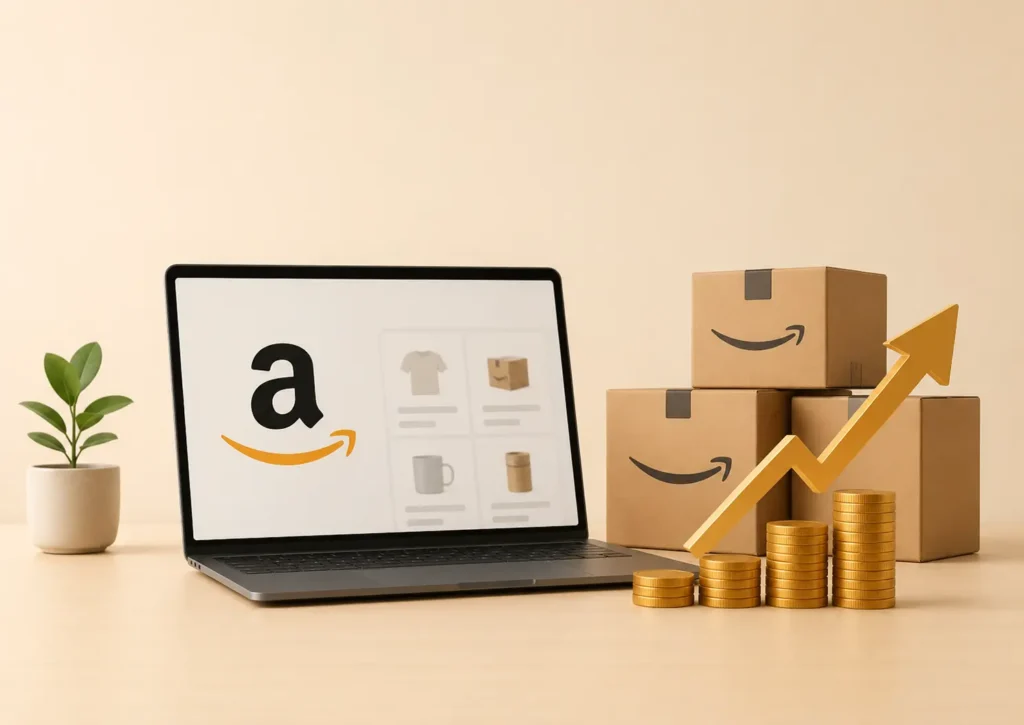
    Illustration showing Amazon seller earnings with an Amazon box, growth chart, coins, and the text "How Much Money Can Sellers Make on Amazon?" representing Amazon FBA profit, revenue, and business growth.

    Summary

    The truth? There isn’t one number that fits everyone.

    Some Amazon businesses generate a few thousand dollars a year. Others build multi-million-dollar brands. The opportunity is real. So is the competition.

    Your income depends on product demand, margins, advertising costs, fulfillment strategy, and how well you manage your business after launch.

    Throughout this guide, you’ll learn what the average Amazon seller income looks like, what kind of Amazon FBA income sellers actually keep after fees, common mistakes that eat into profits, and practical ways to increase sales without simply spending more on ads.

    Key Takeaways

    Amazon Can Be Profitable. But It's Not Passive.

    Many people think listing a product is enough. It isn’t. Successful sellers constantly optimize listings, monitor PPC campaigns, and improve conversions.

    Amazon FBA Profit Margin Matters More Than Revenue

    A seller making $300,000 a year with poor margins may earn less than someone selling half as much with efficient operations. Revenue looks exciting, but profit pays the bills.

    Growth Doesn't Happen Overnight

    Some products gain traction in weeks. Others need months of testing. Patience, data, and consistency usually win.

    Strategy Beats Guesswork

    We’ve seen brands double revenue simply by fixing listings and restructuring advertising. Same products, better decisions.

    Entity Overview

    Category: Amazon Selling Guide

    Primary Topic: Amazon Seller Income & Profitability

    Related Entities: Amazon Seller Central, Amazon FBA, Amazon PPC, Amazon SEO, Amazon Brand Registry, Amazon Advertising, Amazon Business Reports, Amazon Fees.

    How Much Can You Make Selling on Amazon?

    This is where expectations meet reality.

    Some new sellers expect to quit their jobs in six months. Others believe Amazon is already too crowded to make money. Neither is completely right.

    Amazon still creates opportunities every single day. But the platform has changed.Β 

    • Customers are smarter.Β 
    • Competition is tougher.Β 
    • Advertising costs more than it did a few years ago.

    Still, sellers continue building profitable businesses. Accordingly, the better question isn’t how much can you make selling on Amazon. It’s how well can you run your business once the sales start coming in?

    Take the case of two sellers launching nearly identical products.

    • The first focuses only on getting sales.Β 
    • Heavy discounts.Β 
    • Aggressive PPC.Β 
    • No real plan for profitability.

    The second spends time understanding customer demand.Β 

    • Improves the listing.Β 
    • Tests pricing.Β 
    • Watches advertising carefully.Β 
    • Makes small changes every week.

    Six months later, both have revenue. Only one has a healthy business.

    That’s something we see quite often observe. As a matter of fact, some of our fastest-growing clients weren’t selling the most products. They were protecting margins while improving conversion rates month after month.

    Generally, Amazon rewards consistency more than quick wins.

    Can I Make Money Selling on Amazon? Yes. But Here's What Most People Miss.

    The short answer? Yes. Thousands of sellers do. The better question though is, how they make money.

    Many beginners imagine that once a product goes live, sales simply happen. Reality looks different.

    • Inventory has to arrive on time.
    • Listings need optimization.
    • Reviews don’t appear overnight.
    • Advertising takes testing.
    • Sometimes a product doesn’t move at all. That happens too.

    A client came to us after spending nearly four months advertising a kitchen product. Sales looked decent and on the outside everything seemed fine. Then we looked deeper.

    • Clicks were expensive.
    • Conversion rates were average.
    • Storage fees kept increasing.
    • Profit? Almost gone.

    Instead of launching another product,Β 

    • We optimized the listing
    • Reduced wasted ad spend
    • Improved images
    • Tightened keyword targeting.

    Within a few months, the business wasn’t just generating more revenue. It was finally keeping more of it. That’s the part many new sellers overlook. Making sales isn’t the goal; keeping profit is.

    Accordingly, every decision should support long-term growth instead of chasing vanity metrics.

    How Much Do Amazon Sellers Make?

    There isn’t a universal paycheck waiting for Amazon sellers. Some businesses earn a few hundred dollars every month. Others generate tens of thousands. A smaller group builds brands worth millions.Β 

    The gap isn’t random. Several factors shape Amazon seller income, including:

    • Product category
    • Profit margins
    • Pricing strategy
    • Advertising efficiency
    • Inventory management
    • Customer reviewsΒ 
    • Seasonality, especially during peak season Amazon shopping events
    • Competition

    For example, a premium home organization brand may sell fewer units than a low-cost gadget seller. Yet the premium brand often earns significantly more profit per order.

    That’s why experienced sellers spend less time chasing revenue numbers and more time improving profitability.

    Above all, sustainable businesses focus on repeatable systems instead of short-term spikes.

    We’ve watched brands increase revenue by over 40% without launching additional products. The difference came from stronger listings, smarter PPC campaigns, and better inventory forecasting.

    Small improvements; big results. That’s usually how Amazon’s growth works.

    How Much Do New Amazon Sellers Make in Their First Year?

    Everyone wants a number. Unfortunately, Amazon doesn’t work that way.

    Some sellers make their first sale within days, others wait weeks, and a few spend months refining their listings before things finally click.

    Generally, new Amazon sellers earn anywhere from a few hundred dollars to several thousand dollars per month during their first year. A small percentage scale much faster, especially if they launch in the right niche with strong execution.

    Accordingly, success depends on more than just the product. Pricing, reviews, inventory planning, PPC management, and listing quality all play a role.

    We’ve seen sellers hit profitability within six months. We’ve also seen businesses spend an entire year fixing poor product research. The marketplace rewards preparation.

    Ready to Build a More Profitable Amazon Business?

    Discover data-driven strategies to improve your profit margins, optimize your listings, and scale your Amazon business with confidence.

    What's a Good Amazon FBA Profit Margin?

    Revenue gets the attention. Amazon FBA profit margin builds the business.

    Many first-time sellers celebrate a $50,000 sales month. Then they realize advertising, Amazon fees, shipping, returns, and storage have eaten most of the profit.

    That’s why experienced sellers track margins before revenue.

    As a general benchmark:

    Profit Margin What It Means
    Under 10% Difficult to scale sustainably
    10–20% Healthy for growing sellers
    20–30% Strong business with room to invest
    30%+ Excellent, though less common in competitive categories

    How Much Money Do Amazon Sellers Make Per Month?

    This is probably the most searched question online. How much do Amazon sellers make?

    The honest answer? It varies.

    Some sellers treat Amazon as a side business and earn an extra few hundred dollars each month. Others build full-time businesses generating five or even six figures in monthly revenue.

    Neither outcome is unusual.

    As a matter of fact, most sellers fall somewhere in the middle. They grow steadily, reinvest profits, and expand one product at a time.

    A typical journey looks something like this:

    • Months 1–3: Product launch, reviews, early PPC testing.
    • Months 4–6: Listings improve. Organic rankings begin climbing.
    • Months 7–12: Better margins, more repeat sales, smarter advertising.

    Growth rarely happens overnight. But when it does happen, it compounds.

    Do Amazon Sellers Make Money? It Depends on What They Measure.

    Ask ten sellers how business is going. Most will tell you their revenue. Fewer will mention profit.

    That’s where the story changes.

    Imagine two brands.

    Both generate $80,000 in monthly sales.

    One spends heavily on ads, carries excess inventory, and constantly discounts products.

    The other has optimized listings, lower advertising costs, and better inventory planning.

    Same revenue. Completely different business.

    That’s why Amazon seller income should never be judged by sales alone. Profit tells the real story.

    Accordingly, successful sellers monitor metrics like:

    • Net profit
    • Advertising Cost of Sales (ACoS)
    • Conversion rate
    • Inventory turnover
    • Customer Lifetime Value
    • Return rate

    Those numbers reveal whether a business is actually growing.

    Can You Make A Profitable Business on Amazon?

    Yes, thousands of brands already do.

    We’ve worked with sellers who doubled their revenue without launching another product.

    How?

    Small changes, big impact. That’s something many sellers underestimate.

    Amazon isn’t just about selling products; it’s about improving every step of the customer journey.

    Eventually, those improvements begin working together.

    • Higher rankings
    • Better conversion rates
    • Lower advertising costs
    • Stronger profits.

    That’s when growth starts feeling predictable instead of lucky.

    Expert Observation

    One of the biggest mistakes we see isn’t poor advertising. It’s chasing revenue while ignoring margins.

    A seller making $500,000 annually with weak profitability may earn less than another business generating half that revenue.

    Focus on building a profitable business first. Scaling becomes much easier afterward.

    Practical Example

    A home organization brand approached us after six months on Amazon. Sales looked healthy; profits didn’t.

    After reviewing the account, we found duplicate keywords, inefficient PPC campaigns, and underperforming product images.

    Nothing dramatic, just lots of small issues.

    Over the following months, we restructured campaigns, refreshed creatives, optimized listings, and tightened keyword targeting.

    Revenue increased and advertising efficiency improved.

    Most importantly, profit grew faster than sales. That’s the outcome every seller should aim for.

    How Much Profit Do Amazon Sellers Keep After Fees?

    This surprises many first-time sellers.

    A product sells for $40. That doesn’t mean you keep $40.

    • Amazon charges referral fees.Β 
    • FBA fees.Β 
    • Storage fees.Β 

    Advertising usually becomes the biggest expense after that. Then come shipping, returns, promotions, and software subscriptions.

    Accordingly, Amazon FBA income depends on what remains after every cost is paid.

    A healthy business doesn’t ask, “How much did we sell?” It asks, “How much did we actually keep?”

    We often see brands improve profitability without increasing sales. They simply reduce wasted spend and tighten operations. Sometimes, that’s enough.

    How Long Does It Take for an Amazon Seller to Become Profitable?

    There isn’t a fixed timeline. Some products become profitable within three to six months. Others take longer, especially in competitive categories.

    Several factors influence the journey:

    • Product demand
    • Launch strategy
    • Pricing
    • PPC efficiency
    • Customer reviews
    • Inventory planning

    If a seller enters a crowded niche with little differentiation, profitability usually takes longer.

    On the other hand, a well-researched product backed by strong branding often gains traction much faster.

    Patience matters. Consistency matters even more.

    How Much Does It Cost to Start Selling on Amazon?

    Another question we hear all the time. The answer depends on your business model.

    Some sellers begin with a few thousand dollars. Others invest significantly more to launch multiple SKUs, premium branding, and larger inventories.

    A typical starting budget includes:

    • Product sourcing
    • Inventory
    • Branding and packaging
    • Amazon selling plan
    • Product photography
    • Listing optimization
    • PPC launch campaigns

    The biggest mistake? Spending everything on inventory.

    Leave room for advertising and optimization. Otherwise, even a great product can struggle to get noticed.

    Which Amazon Business Model Makes the Most Money?

    Every model has strengths.Β 

    • Private Label continues to offer the greatest long-term earning potential because sellers build their own brand and control pricing.
    • Amazon Wholesale provides steady growth but often comes with tighter margins.
    • Online Arbitrage and Retail Arbitrage require less upfront investment, though scaling them can be difficult.
    • Print on Demand remains attractive for creative entrepreneurs but depends heavily on design quality and niche selection.

    There isn’t one perfect model. Choose the one that matches your budget, experience, and long-term goals.

    How to Make More Sales on Amazon Without Simply Spending More?

    Many sellers assume growth means increasing ad budgets. Not always.

    We’ve watched brands increase conversions by improving the customer experience instead.

    Sometimes the biggest opportunities hide inside the listing.

    For example:

    • Rewrite the title with stronger search intent.
    • Add lifestyle images.
    • Improve A+ Content.
    • Answer common customer questions.
    • Remove irrelevant PPC keywords.
    • Optimize pricing.
    • Monitor inventory before peak season Amazon demand.

    Small improvements stack up. Eventually, they become meaningful revenue gains.

    Common Mistakes That Reduce Amazon Seller Revenue

    Some mistakes appear again and again. Not because sellers aren’t working hard.

    Because they focus on the wrong things. Here are the most common ones we encounter:

    1. Chasing Revenue Instead of Profit: Growing sales means little if margins continue shrinking.

    2. Launching Without Research: Good ideas don’t always become successful products. Demand always comes first.

    3. Ignoring Listing Optimization: Even great products struggle with weak titles, poor images, or generic copy.

    4. Treating PPC as “Set and Forget”: Advertising changes every week. Winning campaigns evolve with it.

    5. Running Out of Inventory: Nothing hurts momentum faster than going out of stock during peak demand. Planning ahead matters.

    Ready to Build a More Profitable Amazon Business?

    Discover data-driven strategies to improve your profit margins, optimize your listings, and scale your Amazon business with confidence.

    Emerging Trends Shaping Amazon Seller Income

    Amazon looks different today than it did just a few years ago. AI is changing search behavior., and customers ask longer questions. They’re comparing products differently.

    Amazon increasingly rewards listings that explain benefits instead of repeating keywords.

    We’re also seeing:

    • Greater focus on customer experience.
    • Smarter advertising automation.
    • Better use of first-party data.
    • More emphasis on brand trust.
    • Stronger competition during seasonal events.

    The sellers adapting to these changes are growing faster than those relying on old tactics.

    Krolog's Perspective

    After managing Amazon accounts across multiple categories, one thing stands out.

    Growth is rarely the result of one big decision. It’s hundreds of small ones.

    Each improvement feels minor on its own. Together, they completely change the trajectory of a business. That’s how sustainable Amazon brands are built. Not overnight; one smart decision at a time.

    Final Verdict

    So, can you really make money selling on Amazon? Absolutely. But success isn’t guaranteed.

    The sellers earning consistent profits aren’t chasing shortcuts. They’re making informed decisions, improving every month, and treating Amazon like a real business.

    Whether you’re launching your first product or scaling an established catalog, understanding your Amazon seller income, protecting your Amazon FBA profit margin, and optimizing every stage of the customer journey will always matter more than simply generating revenue.

    At Krolog, we’ve helped brands turn slow-moving products into profitable businesses through data-backed strategies, Amazon SEO, listing optimization, and PPC management.

    The opportunity is still there. The question is whether you’re ready to build it.

    Frequently Asked Questions

    About the Author

    Sandeep K. is the Founder and CEO of Krolog Inc., with over 10 years of experience helping brands grow across Amazon and other ecommerce marketplaces.
    His expertise spans Amazon SEO, listing optimization, PPC management, catalog strategy, inventory planning, and marketplace expansion. Over the years, he has worked with startups, established brands, and global sellers to improve visibility, increase profitability, and achieve sustainable growth through data-driven strategies.

    Β 

    Ready to Grow Your Amazon Business?

    Knowing how much money you can make selling on Amazon is only the beginning.

    Building a profitable business takes the right strategy, consistent optimization, and continuous improvement.

    Whether you’re launching your first product, improving your Amazon FBA income, or looking to increase Amazon seller revenue, Krolog helps brands make smarter decisions backed by real marketplace data.

    Our team specializes in:

    Book a free Amazon growth consultation and discover practical opportunities to improve rankings, reduce wasted ad spend, and increase profitability.

    Related Article

    How Much Does a Shopify Store Cost in 2026? Agency vs Freelancer vs DIY Compared

    How Much Does a Shopify Store Cost in 2026? Agency vs Freelancer vs DIY Compared

    How Much Does a Shopify Store Cost in 2026? Agency vs Freelancer vs DIY Compared Building a Shopify store is…

    How Much Money Can Sellers Really Make on Amazon? The Numbers May Surprise You

    How Much Money Can Sellers Really Make on Amazon? The Numbers May Surprise You

    How Much Money Can Sellers Really Make on Amazon? The Numbers May Surprise You Can you really make money selling…

    Shopify vs WooCommerce for Amazon Sellers: The Complete 2026 Comparison Guide

    Shopify vs WooCommerce for Amazon Sellers: The Complete 2026 Comparison Guide

    Shopify vs WooCommerce for Amazon Sellers: The Complete 2026 Comparison Guide Most Amazon sellers eventually hit the same question. “What…

    Scroll to Top