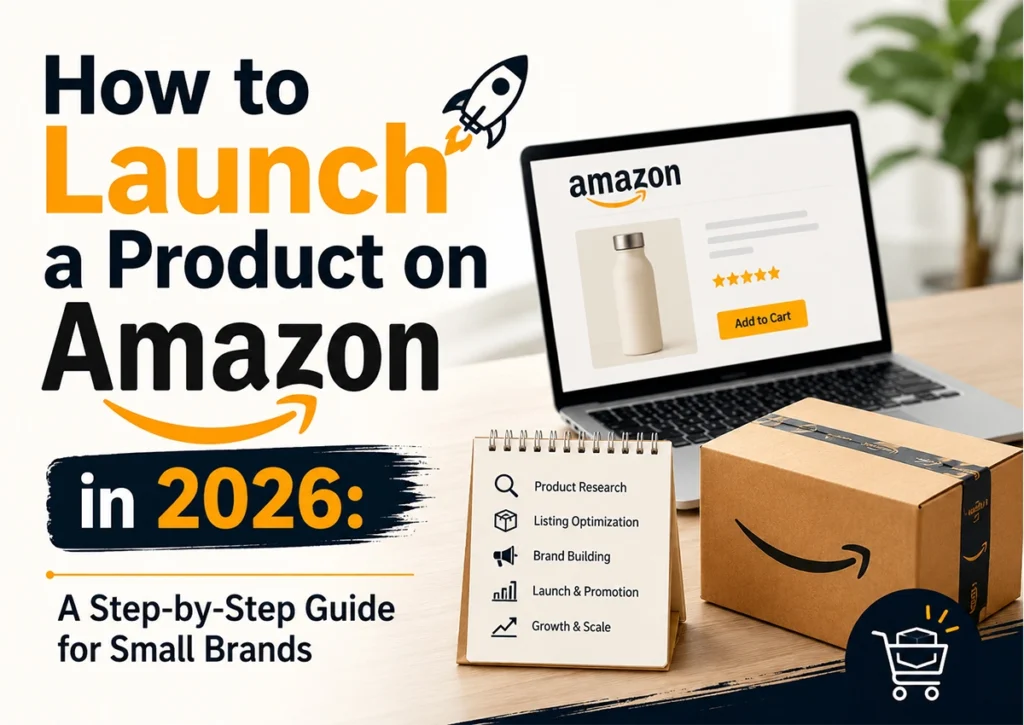
How to Launch a Product on Amazon in 2026: A Step-by-Step Guide for Small Brands
How to Launch a Product on Amazon in 2026: A Step-by-Step Guide for Small Brands Introduction A practical guide for…
A practical guide for small brands looking to launch products successfully on Amazon in 2026. Learn how to build an effective Amazon launch plan, optimize listings, manage inventory, avoid common mistakes, and scale with proven Amazon product launch strategies.
Β
Launching a product on Amazon in 2026 is a whole new ballgame. Successful brands combine keyword research, listing optimization, inventory planning, PPC campaigns, and review generation into a structured Amazon product launch strategy. Small businesses that follow a clear Amazon launch plan often reach profitability faster and build sustainable rankings.
Successful launches start weeks before inventory reaches Amazon.
Images, copy, and keyword optimization influence ranking and sales velocity.
Advertising supports organic growth during the launch phase.
Running out of stock early can destroy momentum.
Continuous optimization separates successful launches from failed ones.
An Amazon product launch is a strategic process of introducing a new product to the Amazon marketplace with the goal of building visibility, generating initial sales velocity, improving keyword rankings, and establishing long-term growth. A successful Amazon product launch combines listing optimization, advertising campaigns, inventory forecasting, promotional tactics, and post-launch performance monitoring to maximize both organic and paid growth opportunities.
Category Type: Ecommerce Growth Strategy
Related Entities: Amazon FBA, Amazon PPC, Amazon SEO, Product Listing Optimization, Brand Registry
Common Synonyms: Amazon launch plan, Amazon FBA product launch, Amazon product launch strategy
Key Metrics: Sales velocity, CTR, Conversion Rate, TACoS, Keyword Ranking
Amazon has become increasingly competitive. Simply listing a product is not enough to promise visibility.
A structured Amazon product launch strategy helps brands:
One mistake I frequently see among new sellers is spending heavily on PPC before optimizing the listing. Advertising can bring traffic, but weak images and poor copy prevent conversions.
Many failed launches are actually conversion problems disguised as traffic problems.
Before investing in inventory, validate demand and competition.
Evaluate:
Build a conversion-focused listing with:
Forecast stock carefully. Avoid:
Launch campaigns across:
Monitor:
Β
For most first-time sellers, an Amazon FBA product launch provides operational advantages.
For small brands, FBA generally creates stronger momentum during the launch period.
Before going live, ensure you have:
Modern launches require both paid and organic growth.
Growing brands often work with:
Best for: Tight budgets
Limitation: Narrow skill sets
Best for: Strategic guidance
Limitation: Limited execution support
Best for: Scaling brands
Services include:
Companies like Krolog provide end-to-end support, helping brands manage launches, advertising, and profitability while reducing common operational mistakes.
Small businesses do not always need enterprise-level support.
Start with:
Scale gradually as data becomes available.
When evaluating agencies, prioritize:
Good consultants help with:
The best consultants focus on profitability and not just chase vanity metrics.
Private-label brands benefit most from agencies or consultants that offer:
We evaluate launch strategies based on:
Sandeep K., Founder and CEO of Krolog Inc., is an experienced Amazon and ecommerce specialist with expertise in marketplace growth, PPC management, profitability analysis, and inventory forecasting. Over the years, he has helped brands build scalable systems that support long-term success across Amazon and other ecommerce channels.
Request a launch audit to uncover listing gaps, PPC opportunities, inventory risks, and growth potential.
Request an Audit
Learning how to launch a new product on Amazon successfully requires more than advertising. Winning brands align listings, inventory, PPC, and customer experience into one coordinated strategy.
For many small businesses, working with experienced Amazon Product Launch Services such as Krolog helps accelerate growth while avoiding costly mistakes.
Β
Costs vary depending on inventory, advertising, and category competition. Many small brands spend between $2,000 and $10,000 on their first launch.
Look for healthy demand, manageable competition, strong margins, and differentiation opportunities.
Starting with a single SKU and a modest inventory order helps reduce upfront risk.
Not necessarily. However, experienced consultants or agencies can shorten the learning curve and reduce expensive mistakes.
Avoid peak season congestion unless your product is seasonal. Many brands prefer launching several months before major shopping events.
Generally, no. Focus on one product first and establish stable rankings before expanding.
For most new sellers, FBA offers better scalability and Prime eligibility.
Plan for approximately 60β90 days of stock based on expected sales velocity and supplier lead times.
How to Launch a Product on Amazon in 2026: A Step-by-Step Guide for Small Brands Introduction A practical guide for…
What Is a Good ACoS for a Small Business on Amazon FBA, and How Do You Improve It? Introduction A…
What Are the Best Strategies for Increasing Sales During Amazon Prime Day for Sellers ? Introduction For many brands, Amazon…
If youβre looking for expert-led Amazon advertising strategies, a performance-focused Amazon PPC strategy, and real growth, get in touch with us at Krolog, where Amazon experts will help you build a winning Amazon advertising system tailored to your business.
Krolog was born from a simple yet powerful idea: to empower businesses with the tools and strategies needed to thrive in the ever-evolving digital marketplace. Our journey is a testament to the transformative impact of strategic E-commerce solutions.


Copyright Β© 2026 All Right ReservedΒ