• Tips and Tricks for Amazon FBA Labeling

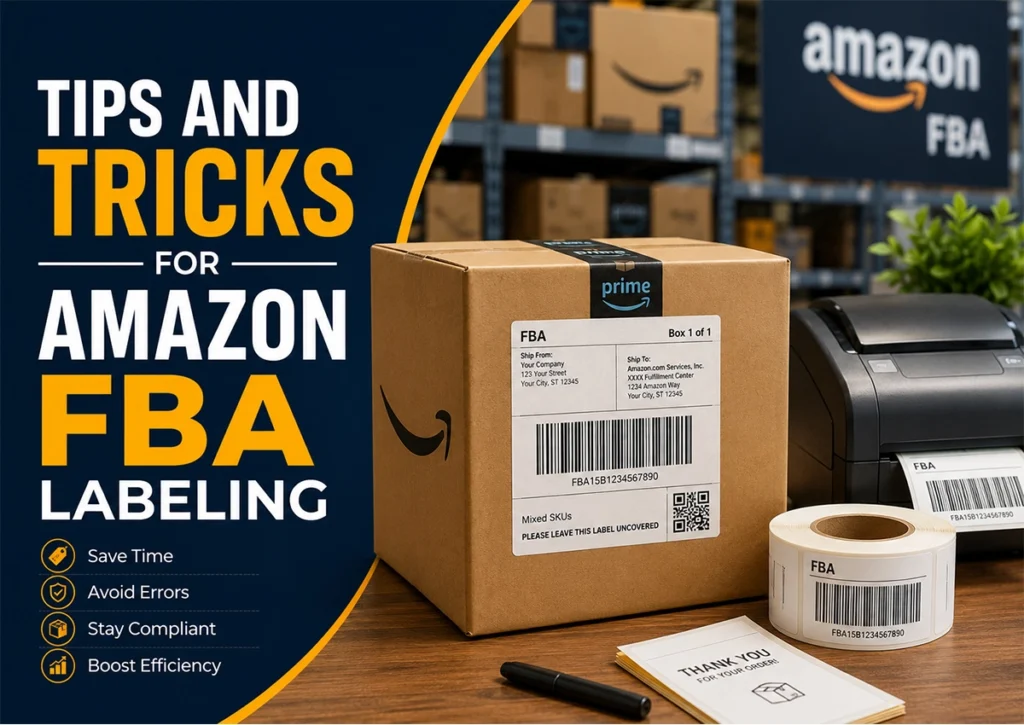
    Amazon FBA labeling guide showing a labeled shipping box, barcode labels, thermal printer, and warehouse setup with tips for accurate Amazon FBA product labeling and compliance.

    Introduction

    To many Amazon sellers, labeling seems like an easy operational task. But experienced sellers know that labeling mistakes cause shipment delays and problems with Amazon receiving inventory, stranded inventory, and additional Amazon fees.

    Whether you’re scaling an entire catalog or launching your first product, understanding Amazon FBA labeling saves your time and money. In fact, one sticky barcode can cost you the entire fulfillment process.

    Considering Amazon’s strict compliance policies, sellers need to treat labeling as an integral part of inventory management. Labeling FBA inventory also helps operational efficiency and account health in the long-run.

    As Amazon continues to tighten compliance standards, sellers must treat labeling as an essential part of inventory management rather than an afterthought. Accordingly, mastering Amazon FBA labels helps improve operational efficiency, maintain account health, and support long-term growth.

    Β 

    What Are Amazon FBA Labels?

    Amazon FBA labels are scannable barcodes that Amazon fulfillment centers use to identify and track the inventory throughout the fulfillment process.
    Every unit that is sent to Amazon needs to have one of the following:

    • Amazon barcode (FNSKU)
    • Manufacturer barcode (in approved cases)
    • Stickerless commingled inventory program

    Most sellers use Amazon’s FNSKU labels because they improve inventory control and reduce the risk of inventory mixing.

    Amazon Label Requirements for Sellers

    As per Amazon’s requirement, labels must be:

    • Easily scannable.
    • 1″ x 2″ at a minimum.
    • Printed in a high-contrast, black-on-white color scheme.
    • Cover all existing competing barcodes.
    • Remain intact during the entire shipping and storage process.

    Amazon may impose relabeling fees and shipment delays for labels that do not comply.

    Key Observation

    One of the biggest issues encountered by sellers is that they place labels on the seams of the packaging or on a curved surface. While the labels may be easily seen, the scanners in the fulfillment center may not be able to read them accurately.

    How to properly label products for Amazon FBA shipment?

    Step 1: Generate Your Amazon FBA Label

    • Log in to Seller Central
    • Create a Shipment
    • Select Products
    • Download FNSKU labels
    • Follow all of the formatting guidelines for Amazon and print the labels.

    Step 2: Use Quality Printing Equipment

    Thermal printers typically provide better durability and barcode clarity.
    The best label printer for Amazon FBA often depends on shipment volume, but Zebra and Rollo printers remain popular choices among professional sellers.

    Step 3: Place the Label Correctly

    Place the label:

    • On a flat surface
    • Away from package edges
    • Away from corners
    • Over existing barcodes if required

    Step 4: Scan Your Label

    Labeling Products for an Amazon FBA Shipment requires that the labels be clear barcodes. Before shipment, scan a sample of the units.

    Amazon FBA Labeling Tips & Tricks

    Experienced marketers adhere to these principles and methods, which include:

    • Print labels using thermal printers whenever possible.
    • Avoid glossy label paper that may create scan issues.
    • Double-check barcode placement before shipping.
    • Keep backup copies of shipment labels.
    • Audit inventory before dispatch.
    • Use inventory preparation checklists during peak periods.

    These methods reduce errors in Amazon FBA labeling for less experienced sellers.

    What Software Tools Help Create Amazon FBA-Compliant Labels?

    Technology has made Amazon labeling easier than it was previously, with some available options:

    • Amazon Seller Central: Amazon’s built-in label generator is the most commonly used tool.
    • InventoryLab: This tool enables inventory tracking and the creation of compliant labels.
    • ScanPower: This is an inventory and warehouse management solution used primarily by larger sellers.
    • SellerCloud: This tool integrates inventory management, shipping, and label creation.
    • ShipStation: This tool is mainly for sellers using multiple fulfillment channels.

    Depending on your operational needs and the complexity of your warehouse and shipment volume, this list of tools varies.

    What Are the Best Services for Amazon FBA Labeling Fulfillment?

    Not every seller wants to handle labeling internally.
    Fortunately, there are several options.

    1. Amazon FBA Label Service: This service provides labeling by Amazon’s fulfillment center staff, an option that reduces the workforce but increases fulfillment expense.

    2. Third Party Prep Centers: These prep centers commonly provide the following services:

    3. Third Party Prep Centers: These prep centers commonly provide the following services:

    • Labeling
    • Packaging
    • Inspection
    • Bundling
    • Shipment preparation

    A quality FBA Label Service Provider can help grow a brand and prepare it for high demand.

    4. In-House Labeling: Maintaining an internal labeling service can be cost-effective for high-volume sellers.

    The right choice depends on volume, labor availability, and profitability goals.

    What is Stickerless Commingled Inventory?

    Stickerless commingled inventory allows Amazon to pool identical products from multiple sellers using manufacturer barcodes instead of individual FNSKU labels.


    This method eliminates labeling, but comes with risks.

    • Mixing inventory
    • Quality Control Concerns
    • Higher Risk of Counterfeit
    • Less Visibility
    • Less Control of Inventory

    For private label brands, FNSKU labeling provides better control and protection of inventory.

    What is Amazon FBA Private Labeling And Why It Matters?

    Amazon FBA private labeling is the process of sourcing a product, branding it under your own business name, and selling it through Amazon’s fulfillment network.
    For private label sellers, proper Amazon FBA private labeling extends beyond packaging design.
    Labels support:

    • Brand protection
    • Inventory accuracy
    • Customer trust
    • Operational efficiency

    As competition increases, accurate inventory management becomes a competitive advantage.

    Common Amazon Labeling Mistakes Sellers Should Avoid

    • Ignoring Barcode Conflicts: Multiple visible barcodes often create receiving errors.
    • Using Low-Quality Amazon FBA Stickers: Poor print quality can reduce scan accuracy.
    • Incorrect Label Placement: Barcodes placed over seams, curves, or package edges frequently create issues.
    • Rushing During Peak Season: During Amazon’s peak season periods, shipment volume increases dramatically. Consequently, labeling errors often multiply when sellers rush inventory preparation.

    How Krolog Helps Sellers Improve Amazon Operations

    Labeling may seem like a small part of the Amazon journey, but operational efficiency often separates growing brands from struggling sellers.

    At Krolog, we help brands optimize every stage of their Amazon business, from inventory preparation and listing optimization to PPC management, account health, and growth strategy. By identifying inefficiencies early and implementing scalable systems, sellers can avoid costly fulfillment issues and focus on profitable growth.

    Final Thoughts

    Amazon FBA success depends on attention to detail, and labeling remains one of the most overlooked areas of inventory management.

    Proper Amazon labelling, barcode compliance, and inventory preparation reduce receiving issues, improve operational efficiency, and support long-term scalability.
    Whether you’re managing a single SKU or a large private-label catalog, investing time in understanding Amazon FBA labeling requirements can prevent costly mistakes and improve overall business performance.

    Above all, successful Amazon FBA operations rely on consistent processes, accurate labeling, and proactive inventory management. Even small labeling errors can lead to delays, additional fees, and fulfillment disruptions.
    By implementing compliant labeling practices and regularly auditing your inventory preparation process, you can keep products moving smoothly through Amazon’s fulfillment network.

    For sellers looking to simplify operations and minimize costly mistakes, Krolog provides expert guidance to help ensure compliant labeling, streamlined workflows, and hassle-free Amazon growth.

    Β 

    FAQ: Frequently Asked Questions

    You can generate Amazon FBA labels directly through Seller Central when creating a shipment. Amazon provides downloadable FNSKU barcode labels that can be printed using standard or thermal label printers.

    Amazon FBA private label refers to selling products under your own brand while using Amazon’s fulfillment network to store, pack, and ship inventory.

    For many sellers, private labeling offers greater control over branding, pricing, and margins. However, success depends on product selection, differentiation, and effective marketing.

    Amazon FNSKU labels are typically printed at approximately 1″ x 2″, although sellers may use larger labels provided the barcode remains clear, scannable, and compliant with Amazon requirements.

    Related Article

    Tips and Tricks for Amazon FBA Labeling

    Tips and Tricks for Amazon FBA Labeling

    Tips and Tricks for Amazon FBA Labeling Introduction To many Amazon sellers, labeling seems like an easy operational task. But…

    Amazon Announces Prime Day 2026 Dates: Four-Day Shopping Event Set for June 23–26

    Amazon Announces Prime Day 2026 Dates: Four-Day Shopping Event Set for June 23–26

    Amazon Announces Prime Day 2026 Dates: Four-Day Shopping Event Set for June 23–26 Introduction Amazon has officially announced the dates…

    How Amazon Logistics Works: A Complete Guide to Its Benefits

    How Amazon Logistics Works: A Complete Guide to Its Benefits

    How Amazon Logistics Works: A Complete Guide to Its Benefits Introduction Amazon has transformed modern eCommerce not only through its…

    Ready to Scale Your Amazon Brand?

    If you’re looking for expert-led Amazon advertising strategies, a performance-focused Amazon PPC strategy, and real growth, get in touch with us at Krolog, where Amazon experts will help you build a winning Amazon advertising system tailored to your business.

    Scroll to Top