
Amazon Store Optimization: A 2026 Checklist for Sellers
Amazon Store Optimization: A 2026 Checklist for Sellers Your Amazon listing gets the click. Your store decides whether shoppers keep…
Running Amazon ads isn’t the hard part. Running profitable Amazon ads is.
We’ve audited accounts spending $500 a month and accounts spending $50,000 a month. Surprisingly, the problems are usually the same: wasted spend, duplicate keywords, loose campaign structure, and ACoS climbing for no obvious reason.
That’s exactly where an Amazon PPC audit comes in. It tells you what’s working, what’s leaking budget, and what needs fixing before you increase ad spend.
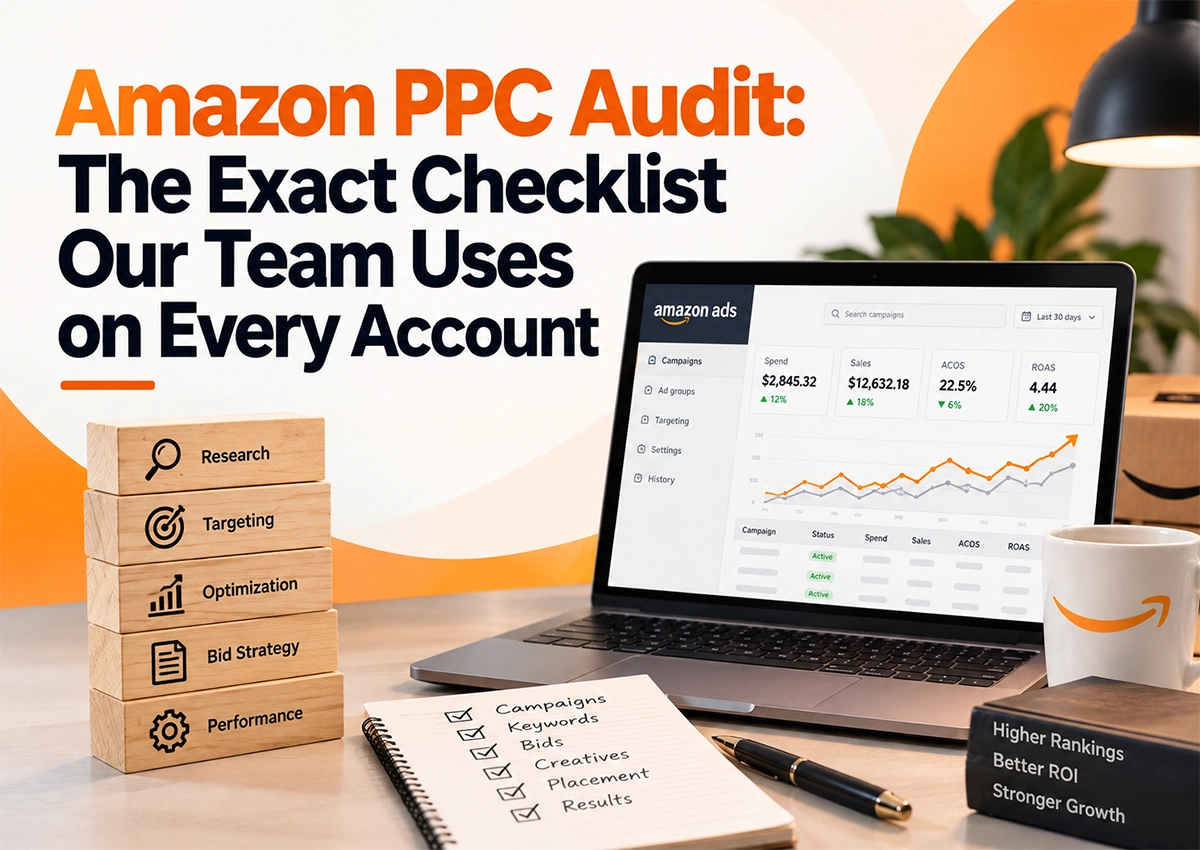
In this guide, we’re sharing the exact Amazon PPC audit checklist our team uses on every account. From Amazon PPC keyword research and negative keyword analysis to bid optimization and campaign structure, this is the framework we use to improve performance without guessing.
An Amazon PPC audit is a complete review of your advertising account, campaigns, keywords, bids, search terms, targeting, and ACoS performance.
Instead of looking only at spend or sales, a proper Amazon PPC account audit identifies wasted budget, uncovers profitable keywords, improves campaign structure, and creates a roadmap for better Amazon PPC optimization.
Whether you’re launching a new product or scaling an existing catalog, regular audits help keep campaigns profitable and easier to scale.
The biggest savings often come from fixing existing campaigns, not launching new ones.
A clean Amazon PPC campaign structure makes optimization easier and improves keyword control.
Adding Amazon PPC negative keywords prevents ads from showing for irrelevant searches.
The best-performing accounts are audited regularly, not only when ACoS increases.
An Amazon PPC audit is a health check for your advertising account.
Think of it like opening Seller Central and asking one simple question: Where is my ad budget actually going?
A good audit looks beyond impressions and clicks. It checks campaign structure, keyword targeting, bids, placements, search terms, and conversion performance together. Accordingly, you get a clearer picture of what’s driving profitable sales and what’s simply spending money.
In 2026, this matters even more. Amazon’s advertising ecosystem is getting more competitive, CPCs continue to fluctuate, and AI-driven shopping behavior is changing how products are discovered. As a result, campaigns that worked six months ago may already need optimization.
At Krolog, one pattern shows up in almost every Amazon PPC campaign audit. Sellers often increase budgets when sales drop. However, budget isn’t usually the problem. Campaign structure and keyword quality are.
Every account looks different.Β
The checklist doesn’t change much, though.
Before touching bids or budgets, we audit the foundation. Accordingly, this Amazon PPC audit checklist helps us spot wasted spend before making optimization decisions.
A messy campaign structure makes optimization harder than it needs to be. We usually start by checking whether campaigns are separated by targeting type instead of mixing everything.
A healthy Amazon PPC campaign structure includes:
If exact, phrase, and broad keywords live inside one campaign, optimization becomes confusing. Split them; it gives you cleaner data and better bid control.
Keywords drive the account. Bad keywords drain it.
An Amazon PPC keyword audit looks at every keyword and asks three questions:
Keep scaling keywords with profitable conversions. Pause or reduce bids on keywords spending consistently without results.
One thing we notice often is that sellers keep adding new keywords every week but never clean old ones. Campaigns slowly become crowded, and performance gets harder to read.
This isn’t just our checklist on paper. It’s the same audit framework we used for Cantoo City, a Canadian art supplies brand whose Amazon ads were underperforming before partnering with Krolog.
We started with a complete Amazon PPC account audit, reviewing:
From there, we restructured campaigns by intent, refined keyword targeting, added negative keywords, and continuously optimized bids based on performance data.
The result was a stronger, more efficient advertising account that helped the brand achieve:
Keywords and search terms aren’t the same.
Keywords are what you target. Search terms are what customers actually typed.
That’s why Amazon PPC search term analysis is one of the highest-impact parts of every audit.
| Search Term Pattern | Audit Action |
|---|---|
| High spend, zero sales. | Add as a negative keyword. |
| High conversions, low bid. | Increase bid gradually. |
| Relevant long-tail search term. | Move into an exact-match campaign. |
| Irrelevant customer searches. | Block through negative keywords. |
A good search term report usually reveals opportunities you never targeted directly.
If there’s one step sellers skip the most, it’s Amazon PPC negative keywords.
Negative keywords stop Amazon from showing ads for searches that don’t convert.
Negative keywords on Amazon are search terms you tell Amazon not to target.
For example, if you’re selling premium leather sneaker cleaner, searches for kids shoe polish or boot repair kit may be irrelevant. Blocking them prevents wasted clicks.
During every Amazon PPC campaign audit, we review:
This process usually reduces wasted spend before increasing budgets.
Some accounts have hundreds of dollars spent on irrelevant searches because no one reviews search term reports regularly. Adding the right negative keywords often improves ACoS faster than changing bids.
Once campaigns and keywords are clean, it’s time to optimize bids.
This is where most sellers go wrong. They either increase every bid or reduce everything after ACoS goes up. Neither works.
We review bids based on performance, not guesswork.
The goal isn’t the lowest CPC but profitable visibility.
Amazon PPC ACoS tells you how much you’re spending to generate sales. A useful metric, but never read it alone.
Look at ACoS together with:
A high ACoS keyword may still deserve budget if it’s driving strong organic rankings or profitable lifetime value. Context matters.
We’ve seen sellers pause keywords simply because ACoS looked high for a few days. A better approach is reviewing search term quality and conversion history before making changes.
A thorough PPC audit can uncover wasted spend, weak keywords, inefficient bids, and campaign gaps. Use the right checklist to turn your Amazon ads into a more efficient growth channel.
Even experienced advertisers miss these during an Amazon PPC account audit.
campaigns aligned with current performance and market trends.
| Audit Area | What We Review |
|---|---|
| Campaign Structure | Auto, manual, product targeting, match types. |
| Keyword Audit | High-performing, low-performing, duplicate keywords. |
| Search Term Analysis | Winning search terms, wasted spend, negative keyword opportunities. |
| Bid Optimization | CPC, CTR, conversion rate, placement adjustments. |
| Performance Analysis | ACoS, ROAS, spend, sales, campaign profitability. |
A successful Amazon PPC audit isn’t a one-time exercise. It’s a repeatable process that helps sellers reduce wasted spend, improve targeting, and scale campaigns with confidence.
Our Amazon PPC audit checklist starts with campaign structure, moves into keyword and search term analysis, adds Amazon PPC negative keywords, and finishes with bid optimization and performance analysis. That’s how campaigns become easier to manage and more profitable over time.
At Krolog, every Amazon PPC campaign management strategy begins with a detailed audit before budgets are scaled. Better decisions come from better data, not bigger ad spend.
An Amazon PPC audit is a complete review of your advertising account, including campaign structure, keywords, bids, targeting, search terms, ACoS, and overall performance
For active sellers, a monthly Amazon PPC account audit helps identify wasted spend, keyword opportunities, and campaign optimization areas before performance declines
A complete Amazon PPC audit checklist covers campaign structure, keyword performance, search term analysis, negative keywords, bid optimization, targeting, placements, and ACoS review.
Amazon PPC negative keywords prevent your ads from appearing for irrelevant customer searches, helping reduce wasted clicks and improve campaign efficiency.
Review your Search Term Report regularly. Search queries with high clicks, high spend, and no conversions are often strong candidates for Amazon negative keywords.
A clean Amazon PPC campaign structure separates auto, manual, keyword, and product-targeting campaigns, making optimization and reporting much easier.
There's no universal target. A good Amazon PPC ACoS depends on your product margins, launch stage, and profitability goals. Always evaluate it alongside conversion rate and total sales.
When learning how to edit Amazon advertising campaign settings, make gradual changes to bids, budgets, keywords, or targeting instead of editing multiple variables at once. This makes performance changes easier to measure.
Sandeep K., Founder & CEO, Krolog Inc.
Sandeep has over 10 years of experience helping brands improve Amazon PPC, SEO, listing optimization, inventory strategy, and marketplace growth across the US and Canada.
If your campaigns are spending more but growing less, it’s probably time for an Amazon PPC audit.
Krolog helps brands uncover wasted spend, optimize keyword targeting, improve ACoS, and build scalable Amazon PPC management strategies that drive profitable growth.
Request a free Amazon PPC audit and discover where your account can save budget and generate more sales.
Amazon Store Optimization: A 2026 Checklist for Sellers Your Amazon listing gets the click. Your store decides whether shoppers keep…
Amazon Product Ranking Guide: How to Improve Visibility & Sales in 2026 Getting your product on Amazon is easy. Getting…
Amazon PPC Audit: The Exact Checklist Our Team Uses on Every Account Running Amazon ads isn’t the hard part. Running…
Krolog was born from a simple yet powerful idea: to empower businesses with the tools and strategies needed to thrive in the ever-evolving digital marketplace. Our journey is a testament to the transformative impact of strategic E-commerce solutions.


Copyright Β© 2026 All Right ReservedΒ