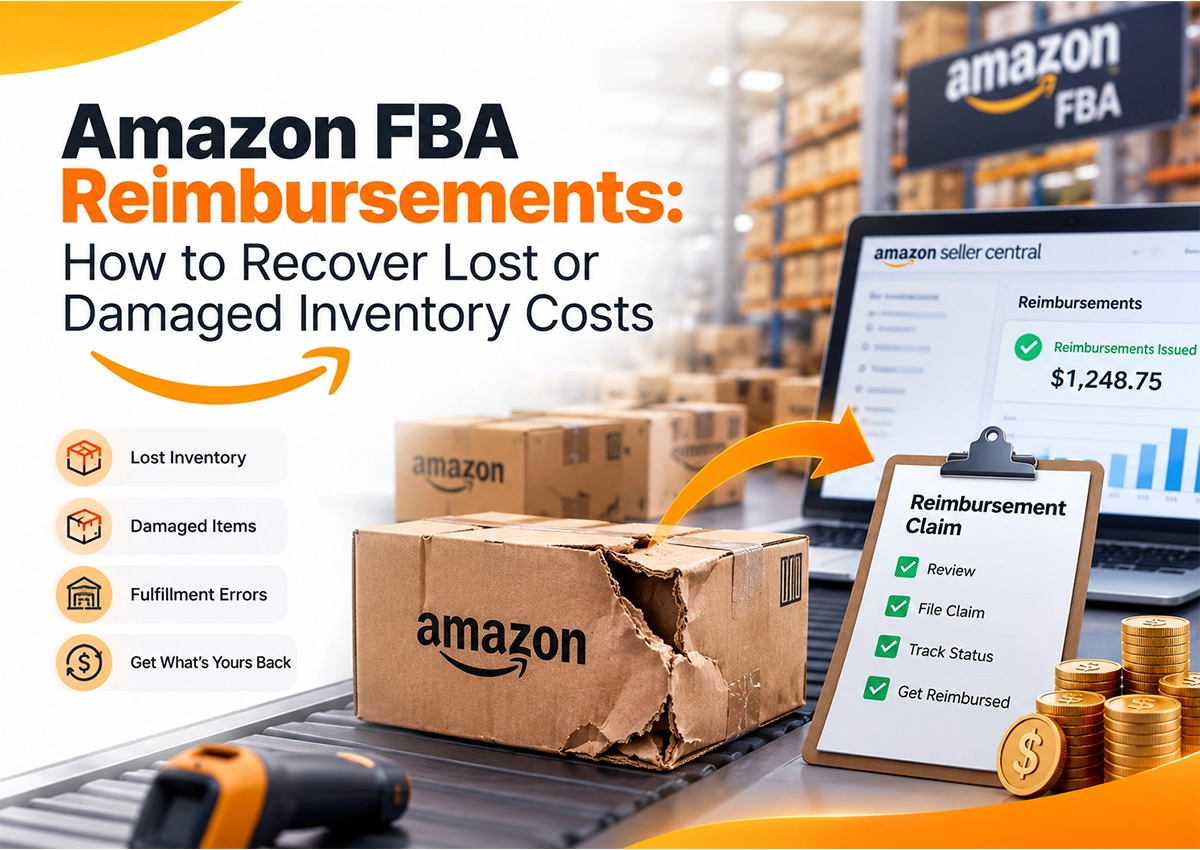
Amazon FBA Reimbursements: How to Recover Lost or Damaged Inventory Costs in 2026
Amazon FBA Reimbursements: How to Recover Lost or Damaged Inventory Costs in 2026 Inventory goes missing on Amazon more often…
Inventory goes missing on Amazon more often than most sellers realize.
A shipment arrives short. A returned item never reaches your inventory. A product gets damaged inside a fulfillment center. Small losses, maybe. Until they start adding up.
That’s where Amazon FBA reimbursements come in. They help sellers recover money for the inventory Amazon loses, damages, or mishandles.Β
In 2026, understanding Amazon’s reimbursement process isn’t optional anymore. It’s part of protecting your margins.
This guide explains what qualifies for reimbursement, how claims work, recent policy changes, and how sellers can recover money they’re often leaving behind.
Amazon FBA reimbursements help sellers recover eligible costs when inventory is lost, damaged, destroyed, or mishandled while it’s under Amazon’s responsibility. However, not every reimbursement is issued automatically.
Today’s reimbursement process requires better documentation, regular account audits, and timely claims. Sellers who actively monitor reimbursement reports often recover revenue that would otherwise be written off as inventory shrinkage.
Missing inventory often turns into missed profit if reimbursement opportunities aren’t tracked.
Many reimbursement cases still require sellers to identify discrepancies and submit supporting claims.
Manufacturing costs, shipment records, and inventory reports help support eligible reimbursement claims.
Routine reimbursement reviews help uncover inventory losses, fee errors, and unresolved return issues before claim windows expire.
Think of Amazon FBA reimbursements as money your business has already earned but hasn’t received yet.
If Amazon is responsible, sellers may qualify for an Amazon reimbursement.
The catch? Many sellers assume Amazon catches every error automatically; it doesn’t.Β
While Amazon now issues proactive reimbursements for several warehouse-related losses, many shipment discrepancies, return issues, removal orders, and valuation disputes still require manual review and a valid Amazon reimbursement claim.
That’s exactly why Amazon reimbursement services have become an important part of FBA account management in 2026.
One pattern we repeatedly see at Krolog is sellers focusing on PPC, listings, and rankings while ignoring reimbursement reports. Meanwhile, recoverable revenue quietly sits inside Seller Central for weeks or even months.
Imagine you ship 300 cutting boards to Amazon.
Amazon receives only 296 units. Four units never appear in inventory. No automatic reimbursement arrives.
If nobody checks the shipment discrepancy within Amazon’s claim window, that inventory loss becomes permanent. A simple reimbursement audit could have recovered that amount.
Amazon doesn’t intentionally keep your money. But it also doesnβt always hand it back unless you claim it.
Every month, Seller Central records inventory discrepancies across shipments, returns, warehouse transfers, removals, and damaged inventory. Some reimbursements happen automatically. Others quietly expire because no one files a claim within the eligibility window.
We’ve seen brands lose hundreds of dollars. We’ve also seen seven-figure sellers recover thousands through a simple reimbursement audit.
The difference wasn’t sales volume; it was visibility. The sellers recovering money weren’t selling more products; they were watching the right reports.Β
Sellers usually miss reimbursements because they assume Amazon has already reconciled everything, which is rarely the case.
Amazon automatically reimburses many inventory losses inside fulfillment centers. However, shipment discrepancies, damaged returns, removal order issues, disposal mistakes, and valuation disputes may still require manual investigation or seller action.
Seller Central already tells you when something doesn’t add up. The problem? Most sellers never look.
Inventory Ledger, Reimbursements, Returns, and Shipment reports often show missing units, damaged inventory, or receiving discrepancies. If you don’t review them regularly, those issues stay unnoticed until the reimbursement claim window closes and money gets left behind.
Since Amazon updated its reimbursement policy, sellers have much shorter windows to file eligible claims. Lost or damaged inventory claims must be submitted within 60 days, customer return claims between 45β105 days, and removal-related claims have their own eligibility windows depending on whether inventory was lost or damaged. Missing these deadlines can mean permanently losing reimbursement eligibility.
At Krolog, reimbursement audits often uncover issues sellers never noticed because they were focused on PPC performance, listing optimization, or inventory forecasting.Β
Meanwhile, recoverable revenue stayed buried inside operational reports.
Let our Amazon experts identify missed reimbursement opportunities and help you recover eligible funds.
Not every reimbursement looks the same. Understanding each Amazon reimbursement type helps sellers know where money is slipping through the cracks.
Let’s break down the most common reimbursement claims.
This is one of the most frequent Amazon FBA reimbursement cases.
Imagine shipping 500 units to Amazon. Seller Central shows only 492 received. Those missing eight units may qualify for reimbursement if Amazon cannot locate them after investigation.
Watch for:
Products don’t always leave fulfillment centers in sellable condition. Items may be damaged while being stored, picked, packed, or transferred between warehouses. If Amazon is responsible, sellers can file an Amazon reimbursement claim for eligible units. Common examples include:
Returns create one of the biggest reimbursement gaps.
Customers receive refunds, but sometimes inventory never returns, or comes back damaged and isn’t properly reimbursed.
Many sellers never compare customer return reports against inventory adjustments, leaving reimbursement opportunities untouched.
Return reimbursement audits regularly reveal inventory marked “customer damaged” even when Amazon accepted responsibility. Those cases deserve another look before the claim window expires.
Β
Amazon’s receiving process isn’t perfect. Boxes arrive, and sometimes quantities don’t match shipment plans, as inventory may get misplaced during receiving.
If shipped quantities differ from received quantities after Amazon completes reconciliation, sellers may qualify for a reimbursement claim Amazon supports through shipment investigation.
Filing an Amazon reimbursement claim isn’t just about opening a case in Seller Central. Timing matters just as much as documentation. Amazon allows different claim windows for different reimbursement scenarios, so knowing the deadline is the first step toward recovering eligible inventory costs.
Before submitting a claim, make sure your inventory issue falls within Amazon’s eligibility window. Missing these deadlines can mean losing reimbursement eligibility altogether.
| Amazon Reimbursement Type | Claim Window |
|---|---|
| Lost or damaged inventory | Within 60 days after Amazon reports the item as lost or damaged. |
| Customer returns reimbursement | 45β105 days after the customer refund or replacement date. |
| Lost removal orders | 15β135 days from the removal shipment creation date. |
| Damaged removal orders | Within 120 days from the removal shipment delivery date. |
| Re-evaluation requests | Within 90 days of Amazon’s initial reimbursement decision. |
These timelines apply to most Amazon FBA reimbursement scenarios under Amazon’s current reimbursement policy, making regular inventory audits even more important for FBA sellers.
Filing an Amazon reimbursement claim is straightforward when you follow the right process. The key is to identify the inventory issue early, gather supporting documents, submit the claim within Amazon’s eligibility window, and monitor the case until it’s resolved. A structured approach helps reduce delays and improves the chances of recovering eligible Amazon FBA reimbursements.
Review Inventory Ledger, FBA Inventory Adjustments, Received Inventory, Customer Returns, and Reimbursements reports to identify discrepancies.
Keep shipment IDs, proof of delivery, invoices, manufacturing costs, removal records, and inventory reports ready before submitting a claim.
Open a case through Seller Central with clear evidence, shipment details, affected ASINs, quantities, and the reimbursement amount requested.
Don’t stop after submission.
Monitor reimbursement cases until Amazon approves, denies, or requests additional documentation. Sellers often recover claims after providing missing supporting records.
Create a weekly reimbursement review alongside PPC and inventory checks. A 20-minute audit can identify missing inventory before reimbursement windows expire, and that’s often easier than recovering expired claims later.
Amazon quietly changed one of the biggest reimbursement rules in 2025. Before that, reimbursements were often calculated using the product’s selling price. Today, Amazon primarily uses the manufacturing cost of the item when calculating eligible Amazon FBA reimbursements.
That’s a big shift. Especially for private-label brands with healthy margins.
If you don’t provide manufacturing cost information, Amazon may estimate it, and those estimates aren’t always in the seller’s favor.Β
That’s exactly why reimbursement management looks very different in 2026.
The takeaway is simple: Better documentation usually leads to better reimbursement accuracy.
This completely depends on how often you’re auditing your account.
A seller with five SKUs may be able to manage reimbursements manually.Β
A brand with hundreds of SKUs across multiple fulfillment centers? Outsourcing reimbursement services is usually the smarter option for them.Β
An Amazon reimbursement service continuously reviews inventory reports, shipment discrepancies, returns, removals, and reimbursement history to identify missed opportunities before claim deadlines expire.
Instead of checking reports one by one, sellers get a structured reimbursement audit and claim tracking process.
At Krolog, reimbursement reviews are part of Amazon account management, and not a separate task. Every inventory discrepancy is checked alongside shipment reports, returns, and reimbursement history because missed reimbursements directly affect profit margins.
Let our Amazon experts identify missed reimbursement opportunities and help you recover eligible funds.
The best Amazon reimbursement service isn’t necessarily the one that files the most claims. It’s the one that finds the claims sellers never knew existed.
A reliable Amazon reimbursement specialist should help sellers:
More importantly, the process shouldn’t stop after submitting a claim. Claims need tracking, follow-ups, and documentation whenever Amazon requests additional evidence.
Not completely; an Amazon reimbursement tool can scan reports faster than a person. It can identify missing inventory, reimbursement gaps, fee discrepancies, and return issues across thousands of transactions.
However, tools don’t always understand context. For example, they may flag an inventory discrepancy that Amazon already resolved or miss a reimbursement dispute that needs supporting invoices.
The strongest approach combines automation with expert review.
Reimbursements aren’t just support tickets. They’re part of protecting your Amazon profitability.
Krolog helps sellers build a structured Amazon FBA reimbursement service around ongoing account management. That means reviewing reimbursement reports before deadlines, validating inventory discrepancies, identifying missed reimbursement opportunities, and tracking open claims until they’re resolved. Our reimbursement process includes:
Our experts believe that recovering lost inventory is good, but preventing future reimbursement losses is even better.
Most sellers lose reimbursement opportunities because they’re busy managing ads, listings, inventory, and orders. Meanwhile, small discrepancies keep piling up inside Seller Central until the claim window closes.
Here are the mistakes we see most often.
1. Waiting Too Long to Review Inventory: A shipment goes missing today. You notice it three months later; that’s usually too late. Make reimbursement audits part of your weekly account routine, not an end-of-quarter task.
2. Assuming Amazon Automatically Reimburses Everything: This is probably the biggest misconception. Amazon proactively reimburses many warehouse-related losses. However, shipment discrepancies, customer return issues, removal orders, damaged inventory, and valuation disputes may still need manual review and an Amazon reimbursement claim.
3. Ignoring Manufacturing Cost Records: Since reimbursement values now rely heavily on manufacturing costs, incomplete or outdated records can result in lower reimbursements than expected.
Keep supplier invoices and manufacturing cost documentation updated inside Seller Central whenever possible.
4. Never Reconciling Customer Returns: A customer receives a refund, but the item never returns to inventory. If sellers don’t compare return reports with inventory adjustments, those losses often remain unnoticed.
At Krolog, reimbursement audits are scheduled alongside inventory and PPC reviews. It’s a simple habit, but it prevents missed claims from becoming permanent losses.
Amazon’s reimbursement system is becoming more automated. This also implies sellers need better operational visibility.
Every Amazon seller focuses on growth.Β
Amazon FBA reimbursements aren’t extra income; they’re money tied to inventory Amazon was responsible for.
Lost units, damaged products, shipment discrepancies, and unresolved returns can quietly reduce profitability if they go unchecked.
The smartest sellers don’t wait for reimbursement notifications. They audit inventory regularly, track reimbursement reports, maintain manufacturing cost records, and file eligible claims before deadlines expire.
That’s where strategy makes the difference.
At Krolog, we combine inventory reconciliation with ongoing Amazon reimbursement services to help brands identify missed reimbursement opportunities, validate claims, and recover eligible revenue before it’s lost for good.
Amazon FBA reimbursements are payments Amazon issues when inventory is lost, damaged, destroyed, or mishandled while under Amazon's responsibility.
Review inventory and reimbursement reports in Seller Central, gather supporting documents, and submit a reimbursement claim with shipment details and evidence before the eligibility window expires.
Amazon automatically reimburses many warehouse-related losses. However, some shipment discrepancies, return issues, removal orders, and valuation disputes still require manual review.
Manufacturing cost records, supplier invoices, shipment IDs, proof of delivery, inventory reports, and return records help strengthen reimbursement claims.
If you manage multiple SKUs or large FBA inventory, an Amazon reimbursement service can help identify missed reimbursement opportunities, track claims, and improve recovery efficiency.
Sandeep K, Founder & CEO of Krolog, is an Amazon marketplace consultant with over 10 years of experience in Amazon SEO, PPC, inventory management, and marketplace growth.Β
He has helped brands improve profitability through data-driven Amazon account management and operational optimization.
Missed reimbursements often hide inside Seller Central reports until it’s too late. Krolog helps Amazon brands audit inventory, identify eligible reimbursement claims, and recover lost revenue before claim windows expire.
Request a free Amazon reimbursement audit and discover reimbursement opportunities your account may be missing.
Amazon FBA Reimbursements: How to Recover Lost or Damaged Inventory Costs in 2026 Inventory goes missing on Amazon more often…
What Do Amazon Consulting Services Actually Include? A Breakdown for Sellers Selling on Amazon isn’t as simple anymore. Competition is…
Shopify Store Speed Optimization: Why It Matters for Conversions in 2026 Shopify store speed optimization is no longer just a…
Krolog was born from a simple yet powerful idea: to empower businesses with the tools and strategies needed to thrive in the ever-evolving digital marketplace. Our journey is a testament to the transformative impact of strategic E-commerce solutions.


Copyright Β© 2026 All Right ReservedΒ