
Amazon Store Optimization: A 2026 Checklist for Sellers
Amazon Store Optimization: A 2026 Checklist for Sellers Your Amazon listing gets the click. Your store decides whether shoppers keep…
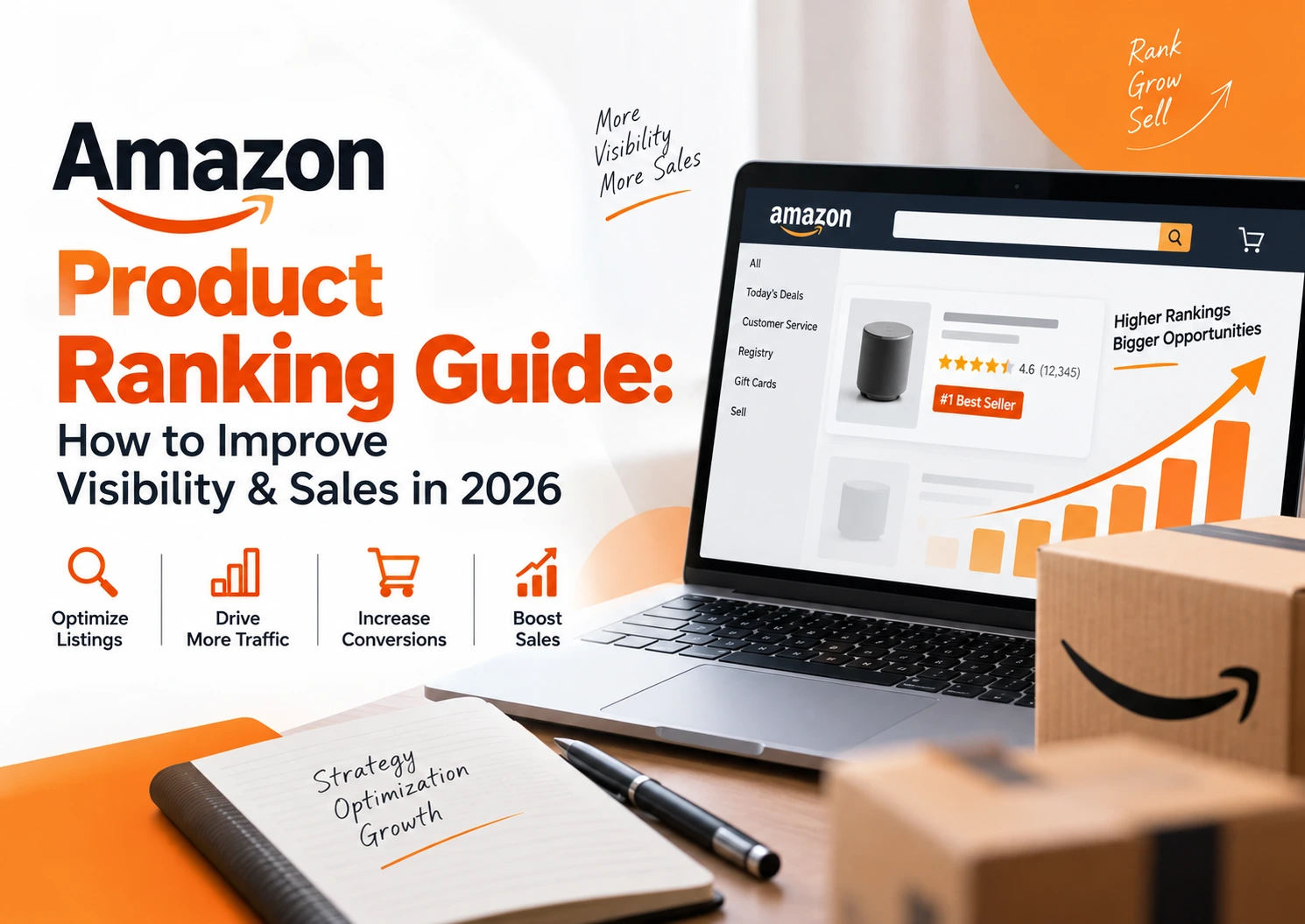
Getting your product on Amazon is easy. Getting it on Page 1? That’s the real challenge.
Amazon product ranking decides whether shoppers discover your listing or never see it. And in 2026, ranking isn’t driven by keywords alone. Amazon now looks at relevance, conversions, reviews, pricing, inventory health, and customer experience before deciding where your product appears.
This guide explains how Amazon product ranking works, the biggest Amazon ranking factors, and practical ways to improve visibility and sales using Amazon SEO and listing optimization.
Amazon product ranking is the position your listing holds in Amazon search results for a specific keyword. Higher rankings improve visibility, clicks, and sales. A strong Amazon SEO strategy combines keyword optimization, listing quality, conversion rate improvements, inventory management, and continuous performance tracking to build sustainable organic growth.
Better Amazon SEO helps listings appear for relevant customer searches and reduces dependence on paid ads.
Amazon rewards listings that generate clicks, purchases, and positive customer engagement.
Pricing, reviews, fulfillment, inventory, and listing quality all impact Amazon search ranking.
Refreshing keywords, creatives, and A+ Content keeps rankings competitive year-round.
Amazon product ranking is where your product appears when shoppers search for a keyword on Amazon.
The higher you rank, the more customers see your listing.Β
But ranking isn’t fixed. Every search, click, purchase, review, and inventory update sends new signals to Amazon.
Today’s shoppers search differently too. Instead of typing “shoe cleaner,” they ask “best sneaker cleaner for white shoes.” Consequently, Amazon SEO has shifted from keyword stuffing to matching customer intent.
We’ve noticed listings with better images and stronger A+ Content often climb rankings even without increasing ad spend. Better conversion rates usually lead to better visibility.
A common question sellers ask is: What does Amazon SEO mean?
Amazon SEO, or Amazon search engine optimization, is the process of optimizing your listing so Amazon understands what you’re selling and shows it for relevant searches.
Amazon indexes listings using:
After indexing, Amazon ranks listings based on customer behavior.
| Amazon Ranking Factor | Why It Matters |
|---|---|
| Keyword relevance | Helps Amazon match customer searches. |
| Click-through rate | Shows shoppers choose your listing. |
| Conversion rate | Higher purchases improve rankings. |
| Reviews and ratings | Build customer trust. |
| Inventory availability | Stockouts reduce visibility. |
| Fulfillment performance | Fast delivery improves customer experience. |
These signals work together to influence Amazon search ranking.
Your listing should answer customer questions immediately. Focus on:
A complete listing supports both Amazon listing SEO and higher conversions.
Backend Amazon search terms help Amazon index additional keyword variations.
Use:
Avoid repeating keywords already visible on the listing.
Amazon promotes listings customers actually buy. Small improvements can make a big difference:
Higher conversions help improve Amazon ranking naturally.
These metrics are related but not identical.
Amazon sales rank measures how well your product sells within its category.
Amazon product ranking measures where your product appears for specific search keywords.
A product may have:
Track both to understand overall listing performance.
Boost product visibility with the right SEO, listing optimization, and PPC strategy. Get expert Amazon ranking support from Krolog and turn more searches into sales.
A successful Amazon SEO strategy isn’t complicated. It’s consistent.
Avoid these mistakes:
These issues gradually reduce Amazon ranking over time.
Amazon search keeps evolving. Here are a few trends to keep up with:
Amazon’s AI shopping experience has transformed. Alexa for Shopping now powers conversational shopping directly inside the Amazon app and search bar, replacing Rufus in 2026. Instead of matching exact keywords, Alexa understands natural shopping questions, compares products, and recommends listings based on customer intent and context.
Customers now search with prompts like:
Accordingly, listings optimized for customer questions, product benefits, and complete product information are more likely to surface in Alexa for Shopping results than listings optimized only for exact-match keywords. The focus has shifted from keyword repetition to intent-driven Amazon SEO optimization.
Amazon product SEO now rewards listings with complete information, visuals, FAQs, and helpful product comparisons.
Brands updating listings throughout the year generally maintain stronger Amazon SEO rankings than brands treating SEO as a one-time task.
At Krolog, ranking improvements come from connecting SEO, conversion optimization, and PPC insights into one strategy. Our Amazon SEO services include:
The goal is to achieve both better rankings and profitable growth.
Improving Amazon product ranking isn’t about chasing one algorithm update. It’s about building listings customers want to click, and Amazon wants to recommend.
Strong Amazon SEO, optimized search terms, high-converting content, healthy inventory, and continuous optimization all work together to improve visibility and sales.
The brands that rank consistently in 2026 are the ones that optimize continuously.
Amazon product ranking is the position your listing appears in Amazon search results for a specific keyword.
Amazon SEO indexes listings through keywords and product data, then ranks them using relevance, conversions, reviews, inventory, and customer engagement.
Amazon search terms are backend keywords added inside Seller Central to improve indexing for additional customer searches, but are not visible to the shoppers.
Optimize titles, bullets, images, A+ Content, backend keywords, pricing, reviews, and inventory without relying only on PPC.
Keyword relevance, click-through rate, conversion rate, reviews, pricing, fulfillment performance, and inventory availability.
Sales rank measures category sales performance, while search ranking measures keyword visibility.
Review keywords and listing content every quarter and before major shopping events like Prime Day and Black Friday.
PPC doesn't directly improve SEO, but increased sales and keyword data can strengthen organic optimization.
Use Seller Central, Brand Analytics, Helium 10, Jungle Scout, or keyword tracking tools to monitor rankings.
Yes, rankings are subject to change as competitors optimize listings, launch products, and update pricing or content. Professional Amazon SEO services ensure your listings stay competitive and rank high for maximized visibility and conversions.Β
Sandeep K, Founder and CEO of Krolog Inc., has over 10 years of experience helping ecommerce brands improve Amazon SEO, listing optimization, PPC performance, and marketplace growth.
Whether you’re launching a new product or trying to recover lost visibility, Krolog helps brands improve Amazon product rankings through data-driven Amazon SEO, listing optimization, keyword strategy, and continuous marketplace optimization.
Amazon Store Optimization: A 2026 Checklist for Sellers Your Amazon listing gets the click. Your store decides whether shoppers keep…
Amazon Product Ranking Guide: How to Improve Visibility & Sales in 2026 Getting your product on Amazon is easy. Getting…
Amazon PPC Audit: The Exact Checklist Our Team Uses on Every Account Running Amazon ads isn’t the hard part. Running…
Krolog was born from a simple yet powerful idea: to empower businesses with the tools and strategies needed to thrive in the ever-evolving digital marketplace. Our journey is a testament to the transformative impact of strategic E-commerce solutions.


Copyright Β© 2026 All Right ReservedΒ