Nav Preview
  • Amazon Search Algorithm Explained: How It Works & How to Rank Higher in 2026

    Amazon Search Algorithm Explained: How It Works & How to Rank Higher in 2026

    Amazon Search Algorithm Explained: How It Works & How to Rank Higher in 2026

    Most Amazon sellers spend months tweaking titles, adding keywords, or increasing ad budgets; yet rankings barely move. Why? Because Amazon’s search engine has evolved far beyond simple keyword matching.

    Today’s Amazon ranking algorithm evaluates customer behavior, listing quality, sales performance, and even post-purchase satisfaction before deciding which products deserve visibility. 

    In this guide, we’ll break down how Amazon’s search engine actually ranks products. As AI-powered shopping experiences are becoming more common in 2026, understanding how the Amazon search engine works is no longer optional.

    Amazon SEO
    Amazon Ranking Algorithm
    Linting SEO

    Amazon ACoS Strategies

    PPC Performance

    Higher ROAS

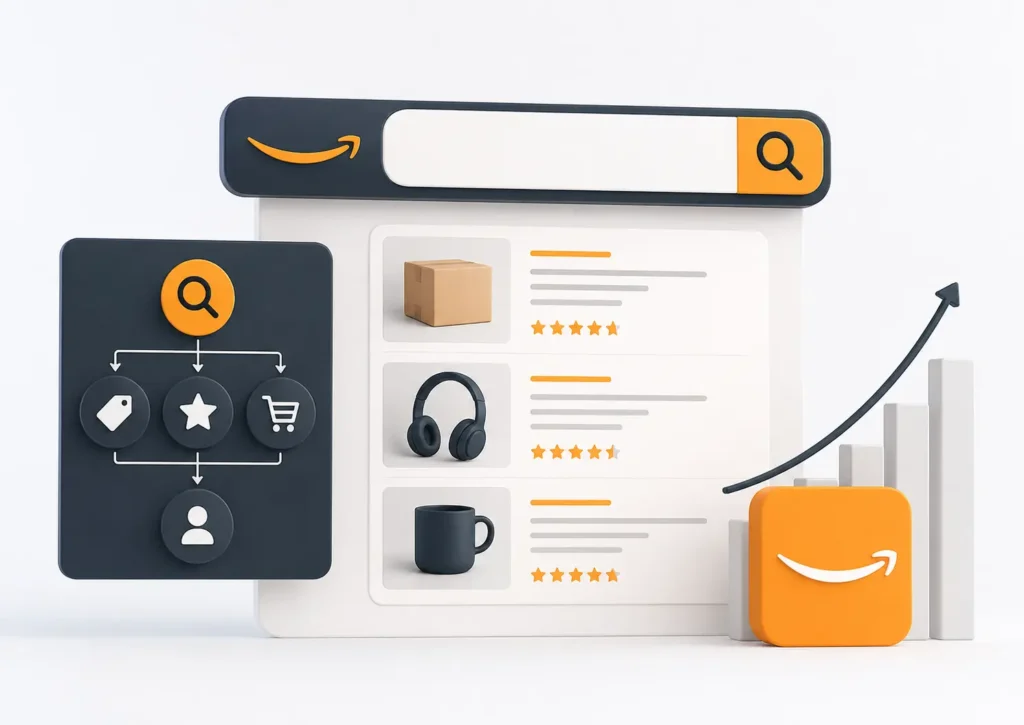
    Amazon Search Algorithm Explained showing key Amazon ranking factors including relevance, sales velocity, listing quality, conversion rate, and customer satisfaction to improve Amazon SEO and product rankings in 2026.

    Summary

    Amazon’s search algorithm has become significantly smarter in 2026. Instead of rewarding listings that simply repeat keywords, Amazon now prioritizes products that consistently satisfy shoppers. 

    Strong click-through rates, healthy conversion rates, competitive pricing, inventory stability, customer satisfaction, and high-quality listing content all contribute to higher rankings.

    Understanding Amazon search engine optimization today involves evaluating ranking factors that matter and practical ways to improve your organic visibility without relying entirely on ads, so as to elevate the entire shopping journey of the customers.

    Key Takeaways

    Amazon Rewards Customer Satisfaction

    The Amazon ranking algorithm promotes products that generate clicks, conversions, positive reviews, and fewer returns.

    Keywords Still Matter, But Context Matters More

    Relevant keywords help listings get indexed. Customer engagement determines whether they continue ranking.

    PPC Supports Organic Growth

    Sponsored campaigns can improve product discovery, generate sales velocity, and indirectly strengthen organic rankings.

    Listing Optimization Never Stops

    Winning brands continuously update content, images, pricing, and keywords based on marketplace data instead of treating optimization as a one-time task.

    Entity Overview

    Category : Amazon Search Algorithm

    Category Type : Ecommerce Search & Ranking System

    Related Entities : Amazon Seller Central, Amazon SEO, Amazon PPC, Amazon A9 Algorithm, Amazon Rufus, Product Detail Page, Search Query Performance, Brand Analytics

    Common Synonyms : Amazon A9 algorithm, Amazon SEO algorithm, Amazon ranking algorithm, Amazon search engine

    Primary Metrics : Organic Ranking, Click-Through Rate (CTR), Conversion Rate (CVR), Sales Velocity, Session Percentage, Buy Box Percentage

    What Is the Amazon Search Algorithm?

    Most sellers think Amazon works like Google, but it doesn’t.

    While Google wants to answer questions, Amazon wants customers to buy products.

    That single difference changes everything.

    Every time someone types a search query, Amazon’s search engine scans millions of listings. Then it predicts which products are most likely to generate a purchase. Not the most clicks; not the most traffic, but the maximum sales.

    That’s why two products targeting the same keyword can rank very differently.

    One converts, the other doesn’t. The better converter usually wins.

    Years ago, sellers could rank simply by repeating keywords inside titles and backend fields. Those days are mostly gone. Today, the Amazon ranking algorithm measures customer intent alongside historical performance.


    Think of it like this: Imagine two insulated water bottles.

    Both are optimized for the keyword “stainless steel water bottle.” One receives 100 visitors and converts 25 into buyers.

    The second receives the same traffic but converts only six customers.

    Amazon learns quickly which product shoppers actually prefer. Over time, the better-performing listing earns more visibility.

    That’s really what Amazon search engine optimization has become: convincing Amazon that shoppers consistently choose your product over similar alternatives.

    Expert Observation

    One thing we notice while auditing seller accounts at Krolog is that many businesses obsess over keywords but completely ignore conversion signals.

    Sometimes changing the main image improves rankings faster than rewriting an entire title. Strange? Maybe, but that’s exactly how Amazon’s search engine thinks.

    How Does Amazon Search Engine Work?

    A seller once asked us,

    “Why am I indexed for hundreds of keywords but ranking on page seven?” It’s a fair question.

    Indexing and ranking aren’t the same thing.

    First, Amazon indexes your listing.

    That simply means your product becomes eligible to appear in certain searches.

    Ranking only happens afterward. This is where the algorithm evaluates whether your product deserves visibility.

    Amazon generally follows three stages.

    Stage 1: Crawling & Indexing

    Amazon scans your listing. It looks at:

    • Product title
    • Bullet points
    • Product description
    • Backend search terms
    • Brand name
    • Category
    • Product attributes

    If these elements contain relevant search terms, Amazon indexes your listing.

    Stage 2: Relevance Analysis

    Next comes relevance.

    Amazon asks:

    “Does this product actually match what the customer searched for?”

    Keyword relevance still matters. But semantic understanding has improved dramatically.

    For example:

    Someone searching for: “large wooden chopping board for vegetables”

    may also see listings optimized for:

    • butcher block
    • cutting board
    • kitchen chopping board

    Even if those exact phrases aren’t identical. Amazon increasingly understands context rather than exact wording.

    Stage 3: Performance Evaluation

    This is where rankings are won or lost. The algorithm evaluates:

    • Click-through rate
    • Conversion rate
    • Sales history
    • Inventory availability
    • Customer reviews
    • Refund percentage
    • Pricing competitiveness
    • Delivery speed

    Products that consistently outperform competitors gradually move upward. Products that disappoint shoppers slowly disappear.

    It’s less about pleasing an algorithm and more about appealing to the customers, and for Amazon, it simply follows the data.

    How Amazon A9 Algorithm Works in 2026?

    People still call it the Amazon A9 algorithm.

    Technically, Amazon’s ranking systems have evolved well beyond the original A9 architecture.

    Yet the name stuck.

    Think of A9 today as the foundation of a much broader AI-driven ecosystem. Especially now that Amazon continues integrating generative AI experiences like Rufus into product discovery.

    Instead of asking, “Does this listing contain my keyword?” Amazon increasingly asks, “Will this listing solve the customer’s problem?”

    That’s a huge shift.

    Today’s Amazon SEO algorithm combines traditional ranking signals with behavioral data.

    Some of the strongest signals include:

    • Historical sales performance
    • Purchase frequency
    • Session conversion
    • Listing quality
    • Customer satisfaction
    • Inventory health
    • Advertising momentum

    A product with perfect keyword optimization but weak conversion rarely maintains strong rankings. Meanwhile, another listing with fewer keywords but outstanding customer engagement often climbs steadily.

    Practical Example

    A home organization brand’s rankings had stalled for months. Interestingly, keywords weren’t the issue. Their product images looked outdated compared to newer competitors.

    After redesigning images, improving A+ Content, and refining bullets, conversion improved by almost 18%.

    Within six weeks, several primary keywords moved onto page one. No major keyword rewrite.

    Just a better shopping experience.

    Sometimes sellers underestimate how closely the Amazon product ranking algorithm ties visibility to customer behavior.

    What Factors Influence Amazon Search Rankings?

    Ask ten sellers what influences rankings. Everyone will have different answers.

    • Some swear by keywords.
    • Others say reviews.
    • A few swear by advertising.

    The truth is, Amazon considers dozens of signals simultaneously. Some matter more than others.

    1. Keyword Relevance

    Keywords still help Amazon understand what you’re selling. Without proper optimization, your listing may never appear in relevant searches. Natural keyword placement works far better than stuffing.

    2. Click-Through Rate

    Customers have to click before they can buy.

    • The Main image
    • Title
    • Price
    • Ratings,

    All influence whether shoppers choose your listing. Low CTR often means Amazon gradually reduces visibility.

    3. Conversion Rate

    Amazon loves products that sell. Simple and clean.

    If shoppers frequently purchase your listing after clicking, rankings usually improve over time.

    This remains one of the strongest Amazon ranking factors in 2026.

    4. Sales Velocity

    Products generating consistent sales signal popularity. Large spikes help, but steady growth helps even more as Amazon prefers momentum over short-term bursts.

    5. Inventory Availability

    Running out of stock is more damaging than many sellers realize.

    Even a few days without inventory can interrupt the ranking progress you’ve spent months building.

    6. Customer Experience

    Amazon closely monitors:

    • Review quality
    • Return rates
    • Late deliveries
    • Customer complaints

    Poor customer experience eventually affects visibility. Good customer experience strengthens long-term rankings.

    How Does Amazon Index New Listings?

    One of the biggest misconceptions among new sellers is that publishing a listing automatically makes it searchable. It doesn’t.

    Publishing simply makes your product live. Indexing is a separate process.

    Amazon first crawls your listing and tries to understand what you’re selling. It scans your title, bullet points, backend search terms, product description, category, brand name, and attributes. If everything aligns, your product gets indexed for relevant search queries.

    But indexing isn’t instant. Sometimes it happens within a few hours. Other times, it takes several days, especially for competitive categories or newly created accounts.

    Here’s something we’ve noticed while working with new brands at Krolog. Sellers often panic after launching because they can’t find their product on Amazon. In reality, the listing hasn’t finished indexing yet. They start changing titles every few hours, which only creates more confusion for the algorithm.

    The smarter approach? Let Amazon process the listing first. Then verify indexing using relevant keyword searches or backend indexing tools before making major edits.

    A few practices that usually help:

    • Use one primary keyword naturally in the title.
    • Fill in every important product attribute.
    • Avoid duplicate backend keywords.
    • Complete the listing before publishing.
    • Keep inventory available from Day One.

    Incomplete listings rarely perform well, no matter how good the product is.

    Ready to Rank Higher on Amazon?

    Improve your Amazon SEO, optimize your listings, and increase organic visibility with expert guidance.

    Does Amazon PPC Help Improve Organic Rankings?

    This question comes up almost every week.

    “If I spend more on PPC, will my organic rankings improve?”

    The answer isn’t exactly yes. But it isn’t a no either.

    Amazon has never officially confirmed that advertising is a direct ranking factor. However, 

    • PPC increases visibility. 
    • More visibility creates more clicks. 
    • More clicks generate more sales. 
    • More sales improve performance signals.

    And those signals absolutely influence the Amazon product ranking algorithm.

    Think of PPC as fuel. It won’t rank a poor product forever. But it can accelerate momentum for a well-optimized listing.

    For example, imagine launching a new product. Without ads, Amazon has very little customer data.

    With Sponsored Products running, customers start interacting with your listing immediately.

    If they buy consistently, Amazon begins collecting positive engagement signals.

    Gradually, your organic visibility improves. We’ve seen this happen repeatedly with brands launching new products.

    The mistake many sellers make is relying on PPC forever. Healthy Amazon growth usually follows this pattern:

    • Launch with advertising.
    • Improve conversion rates.
    • Build organic rankings.
    • Reduce advertising dependency over time.

    That’s where long-term profitability begins.

    How to Improve Amazon Rankings in 2026?

    There’s no shortcut anymore. Amazon’s algorithms have become incredibly good at identifying listings that genuinely satisfy customers.

    Instead of trying to game the system, focus on becoming the obvious choice. 

    • Start with keyword research. Understand how customers actually search rather than guessing. Use high-intent keywords naturally across your listing instead of forcing exact matches everywhere.
    • Next, improve click-through rate. Sometimes replacing a dull hero image with a professionally designed one produces bigger ranking improvements than rewriting your entire description.
    • Then focus on conversions. Answer customer objections before they ask. Show dimensions clearly. Explain benefits instead of features.
    • Use comparison charts inside A+ Content. This helps build customer trust.
    • Inventory also deserves attention.
    • Products that frequently go out of stock often lose hard-earned rankings. Recovering them isn’t always easy.
    • Finally, monitor performance continuously. Amazon isn’t static; customer behavior changes, competitors improve, and algorithms evolve. Your listing should evolve too.

    Practical Ranking Checklist

    • Refresh keywords every few months.
    • Monitor click-through rate.
    • Improve conversion before increasing ad spend.
    • Keep inventory healthy.
    • Earn authentic reviews through great customer experiences.
    • Optimize images regularly.
    • Update A+ Content when necessary.

    Small improvements made consistently usually outperform dramatic changes made once.

    Common Amazon SEO Mistakes That Hurt Rankings

    Some mistakes appear again and again. Even experienced sellers fall into them.

    1. Keyword Stuffing: Repeating the same keyword fifteen times doesn’t improve rankings. It usually hurts readability instead.
    2. Ignoring Customer Intent: Ranking for a keyword means little if the listing doesn’t answer what customers actually want. Intent always matters.
    3. Treating SEO as a One-Time Project: Many brands optimize once. Then never touch the listing again. Meanwhile, competitors keep improving. Eventually, rankings slip out.
    4. Running Out of Stock: This one hurts more than most sellers expect. A temporary stockout can undo months of organic progress.
    5. Weak Images: Amazon shoppers buy with their eyes first. Poor visuals reduce clicks. Fewer clicks reduce rankings.

    Our Evaluation Methodology

    At Krolog, we don’t judge Amazon SEO strategies by theory alone. We evaluate them through real seller performance.

    Our recommendations are based on:

    • Organic ranking improvements.
    • Conversion rate growth.
    • Click-through performance.
    • Inventory consistency.
    • Customer satisfaction metrics.
    • Long-term profitability.
    • Marketplace competitiveness.
    • AI search readiness.

    Because rankings mean very little if profits don’t improve alongside them.

    Ready to Rank Higher on Amazon?

    Improve your Amazon SEO, optimize your listings, and increase organic visibility with expert guidance.

    Final Verdict

    Understanding how the Amazon search engine works has become far more important than simply finding keywords.

    The brands growing consistently in 2026 aren’t necessarily spending the most on advertising.

    They’re creating listings shoppers genuinely prefer. That’s what Amazon rewards.

    Focus on 

    • Relevance.
    • Customer experience.
    • Continuous improvement.

    The rankings usually follow.

    If improving organic visibility feels overwhelming, partnering with specialists can shorten the learning curve dramatically.

    At Krolog, we combine Amazon SEO, listing optimization, PPC strategy, and marketplace analytics to help brands build sustainable rankings instead of chasing temporary wins.

    Frequently Asked Questions

    About the Author

    Sandeep K.,  Founder & CEO of Krolog Inc., has spent over a decade helping brands grow across Amazon through marketplace strategy, Amazon SEO, PPC optimization, listing conversion, inventory planning, and full-service account management.
    His team has worked with businesses across multiple product categories to improve rankings, profitability, and long-term marketplace performance.

    Ready to Improve Your Amazon Rankings?

    Understanding Amazon’s search algorithm is only the beginning. Sustainable growth comes from combining SEO, conversion optimization, PPC strategy, and continuous account management.

    If you’re looking to rank higher, increase visibility, and build profitable long-term growth, Krolog’s Amazon experts can help.

    Request a free Amazon account audit today and uncover the ranking opportunities your competitors are already using.

    Related Article

    Amazon Search Algorithm Explained: How It Works & How to Rank Higher in 2026

    Amazon Search Algorithm Explained: How It Works & How to Rank Higher in 2026

    Amazon Search Algorithm Explained: How It Works & How to Rank Higher in 2026 Most Amazon sellers spend months tweaking…

    Amazon Account Suspended? Here’s How to Get It Reinstated Faster in 2026

    Amazon Account Suspended? Here’s How to Get It Reinstated Faster in 2026

    Amazon Account Suspended? Here’s How to Get It Reinstated Faster in 2026 Imagine this scenario, where you are an Amazon…

    Amazon Listing Not Showing Up? 12 Expert Fixes to Restore Visibility in 2026

    Amazon Listing Not Showing Up? 12 Expert Fixes to Restore Visibility in 2026

    Amazon Listing Not Showing Up? 12 Expert Fixes to Restore Visibility in 2026 Nothing is more frustrating than searching for…

    Scroll to Top