How Krolog Helped Toner Pros Expand from Amazon to Shopify
How Krolog Helped Toner Pros Expand from Amazon to Shopify Selling successfully on Amazon is a significant achievement, but long-term…
For years, Amazon has been the easiest way to launch an ecommerce business. The traffic is built in, customers already trust the platform, and fulfillment is simple.
But there’s a catch: you don’t own the customer.
That’s why more sellers are investing in Shopify expansion in 2026. Not to leave Amazon, but to build a brand they truly control.
Β
The challenge? Many assume that launching a Shopify store is just another website project. It isn’t.
Direct-to-consumer (DTC) selling plays by different rules. Strategies that work on Amazon don’t always translate to Shopify. As a result, sellers often face low traffic, low conversion rates, and inconsistent branding despite significant investment.
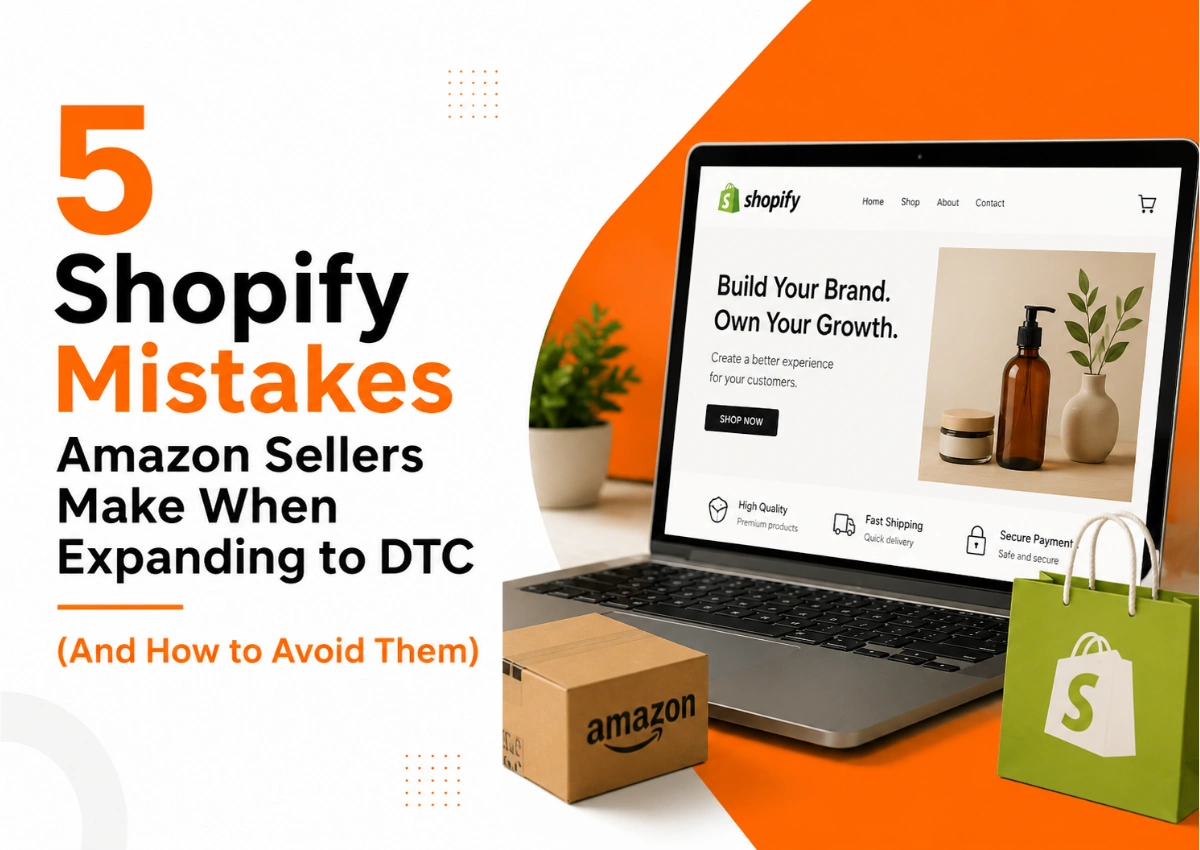
This guide covers the five biggest Shopify mistakes Amazon sellers make when expanding to DTC and how to avoid them with the right Shopify development services, Shopify store optimization, and a scalable multichannel ecommerce strategy.
Expanding from Amazon to Shopify is one of the smartest long-term growth decisions ecommerce brands can make, but only when approached strategically.
Rather than replacing Amazon, successful businesses use Shopify to build stronger customer relationships, collect first-party data, improve profit margins, and diversify revenue streams.Β
However, many sellers unknowingly carry marketplace habits into their DTC strategy, resulting in poor store performance and slower growth.
This guide explains the five most common Shopify mistakes Amazon sellers make, practical ways to avoid them, and the proven strategies that help brands build profitable direct-to-consumer businesses in 2026.
Use Shopify to complement Amazon, diversify revenue, and build your own brand.
A structured Shopify expansion strategy helps avoid costly launch and growth mistakes.
Shopify gives you first-party customer data for email marketing, loyalty programs, and repeat sales.
Selling on both Amazon and Shopify reduces marketplace dependency and strengthens long-term growth.
Continuous Shopify store optimization improves traffic, conversions, and overall performance.
A fast, user-friendly store builds trust and increases conversions.
The right Shopify development services and ecommerce growth strategy turn expansion into sustainable success.
Many sellers still confuse Shopify migration with Shopify expansion. They’re related, but not identical.Β
Migration usually implies moving from one platform to another. Expansion is different.
It means adding Shopify as another revenue channel while continuing to leverage Amazon’s massive marketplace audience.
Think of it this way. Amazon brings customers to your products, while Shopify brings customers to your brand. That distinction matters more than ever.
When customers purchase through Amazon, the marketplace owns much of the relationship. Communication is limited, branding opportunities are restricted, and customer data remains largely inaccessible. Shopify changes that equation.
With your own ecommerce website, you control the shopping experience from beginning to end. You decide how products are presented, how customers interact with your brand, and how relationships continue after the first purchase.
A successful Shopify expansion often includes:
Instead of competing against Amazon, Shopify strengthens your overall ecommerce ecosystem.
Category : Shopify Expansion
Category Type : Multichannel Ecommerce Strategy
Related Entities : Shopify Development Services, Shopify Migration, Amazon Seller Central, Amazon FBA, Shopify Marketplace Connect, First-Party Data Strategy
Common Synonyms : Amazon to Shopify expansion, Shopify DTC launch, Shopify ecommerce development, multichannel ecommerce
Primary Metrics : Customer Lifetime Value, Repeat Purchase Rate, Conversion Rate, Revenue Diversification, Average Order Value
One conversation comes up repeatedly.
“We’ve been thinking about Shopify for two years.”
Usually, by the time sellers act, they’re responding to a problem instead of preventing one.
Although Amazon remains one of the world’s most powerful acquisition channels, relying exclusively on it creates a single point of failure.
And sales can decline almost overnight.
That’s why many successful ecommerce brands now view Shopify as an insurance policy, not against Amazon, but against overdependence. Accordingly, Shopify becomes the place where businesses build long-term assets.
This doesn’t mean sellers should abandon Amazon. Quite the opposite.
The strongest ecommerce businesses in 2026 treat Amazon and Shopify as complementary growth engines. Amazon drives discovery, and Shopify drives retention.
Together, they create a far more resilient business model.
One misconception we hear regularly at Krolog is:
“We’ll launch Shopify once Amazon sales slow down.”
Ironically, that’s often the hardest time to expand. Building a profitable DTC channel takes time. SEO needs time to mature. Email lists need time to grow. Customer trust doesn’t happen overnight.
The brands seeing the strongest Shopify results today didn’t wait for Amazon to become a problem. They started building their own channel while Amazon was already performing well.
That’s a much healthier and far more profitable approach.
This is probably the biggest shift of all. Amazon is optimized for transactions, while Shopify is optimized for relationships.
Inside Amazon, customers usually arrive ready to buy. They compare prices, read reviews, and complete purchases quickly.
On Shopify, visitors often need convincing when they’re discovering your brand, learning your story, evaluating trust, and comparing alternatives. Consequently, success depends on much more than product listings.
Your website becomes your salesperson; product pages become your pitch, emails become a retention engine, and content gets credibility.
This is where first-party data strategy becomes invaluable.
Every visitor who subscribes to your newsletter, joins your loyalty program, abandons a cart, or purchases from your store provides insights you can use to improve future marketing.
Amazon doesn’t offer that level of ownership, but Shopify does.
That’s why many brands stop asking: “Selling on Amazon vs Shopify: which is better?”
Instead, now they ask: “How can both platforms work together?”
That’s the right question.
| Amazon | Shopify |
|---|---|
| Marketplace-first | Brand-first |
| Product discovery | Customer retention |
| Marketplace trust | Brand trust |
| One-time purchases | Repeat purchases |
| Limited customer data | Complete first-party customer data |
| Transaction-focused | Relationship-focused |
This is easily the biggest mistake Amazon sellers make. They export their Amazon catalog, import it into Shopify, and call it a day. Technically, the store is live. Practically, it rarely performs.
Why? Because Amazon and Shopify are built for completely different shopping experiences.
Amazon shoppers already trust the platform. They’re usually comparing products, reviews, pricing, and delivery speeds before making a purchase. The marketplace does most of the work.
Shopify doesn’t. Your website has to build trust from scratch. Accordingly, simply copying Amazon titles, bullet points, and images into Shopify often results in poor engagement and low conversion rates.
Instead, every product page should answer questions customers haven’t even asked yet.
The goal shifts from selling a product to building confidence in your brand.
Invest in professional Shopify development services that focus on customer experience rather than simple migration.Β Optimize:
One thing we’ve consistently noticed at Krolog is that sellers spend weeks perfecting Amazon listings but only hours building Shopify product pages.
Ironically, Shopify visitors usually need more convincing than Amazon buyers. A product page isn’t just there to describe a product; it’s there to earn trust.
Many sellers believe success begins once the website goes live. Actually, that’s when the work starts.
Launching Shopify without a roadmap is like opening a retail store in the middle of nowhere and hoping customers somehow find it. Traffic doesn’t magically appear.
Consequently, businesses often become frustrated within the first few months.
And the reason is as simple as the customers simply haven’t discovered the store yet.
A successful Shopify expansion begins long before launch. It starts with planning.
Questions worth answering include:
Without those answers, even beautifully designed stores struggle.
Skipping these fundamentals often creates expensive problems later.
Imagine launching a furniture store with hundreds of products but no collections.
Visitors have no idea where to start, navigation becomes frustrating, bounce rates increase, and conversions drop.
The products may be excellent, but poor planning quietly hurts performance.
Amazon owns the customer; Shopify lets you own the relationship.
That’s one of the biggest reasons brands invest in DTC.
Yet surprisingly, many Amazon sellers launch Shopify without any strategy for collecting customer information.
It’s a missed opportunity.Β
First-party data has become one of ecommerce’s most valuable assets. Accordingly, every visitor should become more than just a transaction. They should become part of your marketing ecosystem.
A strong first-party data strategy helps brands:
Unlike Amazon, Shopify allows businesses to continue conversations long after checkout.
That’s where real profitability often begins.
Many sellers obsess over acquiring new customers while overlooking the ones they’ve already paid to acquire.
At Krolog, we’ve seen brands increase overall profitability simply by improving post-purchase communication rather than increasing advertising budgets. Retention almost always costs less than acquisition.
This assumption quietly hurts countless Shopify launches. Amazon brings shoppers to your products; Shopify doesn’t.
Once your website goes live, customers won’t automatically appear because your products exist online. Traffic has to be earned. That means building multiple acquisition channels simultaneously.
Successful multichannel ecommerce businesses typically combine:
Each channel supports the others. Together, they create sustainable growth.
Waiting for Google rankings alone can take months; relying only on paid advertising becomes expensive. The smartest brands balance both.
Before launching Shopify, develop an ecommerce growth strategy that answers
Planning these early prevents disappointing launch results.
This mistake creates unnecessary complexity.Β
Eventually, operations become difficult to manage.Β
Modern ecommerce isn’t about managing isolated channels. It’s about creating connected systems. That’s where multichannel ecommerce becomes essential.
Instead of treating Amazon and Shopify independently, successful brands integrate operations through centralized inventory management, fulfillment, reporting, and marketing.
Many businesses also use Amazon FBA to fulfill Shopify orders, reducing operational overhead while maintaining fast delivery expectations.
The result?Β
Work with experienced Shopify development services providers who understand both the Amazon and Shopify ecosystems. The right setup includes:
One of the biggest differences we see between average brands and high-growth brands isn’t product quality. It’s operational simplicity.
The brands growing fastest have systems that work together, not against each other. Amazon drives discovery, Shopify builds customer relationships, and everything behind the scenes operates as one connected business.
The biggest mistakes include treating Shopify like another Amazon listing, launching without a clear Shopify expansion strategy, ignoring first-party data, expecting Amazon traffic to automatically transfer, and managing Amazon and Shopify as separate businesses. A structured ecommerce growth strategy helps avoid these issues.
Many Amazon sellers are accustomed to built-in marketplace traffic and customer trust. Shopify requires brands to generate their own traffic through SEO, paid advertising, email marketing, and content while delivering a superior shopping experience. Success depends on building relationships rather than simply listing products.
Yes. Amazon sellers can use Amazon FBA to fulfill Shopify orders through approved integrations. This allows businesses to maintain fast shipping while expanding into direct-to-consumer sales without building an entirely new fulfillment network.
Β
Many sellers simply copy Amazon pricing without considering differences in marketplace fees, shipping costs, customer acquisition expenses, and profit margins. Shopify pricing should reflect a broader ecommerce growth strategy rather than mirror marketplace pricing.
Β
There isn't a universal timeline. Most brands begin seeing meaningful results within 6 to 12 months, depending on product demand, marketing investment, Shopify store optimization, SEO performance, and customer retention efforts. Businesses that consistently invest in long-term growth generally see stronger returns.
Amazon focuses on marketplace transactions, while Shopify focuses on building customer relationships. Shopify gives brands complete control over branding, customer data, pricing, marketing, and retention strategies, making it an ideal platform for long-term business growth.
The best time is before marketplace challenges become business problems. Sellers should consider launching on Shopify while Amazon sales remain strong, allowing them to build an additional revenue stream and reduce marketplace dependency over time.
Not directly. Amazon reviews cannot typically be transferred due to Amazon's policies. However, brands can build trust through customer testimonials, verified reviews collected on Shopify, user-generated content, case studies, and strong social proof.
Sandeep K., Founder & CEO of Krolog, has over 10 years of experience helping ecommerce brands grow through Amazon marketplace management, Shopify development, conversion optimization, marketplace SEO, PPC advertising, and multichannel commerce strategies.
His team has worked with brands across multiple industries to build scalable ecommerce ecosystems that combine marketplace success with long-term DTC growth.
Launching Shopify is only the first step. Building a profitable DTC business requires the right strategy, technical foundation, customer acquisition plan, and ongoing optimization.
Whether you’re planning a complete Shopify migration, expanding beyond Amazon, or looking for expert Shopify development services, Krolog helps brands build high-converting ecommerce stores designed for long-term growth, not just launch day.
Our team specializes in:
We’ll review your current ecommerce setup, identify missed growth opportunities, and provide a practical roadmap to help you expand confidently beyond the marketplace.
How Krolog Helped Toner Pros Expand from Amazon to Shopify Selling successfully on Amazon is a significant achievement, but long-term…
5 Shopify Mistakes Amazon Sellers Make When Expanding to DTC (And How to Avoid Them) For years, Amazon has been…
Amazon Backend Keywords Guide (2026): How to Use Hidden Keywords for Better Rankings You could have the best product on…
Krolog was born from a simple yet powerful idea: to empower businesses with the tools and strategies needed to thrive in the ever-evolving digital marketplace. Our journey is a testament to the transformative impact of strategic E-commerce solutions.


Copyright Β© 2026 All Right ReservedΒ