Nav Preview
  • Shopify SEO Checklist 2026: The Steps That Actually Move the Needle

    Shopify SEO checklist isn’t just another list of technical tasks anymore. It’s the difference between a store people discover, and one that stays invisible.

    You launch a beautiful Shopify store. Products look amazing. Ads are running. But organic traffic? Almost zero.

    That’s the story for many ecommerce brands in 2026.

    Search has changed as Google now rewards intent. AI search engines look for structured, trustworthy content. And Shopify search engine optimization now goes beyond adding keywords to product pages.

    This guide walks you through the Shopify SEO checklist that actually moves rankings, traffic, and conversions without wasting time on outdated tactics.

    Amazon FBA Prep
    Cross-Border Fulfillment
    US & Canada Warehousing

    Amazon ACoS Strategies

    PPC Performance

    Higher ROAS

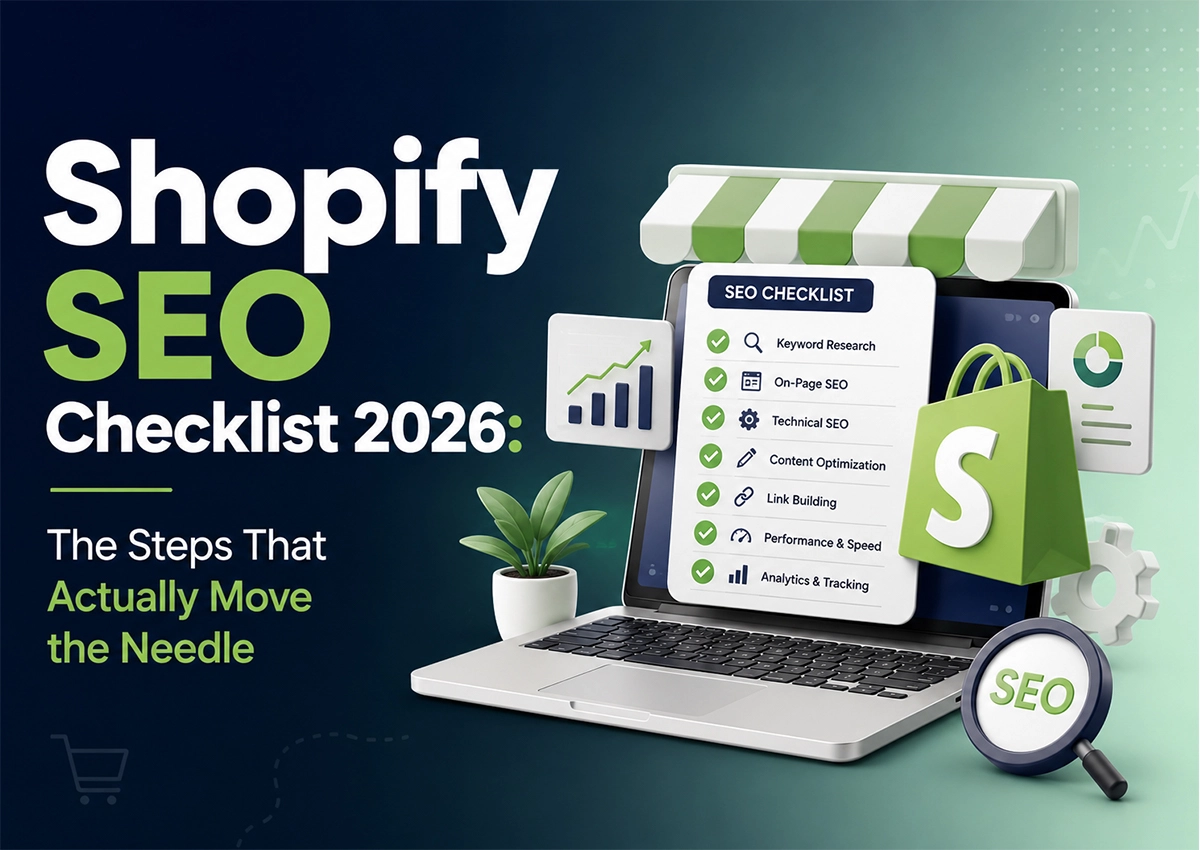
    Shopify SEO checklist 2026 infographic showing key steps: keyword research, on-page SEO, technical SEO, content optimization, link building, performance and speed, and analytics and tracking

    Summary

    A strong Shopify SEO checklist helps ecommerce brands improve visibility, attract qualified traffic, and increase conversions. However, SEO for Shopify is no longer about keyword stuffing or chasing perfect scores.

    Instead, focus on technical health, optimized collections, product pages, internal links, structured data, and content that answers buyer intent.

    Key Takeaways

    Shopify SEO Starts With Structure

    A clean site structure helps both shoppers and search engines find products faster.

    Product Pages Need More Than Keywords

    Strong copy, metadata, images, and internal links improve discoverability.

    Technical SEO Still Matters

    Fix indexing, duplicate content, and Core Web Vitals before scaling traffic.

    SEO Is An Ongoing Task

    Every new product, collection, or campaign affects your Shopify SEO performance.

    What Is a Shopify SEO Checklist and Why Does It Matter in 2026?

    A Shopify SEO checklist is a roadmap. It tells search engines what your store sells and why it deserves to rank.

    Think about two stores selling the same sneakers. One has clear categories, optimized product pages, and helpful buying guides. The other has generic titles and duplicate descriptions.

    Guess which one Google understands better?

    That’s exactly why SEO for Shopify matters. Good SEO improves visibility, better visibility brings qualified traffic, and qualified traffic usually converts better.

    Expert Observation

    One mistake we see often at Krolog? Brands spend thousands on Meta Ads before fixing organic visibility. Paid traffic disappears when budgets stop. SEO keeps working long after.

    Shopify SEO Checklist: 10 Steps That Actually Improve Rankings

    1. Start With Keyword Mapping Before Writing Anything

    Don’t optimize every page for the same keyword. Instead, assign one primary keyword to each page. This creates topical relevance instead of keyword competition.

    2. Optimize Your Homepage for Search Intent

    Your homepage SEO Shopify strategy should explain exactly who you are.

    Don’t just say “Premium Apparel.” Say what you sell, who it’s for, and why it’s different.

    Include:

    • Primary keyword naturally.
    • Clear H1 heading.
    • Brand value proposition.
    • Internal links to collections.
    • Optimized title and meta description.

    Think homepage first; everything else connects from here.

    3. Write Product Pages That Humans Actually Read

    Google indexes products; customers buy them.

    Shopify on-page SEO means writing descriptions that answer real questions. Include:

    • Benefits before features.
    • Size or usage information.
    • FAQs inside descriptions.
    • Relevant keywords naturally.
    • Unique copy for every product.

    Avoid copying supplier descriptions. That’s one of the fastest ways to create duplicate content.

    4. Optimize Collection Pages, They’re SEO Gold

    Collection pages often rank better than products.

    Why? Because they target broader keywords. For example:

    • Running Shoes: Explore lightweight running shoes for road, trail, and everyday training, with options for every running style and comfort preference.
    • Organic Coffee Beans: Browse ethically sourced organic coffee beans based on roast level, flavor profile, and brewing method.
    • Baby Feeding Essentials: Shop bottles, bibs, utensils, and feeding accessories with expert tips to help parents choose the right essentials for every stage.

    Add a short introduction above these products; add buying advice below them, and suddenly the page answers more search intent.

    5. Fix Meta Titles and Descriptions Everywhere

    Metadata still matters.

    Use Shopify custom meta tag best practices for SEO instead of auto-generated titles.

    Good title formula:

    Primary Keyword + Brand + Benefit

    Good description formula:

    Keyword + value proposition + call to action.

    Keep titles under 60 characters. Descriptions around 150–160.

    Short, clear, and click-worthy.

    6. Improve Images for SEO Without Slowing the Store

    Images help rankings too.

    Checklist:

    • Rename files before upload.
    • Add descriptive ALT text.
    • Compress images.
    • Use modern formats.
    • Avoid oversized hero banners.

    This supports Shopify search engine optimization and improves page speed together.

    7. Build Internal Links That Make Sense

    Internal linking is underrated.Β 

    • Every blog should point toward collections.
    • Every collection should connect to products.
    • Every product should link related products.

    That way, it’s easier for Google to crawl and for customers to browse longer.

    Win-win.

    8. Add Structured Data Wherever Possible

    Structured data tells Google:

    “This is a product.”

    “This is a review.”

    “This is pricing.”

    It improves eligibility for rich results and AI-generated search experiences. Prioritize:

    • Product schema
    • Breadcrumb schema
    • Organization schema
    • FAQ schema

    9. Create Content That Solves Buying Questions

    This is where blogs help. Instead of writing “Our New Shoes Collection,” answer questions people search. Examples:

    • How to choose running shoes.
    • Best travel backpack sizes.
    • Cotton vs bamboo towels.

    Helpful content builds authority around your products.

    10. Audit Technical SEO Every Month

    Technical SEO quietly breaks over time. Check regularly:

    • Broken links
    • Redirect chains
    • Duplicate pages
    • Missing ALT text
    • Missing meta titles
    • Slow-loading pages
    • Sitemap updates

    A monthly SEO checklist catches problems before rankings drop.

    Ready to Turn Your Shopify Traffic Into Revenue?

    Get the right SEO strategy in place to improve your search visibility, attract high-intent shoppers, and grow organic revenue.

    How to Get Shopify to Rank for Keywords

    This is probably the most searched Shopify question. Here’s the reality:

    You don’t rank by repeating keywords; you rank because every page supports one search intent.

    A Simple Ranking Framework: SEO compounds. One optimized page rarely changes everything. Fifty optimized pages usually do.

    What Are the Most Common Shopify SEO Issues in 2026?

    Every store has issues. Some are expensive.

    1. Duplicate Product Descriptions: Manufacturers provide copy. Hundreds of stores publish the same text. Google has already seen it.

    2. Missing Collection Content: Collections with only products miss ranking opportunities.

    Add helpful introductory content.

    3. Slow Pages: Heavy apps, scripts, and images slow down page speed. Speed affects both rankings and conversions.

    4. Broken Internal Links: Deleted products often leave orphaned pages behind. Fix redirects before they pile up.

    5. Ignoring Mobile SEO: Most shoppers browse on mobile. If navigation feels slow or cluttered, rankings won’t save conversions.

    Expert Observation

    We’ve audited stores with perfect-looking themes but missing metadata on hundreds of pages. Tiny fixes; huge visibility gains.

    Shopify SEO Best Practices for 2026 That Brands Shouldn't Ignore

    SEO is changing because search is changing.

    1. Focus on Search Intent Over Search Volume: Target phrases buyers actually use; intent beats vanity traffic.

    2. Build Topic Clusters: Instead of isolated blogs, create related content around one category.

    Example:

    • Coffee brewing guide.
    • Coffee grind sizes.
    • Coffee storage tips.

    Everything links together.

    3. Optimize for AI Search Results: AI engines summarize trusted pages.

    • Write concise answers.
    • Use FAQs.
    • Structure headings clearly.

    4. Keep Technical SEO Healthy:

    • Run regular audits
    • Monitor indexing
    • Update sitemaps after launching collections.

    5. Combine SEO With Conversion Optimization: Traffic matters; revenue matters more. A ranking page should also persuade customers to buy.

    Why Shopify SEO Needs Continuous Optimization, Not a One-Time Checklist

    Here’s what happens.

    • You launch new products.
    • Install new apps.
    • Update a theme.
    • Publish new collections.

    And SEO changes with every update. That’s why an ecommerce SEO checklist isn’t something you finish once and forget.

    • Review performance monthly.
    • Refresh old blogs.
    • Update metadata.
    • Remove broken pages.

    SEO grows when stores evolve with search behavior.

    Final Takeaway

    A great Shopify store isn’t automatically a searchable Shopify store. That’s the gap many brands miss.

    The right Shopify SEO checklist helps search engines understand your store, improves customer experience, and creates long-term organic growth.Β 

    • Start with technical basics.Β 
    • Strengthen product and collection pages.Β 
    • Build content around customer intent.Β 
    • Then keep optimizing.

    At Krolog, we combine Shopify SEO, technical optimization, speed improvements, and conversion-focused strategy to help ecommerce brands grow beyond paid traffic and build sustainable organic visibility.

    Frequently Asked Questions

    About the Author

    Sandeep K. is the Founder and CEO of Krolog Inc. with over 10 years of experience in Amazon marketplace growth, Shopify development, and ecommerce marketing. He helps brands build scalable Amazon and DTC strategies that drive long-term growth and customer retention.

    Need Help Improving Your Shopify SEO?

    Organic traffic shouldn’t be left to chance.

    Krolog helps brands with Shopify SEO, technical SEO audits, on-page optimization, speed optimization, content strategy, and conversion-focused ecommerce growth.

    Schedule a call with Krolog and start building a Shopify store that ranks, converts, and scales.

    Related Article

    Shopify SEO Checklist 2026: The Steps That Actually Move the Needle

    Shopify SEO Checklist 2026: The Steps That Actually Move the Needle

    Shopify SEO Checklist 2026: The Steps That Actually Move the Needle Shopify SEO checklist isn’t just another list of technical…

    Starting to Sell in the US or Canada? Here’s What Your Fulfillment Setup Should Look Like in 2026

    Starting to Sell in the US or Canada? Here’s What Your Fulfillment Setup Should Look Like in 2026

    Starting to Sell in the US or Canada? Here’s What Your Fulfillment Setup Should Look Like in 2026 Expanding into…

    How Amazon Sellers Can Use Shopify to Build Customer Lifetime Value

    How Amazon Sellers Can Use Shopify to Build Customer Lifetime Value

    How Amazon Sellers Can Use Shopify to Build Customer Lifetime Value Selling on Amazon gets you customers; Retaining them is…

    Scroll to Top