Shopify Store Speed Optimization: Why It Matters for Conversions in 2026
Shopify Store Speed Optimization: Why It Matters for Conversions in 2026 Shopify store speed optimization is no longer just a…
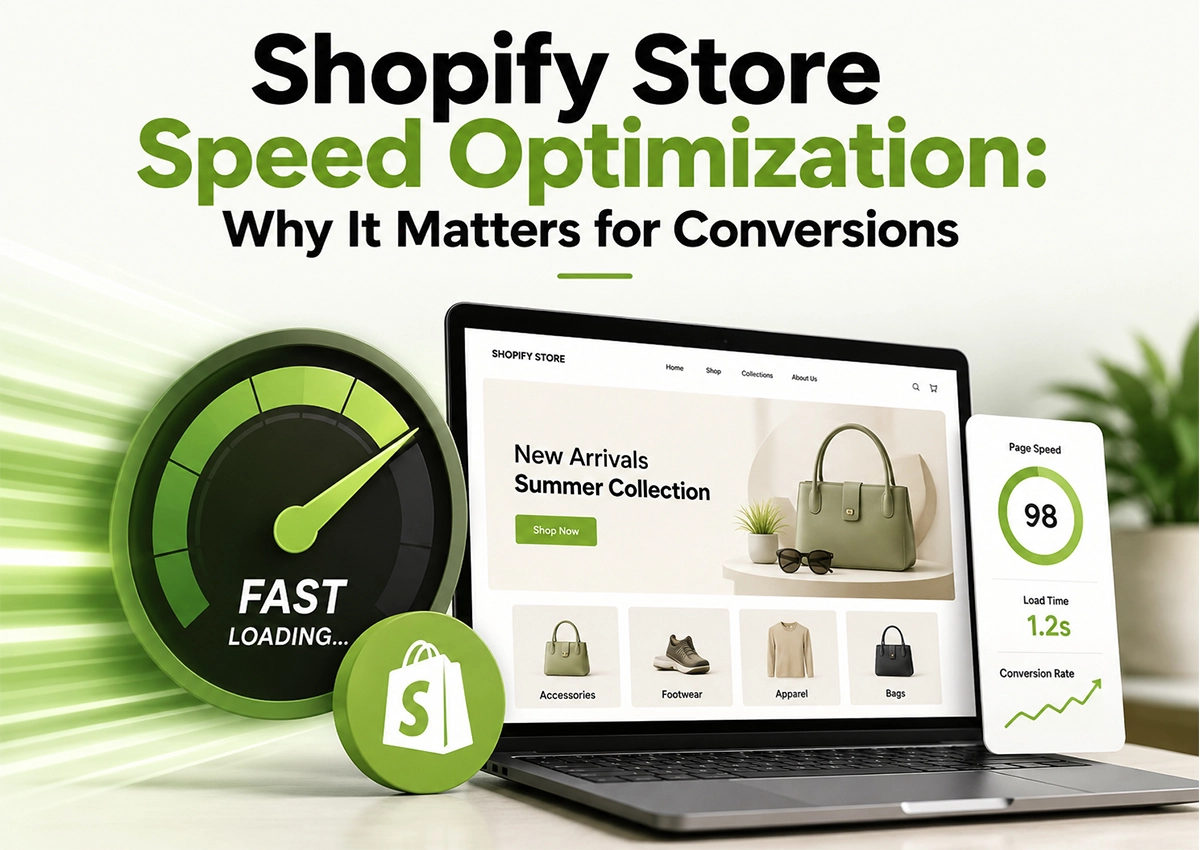
Shopify store speed optimization is no longer just a technical task. It directly affects how shoppers browse, trust, and buy from your store. A slow product page can lose a sale before the customer even sees the offer.
In 2026, shoppers expect fast, frictionless experiences across mobile and desktop. Therefore, brands need more than a good-looking Shopify store. They need a store that responds quickly, loads efficiently, and keeps customers moving toward checkout.
This guide explains how to speed up Shopify website performance, what usually slows stores down, and where Shopify optimization can create measurable conversion gains.
A faster Shopify store can create a smoother shopping journey, reduce friction, and support stronger conversion performance. However, speed optimization isn’t about making every page score 100.
It is about identifying what slows the store down, fixing high-impact issues first, and protecting the customer experience.
Slow pages can increase abandonment, especially on mobile. Therefore, Shopify performance optimization should be part of your conversion strategy.
Too many apps, scripts, tracking pixels, and third-party widgets can quietly increase page weight.
Most ecommerce traffic comes through mobile devices. Accordingly, Shopify page speed optimization should always test real mobile experiences.
New apps, campaigns, themes, and creative assets can slow a store again. Regular Shopify site speed optimization keeps performance under control.
Shopify store speed optimization means improving how quickly and efficiently your storefront loads and responds.
Sounds straightforward, but here’s where it gets interesting.
A store might look perfectly fine on a fast office connection. Then a shopper opens it on a mid-range phone using mobile data.Β
That small delay matters. Shopify optimization should therefore consider:
In other words, speed is part of the buying experience, not just a developer metric.
Imagine a customer clicks your Instagram ad and lands on your product page.
The page takes a few extra seconds to become usable. The customer waits, and then waits again; maybe they leave. You still paid for that click.
This is why Shopify website speed optimization matters financially. A slow store can waste paid traffic, reduce engagement, and weaken the path from product discovery to checkout.
Additionally, speed can influence SEO performance because search engines evaluate page experience alongside other ranking signals.
So, if you are spending heavily on Google, Meta, TikTok, or influencer traffic, speed up Shopify site performance before simply increasing the traffic budget.
Not every slow Shopify store has the same problem. However, several issues appear repeatedly.
Large product images can add unnecessary page weight. Use modern formats where appropriate, compress assets, and avoid uploading enormous images when a smaller version will look identical on mobile.
This one gets overlooked. A brand installs an app for reviews, another for pop-ups, another for upsells, and another for tracking.
Eventually, the storefront carries scripts it barely uses. Therefore, audit apps regularly. Remove unused applications and scripts instead of letting them sit quietly in the background.
A visually impressive theme can still carry unnecessary code. A cleaner theme structure often makes Shopify optimization easier.
Chat widgets, analytics, heatmaps, advertising pixels, recommendation engines, and other tools can all add processing overhead. Use them when they create business value, not simply because they’re available.
You don’t always need a complete rebuild. Start with the obvious wins.
These changes form the foundation of a practical Shopify speed optimization service.
Optimize your store for faster performance, better user experience, and more conversions.
Speed and SEO work together. Search engines want users to find useful pages. Users also expect those pages to work quickly. Therefore, Shopify page speed optimization should sit alongside:
However, don’t make the mistake of chasing speed scores while damaging usability. A product page that loads quickly but lacks strong product information won’t magically rank or convert.
Performance doesn’t replace SEO, but supports it.
Don’t rely on one number. Instead, monitor a combination of technical and commercial metrics:
This is where Shopify performance optimization becomes more useful. The goal is to make the shopping journey faster and more profitable.
Shopify optimization is becoming more strategic.
DIY optimization works for basic improvements. However, consider professional Shopify optimization services when:
At Krolog, we approach Shopify website optimization from both sides. Technical performance matters, and so does revenue.
We assess theme structure, scripts, apps, images, UX, SEO, and conversion friction. Then we prioritize fixes based on business impact rather than chasing vanity scores.
A slow Shopify store doesn’t always announce itself. There may be no broken page or obvious error; maybe just fewer customers reaching checkout.
That’s why Shopify store speed optimization deserves attention in 2026. Faster experiences reduce friction, support SEO, improve usability, and give paid traffic a better chance to convert.
Start with the biggest challenges: remove unnecessary weight, test mobile, measure commercial impact, and keep improving.
Because Shopify speed optimization isn’t a one-time technical project but part of running a high-performing ecommerce store.
Start by compressing images, removing unused apps, reducing third-party scripts, reviewing theme code, and testing mobile performance.
Yes, site performance contributes to page experience and can support stronger SEO when combined with relevant content, technical SEO, and good UX.
It is the process of improving page loading, responsiveness, asset delivery, scripts, theme performance, and overall storefront efficiency.
Start with image compression, app cleanup, script management, lazy loading where appropriate, and removal of unnecessary theme elements.
For complex stores, they can be. Professional optimization can identify technical bottlenecks while protecting UX, SEO, tracking, and conversion functionality.
Go to Shopify Admin, then Online Store, and then Themes to view your speed score. You can also use Google PageSpeed Insights or GTmetrix for a detailed performance report.
Yes, too many apps or poorly optimized apps can add scripts that slow your store. Remove unused apps and audit third-party scripts regularly.
A Shopify speed score of 50+ is generally considered good. Focus on meeting Core Web Vitals for the best SEO and user experience.
Sandeep K, Founder and CEO of Krolog Inc., is an Amazon marketplace consultant with more than 10 years of experience across Amazon SEO, PPC, account management, listing optimization, and marketplace growth.
He has worked with brands across categories to improve marketplace performance, resolve operational challenges, and build sustainable Amazon growth strategies.
Your store should not lose customers because it takes too long to load. Krolog helps ecommerce brands with Shopify optimization, speed optimization, SEO, development, and conversion-focused improvements.
Schedule a call with Krolog and discover how the right Shopify strategy can accelerate your growth.
Shopify Store Speed Optimization: Why It Matters for Conversions in 2026 Shopify store speed optimization is no longer just a…
Amazon Account Health: The Early Warning System Most Sellers Ignore Amazon Account Health is more than a score sitting inside…
DTC Strategy for Amazon Private Label Sellers: A Complete Launch Guide for 2026 Amazon can build your brand. But it…
Krolog was born from a simple yet powerful idea: to empower businesses with the tools and strategies needed to thrive in the ever-evolving digital marketplace. Our journey is a testament to the transformative impact of strategic E-commerce solutions.


Copyright Β© 2026 All Right ReservedΒ