
Nav Preview
  • Amazon FBA Fee Changes 2026: What Sellers Need to Know

    Selling on Amazon keeps changing. So do the costs.

    The Amazon FBA fee changes in 2026Β  have shaped how sellers price products, manage inventory, and calculate profit margins. Some updates are small, while others quietly affect every order you ship through FBA.

    If you’re relying on old calculations, there’s a good chance your margins are already off.

    This guide breaks down Amazon FBA fees 2026, explains what’s changed, what hasn’t, and how sellers can adapt without sacrificing profitability. We’ll also show how tools like an Amazon FBA profit calculator and smarter inventory planning can help offset rising costs.

    Amazon Product Video
    Amazon Advertising Video
    Amazon Sponsored Brand Video

    Amazon ACoS Strategies

    PPC Performance

    Higher ROAS

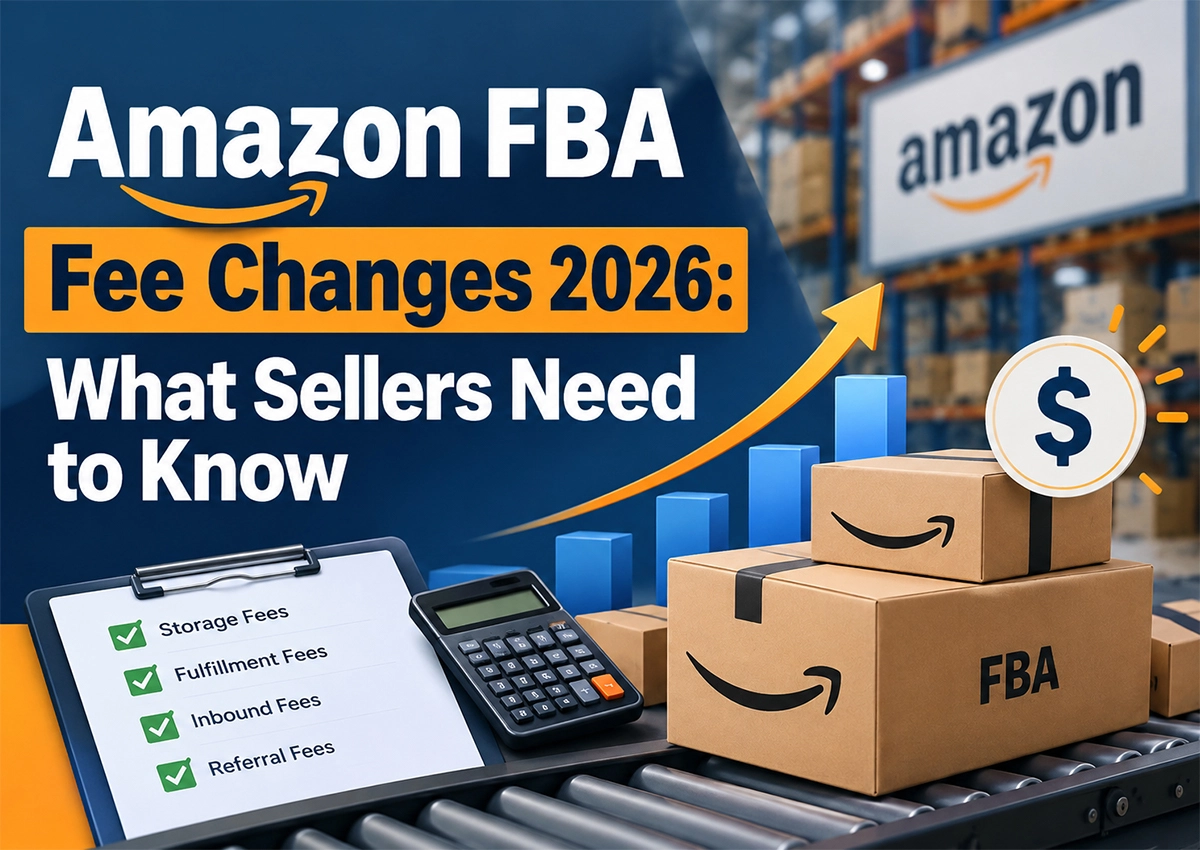
    Amazon FBA fee changes 2026 guide showing storage, fulfillment, inbound, and referral fees

    Summary

    The Amazon FBA fee changes in 2026 are more than a routine pricing update. Even small increases in fulfillment costs can affect margins across hundreds or thousands of orders. Understanding Amazon FBA fulfillment fees, Amazon FBA storage fees, Amazon referral fees, and shipping costs is now essential for every seller.

    Whether you’re launching a new product or managing an established catalog, using an Amazon FBA profit calculator and reviewing your fee structure regularly helps protect profitability. Sellers who update pricing, optimize inventory, and plan around the latest Amazon seller fees in 2026 are better positioned to stay competitive and scale sustainably.

    Key Takeaways

    Fulfillment Fees Increased

    The Amazon FBA fee changes in 2026 slightly increase fulfillment costs for FBA sellers.

    Storage Planning Saves Money

    Better inventory planning helps reduce Amazon FBA storage fees.

    Referral Fees Still Matter

    Amazon referral fees remain category-based and affect every sale.

    Calculate Profit Before Pricing

    Use an Amazon FBA profit calculator to estimate real margins before listing or repricing products.

    What Changed in Amazon FBA Fee Changes 2026 and Why Should Sellers Care?

    The Amazon FBA fee changes in 2026 aren’t a complete pricing overhaul. But they touch enough areas to affect margins if you’re not paying attention.

    Amazon announced updates to fulfillment fees, storage policies, and inventory-related charges for sellers using FBA. At the same time, Amazon referral fees stayed largely category-based for most products.

    If you sell low-margin products, even a few cents per order can add up pretty fast. That’s why recalculating profitability matters now, not after peak season Amazon begins.

    Here’s what changed

    Fee Category 2026 Update
    Amazon FBA fulfillment fees Average increase of about $0.08 per unit across eligible FBA products.
    Amazon FBA storage fees Storage pricing structure continues, with inventory efficiency remaining a key factor.
    Amazon referral fees Most referral fee percentages remain unchanged across major categories.
    Shipping and placement fees Inventory placement and fulfillment costs continue to depend on shipment configuration.

    Expert Observation

    Sellers usually react only to fulfillment fees; that’s a mistake. Storage costs, shipping configuration, and inventory placement often create a much bigger profit leak over time.

    Amazon FBA Fulfillment Fees 2026 Can Quietly Reduce Your Margins

    Fulfillment fees are what Amazon charges to pick, pack, and ship every FBA order.

    Sounds simple. But these fees depend on product size, shipping weight, packaging dimensions, and fulfillment category.

    The Amazon FBA fees in 2026 introduced a modest average increase per unit. Small products may barely feel it, but it does impact bulky items.

    What impacts fulfillment fees?

    • Product dimensions.
    • Shipping weight.
    • Oversize vs standard-size products.
    • Packaging configuration.
    • Multi-unit shipments.

    If your product packaging grew by even half an inch during manufacturing, your fulfillment fee could move into another pricing tier.

    Common Seller Mistake

    Many sellers update product pricing only once a year. Meanwhile, Amazon FBA fulfillment fees change underneath them. Profit slowly disappears.

    Review fulfillment costs every time Amazon publishes fee updates.

    Amazon FBA Storage Fees 2026 Reward Better Inventory Planning

    Storage has become a performance metric. Amazon wants inventory moving, not sitting inside warehouses for months.

    Amazon FBA storage fees 2026 still depend on inventory volume, seasonality, and warehouse occupancy. During peak season, Amazon monthly storage fees increase significantly compared to off-season months.

    Reduce Amazon warehouse storage fees with smarter inventory

    • Forecast inventory monthly.
    • Ship smaller replenishment batches.
    • Remove aging inventory early.
    • Track Inventory Performance Index regularly.
    • Avoid long-term storage charges before they apply.

    Expert Tip

    Storage fees usually spike after inventory planning mistakes, not sales growth. Better forecasting often saves more money than reducing ad spend.

    Amazon Referral Fees Still Matter More Than Many Sellers Think

    Referral fees haven’t changed much; they still vary by product category.

    For most sellers, Amazon referral fees remain between category-specific percentages defined by Amazon Seller Central.

    Categories often have different referral percentages

    Referral fees are calculated as a percentage of the selling price, before calculating final profit.

    That’s why sellers shouldn’t rely only on revenue when evaluating profitability.

    How to Calculate Amazon FBA Fees Correctly Before You Launch or Reprice Products

    Guessing margins doesn’t work anymore. Every seller should calculate costs before launching a product or changing prices.

    An Amazon FBA cost calculator helps estimate fulfillment, storage, referral, and shipping fees before inventory reaches Amazon’s warehouse. Amazon also recommends using its Revenue Calculator to preview the 2026 fee updates and check product profitability.

    Don’t Let Rising FBA Fees Eat Into Your Profits

    Optimize your Amazon strategy, control costs, and protect your margins with expert FBA support.

    What Should an Amazon FBA Profit Calculator Include?

    A reliable Amazon FBA profit calculator should include every major cost, not just fulfillment fees.

    Quick Example

    Even a small fulfillment fee increase changes the final profit. That’s why sellers should update calculations whenever Amazon FBA fee changes go live in 2026.

    Expert Observation

    At Krolog, we always calculate profit after PPC spend, storage costs, and shipping. Revenue looks good on paper. Contribution margin tells the real story.

    Common Amazon FBA Fee Mistakes Sellers Make in 2026

    Most sellers don’t lose money because fees exist. They lose money because they ignore them.

    Pricing Without Updating Fees

    Many brands still use old pricing spreadsheets. Meanwhile, Amazon seller fees 2026 have already changed. Review pricing every quarter.

    Ignoring Storage Charges

    Slow inventory increases Amazon FBA storage fees month after month. Overstocking before peak season can get expensive on Amazon.

    Oversized Packaging

    A slightly larger box can move your product into a higher fulfillment fee tier. Optimize packaging before sending inventory.

    Forgetting Shipping Costs

    Amazon FBA shipping fees include inbound shipping to Amazon, not just delivery to customers. Budget for both.

    Using Ads Without Watching Profit

    Higher sales don’t always mean higher profit. Track PPC costs alongside fulfillment and referral fees.

    Emerging Trends in Amazon FBA Fees 2026 Every Seller Should Watch

    Amazon isn’t only increasing fees. It’s also giving sellers more tools to manage profitability.

    Better Profit Analytics Inside Seller Central

    Amazon is expanding fee preview tools and Profit Analytics dashboards so sellers can estimate fee impact before inventory arrives.

    Inventory Efficiency Gets More Attention

    Healthy inventory levels help reduce unnecessary storage and placement costs. Inventory planning is becoming a competitive advantage.

    Packaging Optimization Saves Money

    Smaller, lighter packaging can reduce Amazon FBA fulfillment fees and shipping costs without changing the product itself.

    Profitability Matters More Than Revenue

    Successful sellers now optimize for contribution margin, not just sales volume. Small fee savings across thousands of orders create significant long-term gains.

    How Krolog Helps Sellers Reduce the Impact of Amazon FBA Fee Changes in 2026

    Fee updates don’t have to hurt profitability. They need better planning.

    At Krolog, we help sellers audit their FBA costs before fee changes affect margins. That includes:

    • FBA fee and profitability audits.
    • Pricing strategy based on updated fees.
    • Inventory planning to reduce storage costs.
    • Packaging recommendations to lower fulfillment fees.
    • PPC optimization to protect overall margins.

    The goal isn’t just reducing costs. It’s building a healthier Amazon business that stays profitable as fees evolve.

    Seller Strategies to Reduce the Impact of Amazon FBA Fee Changes 2026

    You can’t stop fee updates. You can definitely reduce how much they hurt.

    The smartest sellers aren’t cutting corners; they’re optimizing operations. Small changes across packaging, inventory, and pricing often recover more profit than you’d expect.

    1. Use an Amazon FBA Profit Calculator Before Repricing Products

    Don’t raise prices blindly. Run every SKU through an Amazon FBA profit calculator after the latest fee updates. Include referral fees, fulfillment fees, storage costs, shipping, and PPC spend before deciding your selling price.

    2. Keep Inventory Lean to Reduce Amazon FBA Storage Fees

    Storage is expensive when products don’t move. Instead of sending three months of inventory, replenish more frequently based on demand forecasts. This helps lower Amazon FBA storage fees in 2026 and reduces long-term storage charges.

    3. Optimize Packaging to Lower Fulfillment Costs

    Packaging matters more than many sellers realize. A lighter or smaller package can move a product into a lower fulfillment fee tier. Review dimensions before your next manufacturing run.

    4. Review Amazon FBA Shipping Fees Before Every Shipment

    Shipping isn’t one fixed cost. Compare inbound shipment options, consolidate inventory where possible, and choose lower-cost placement options when they make sense for your business.

    5. Monitor Profit, Not Just Sales

    Higher revenue doesn’t always mean higher margins. Track fulfillment costs, advertising spend, and storage fees together. A campaign generating more sales but lower profit still needs fixing.

    Expert Observation

    At Krolog, we recommend reviewing fee reports every month instead of waiting for annual updates. Fee optimization works best when it’s continuous, not reactive.

    Final Verdict

    The Amazon FBA fee changes in 2026 may look small on paper, but they can have a noticeable impact across thousands of orders. Fulfillment fees have increased slightly, storage costs still reward efficient inventory planning, and referral fees continue to vary by category.

    The takeaway is simple. Don’t wait until margins start shrinking. Update your pricing, review inventory regularly, and calculate profitability using the latest Amazon seller fees before making business decisions.

    At Krolog, we help brands turn fee updates into optimization opportunities through smarter pricing, inventory management, and Amazon account strategy.

    Frequently Asked Questions

    About the Author

    Sandeep K, Founder & CEO of Krolog Inc., is an Amazon marketplace consultant with over 10 years of experience helping brands scale through Amazon FBA, PPC, SEO, inventory planning, and marketplace growth strategies. He has worked with businesses across multiple product categories to improve profitability and long-term marketplace performance.

    Need Help Reducing Your Amazon FBA Costs?

    The Amazon FBA fee changes in 2026 don’t have to eat into your margins. The right pricing strategy, inventory planning, and account optimization can help offset rising fulfillment and storage costs.

    Whether you need an FBA profitability audit, Amazon PPC optimization, inventory planning, or complete Amazon account management, Krolog helps sellers build a more profitable Amazon business.

    Related Article

    Amazon FBA Fee Changes 2026: What Sellers Need to Know

    Amazon FBA Fee Changes 2026: What Sellers Need to Know

    Amazon FBA Fee Changes 2026: What Sellers Need to Know Selling on Amazon keeps changing. So do the costs. The…

    Shopify vs. Amazon Fees (2022–2026): Complete Seller Cost Comparison

    Shopify vs. Amazon Fees (2022–2026): Complete Seller Cost Comparison

    Shopify vs. Amazon Fees (2022–2026): Complete Seller Cost Comparison Selling online looks simple until the fees start adding up. A…

    Amazon Sponsored Brand Video: How It Can Improve CTR in 2026

    Amazon Sponsored Brand Video: How It Can Improve CTR in 2026

    Amazon Sponsored Brand Video: How It Can Improve CTR in 2026 Amazon Sponsored Brand Video is no longer a nice-to-have…

    Scroll to Top