Amazon Seller’s Guide to Shopify Ads: Meta, Google & Shopping Strategies
Amazon Seller’s Guide to Shopify Ads: Meta, Google & Shopping Strategies Selling on Amazon gets you visibility; selling on Shopify…

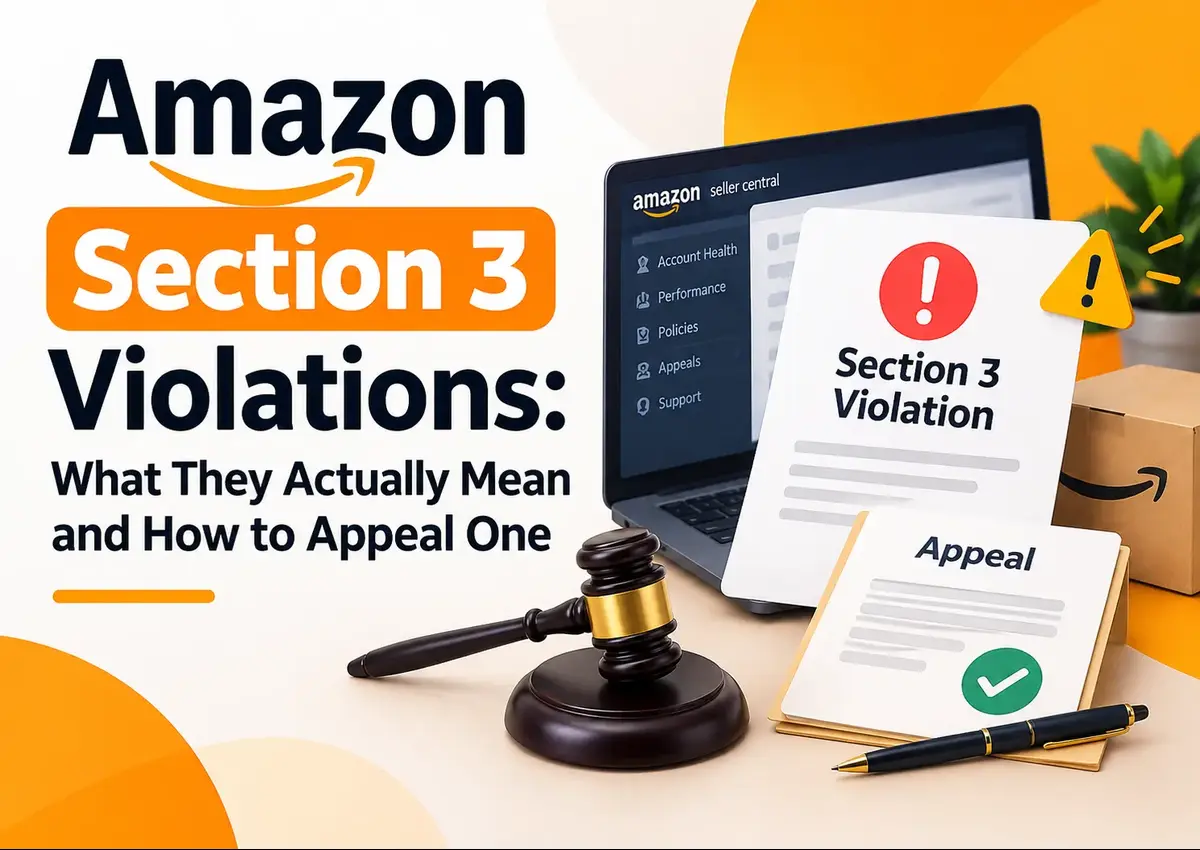
An Amazon Section 3 violation email usually arrives without warning.
You log into Seller Central. Sales were normal yesterday; today, your selling privileges are gone. The notification mentions Amazon Section 3 or the Amazon Business Solutions Agreement Section 3. That’s enough to make most sellers panic.
Here’s the thing: A Section 3 suspension doesn’t always mean you’ve broken Amazon’s rules on purpose. Sometimes Amazon wants additional verification, and sometimes it may flag unusual account activity. In other cases, it suspects a related account or needs documents before restoring access.
The mistake most sellers make? They rush an appeal within minutes.
This guide breaks down what an Amazon Section 3 violation actually means, why Amazon issues these suspensions, and how to prepare an Amazon appeal plan of action that gives your account the best chance of reinstatement.
An Amazon Section 3 violation is a suspension issued under Section 3 of Amazon’s Business Solutions Agreement when Amazon believes it needs to review your account, business information, or compliance status.
A successful Amazon seller account reinstatement starts with identifying the real reason behind the suspension, providing supporting documents, and submitting a clear Amazon appeal plan of action instead of multiple rushed appeals.
Many sellers regain access after completing verification or submitting a strong appeal.
Your appeal should explain the issue, the fix, and the preventive actions.
Shared business details, payment methods, or devices may lead to an Amazon related account suspension review.
Incomplete or inconsistent business information is one of the most common triggers.
Let’s clear up one confusion first: Amazon Section 3 is not a single policy violation. It’s a clause in the Amazon Business Solutions Agreement that allows Amazon to suspend, limit, or terminate selling privileges while it reviews an account.
That’s why many suspension emails don’t mention one exact policy. They simply reference Section 3 of Amazon’s policies.
In most cases, Amazon is asking one question: Can this account continue selling safely on the marketplace?
At Krolog, we’ve seen sellers send three or four appeals before they understand the real reason for the suspension. That usually slows the review process. The first step isn’t writing an appeal; it’s identifying the root cause.
An Amazon Section 3 violation doesn’t happen for one fixed reason.
It’s Amazon’s way of saying, “We need to review this account before you keep selling.”
Sometimes the review takes a few days, and sometimes it may take longer, depending on the documents and the issue involved.
Most suspensions fall into a handful of categories:
Accordingly, the first job is identifying which trigger applies to your account before writing an appeal.
We’ve seen sellers focus only on the suspension email. The better approach is reviewing Seller Central notifications, verification requests, and account health together. That’s usually where the real clue is.
This is one of the biggest reasons sellers receive an Amazon-related account suspension.
Amazon may believe two seller accounts are connected through shared information, even if they’re operated by different people.
Common triggers include:
A related account suspension doesn’t automatically mean you’ve violated policy. However, Amazon expects sellers to explain the relationship and provide supporting evidence if requested.
Imagine two businesses operating from the same office. One account was previously suspended. Amazon may temporarily review the second account because of the shared address. That’s why documentation matters.
Get expert help identifying the issue, preparing your Plan of Action, and navigating the Amazon appeal process.
Verification issues are surprisingly common.
Small inconsistencies can pause selling privileges until Amazon finishes verification.
Amazon may ask for:
Make sure every document matches the information inside Seller Central exactly. Even small differences in names or addresses can delay reinstatement.
One mistake sellers make is uploading different versions of the same document repeatedly. If Amazon rejects a document once, first understand why before submitting another version.
The appeal isn’t the place to argue, but the place to explain.
A strong Amazon appeal plan of action answers three questions:
Briefly explain the reason behind the suspension based on Amazon’s notice and your account review.
Describe the corrective actions you’ve already completed, including verification updates or account changes.
Explain the long-term process changes that reduce the risk of another Amazon Section 3 reinstatement issue.
Keep it factual and concise. Support every claim with relevant documents whenever possible.
Most sellers don’t lose reinstatement because they appealed. They lose it because they appealed too quickly. We’ve reviewed dozens of Amazon Section 3 reinstatement cases, and the same mistakes keep showing up.
Amazon isn’t looking for frustration; it’s looking for facts.
A successful Amazon suspension appeal service focuses on documents, timelines, and corrective actions.
Don’t guess why your account was suspended. Review the Section 3 notice, Seller Central notifications, and verification requests first. Then build your response around the actual issue.
Every new appeal resets the conversation. If Amazon asks for additional documents, respond to that request instead of creating a brand-new appeal.
Copied templates rarely address your suspension. Your Amazon appeal plan of action should reflect your business, your account history, and the reason Amazon suspended you.
One of the biggest reasons for delaying the process is submitting documents that don’t match Seller Central records. Names, addresses, and business details should be consistent across every document.
An Amazon Section 3 violation is rarely just a writing problem. It’s usually a verification, compliance, or account review problem.
At Krolog, we help sellers identify the suspension trigger before drafting an appeal. Our Amazon account reinstatement service focuses on evidence-backed appeals instead of generic templates.
Our team helps with:
The goal is simple: submit one stronger appeal instead of multiple weak ones.
Getting an Amazon Section 3 violation doesn’t always mean your selling journey is over.
In many cases, Amazon is asking sellers to verify information, explain account activity, or resolve compliance concerns. A well-prepared appeal, backed by accurate documents and a clear corrective plan, has a much better chance of success than a rushed response.
If your account is suspended under Amazon Section 3, slow down first and identify the root cause. Then build an appeal around facts, not assumptions.
An Amazon Section 3 violation is a suspension issued under the Amazon Business Solutions Agreement when Amazon temporarily reviews a seller account for verification, compliance, or account activity concerns.
It depends on the case. Some verification reviews take a few days, while complex appeals involving related accounts or compliance issues can take longer.
Amazon suspends an account if it believes it's connected to another seller account through shared business details, payment methods, addresses, or devices.
It should explain what happened, what corrective actions you've taken, and what long-term steps will prevent the issue from happening again.
It's better to respond to Amazon's existing case unless new evidence is requested. Sending repeated appeals without addressing the root cause can delay the review.
Not always. However, if the suspension involves complex verification issues, related accounts, or repeated appeal rejections, professional guidance can help structure a stronger reinstatement case.
Yes, in most cases, an Amazon Section 3 violation results in Amazon temporarily suspending or restricting your selling privileges while it reviews your account. However, the suspension isn't always permanent. Once verification or compliance issues are resolved, eligible sellers can apply for Amazon Section 3 reinstatement.
Often, yes. Many Amazon seller account verification suspensions happen because Amazon needs updated business documents, identity proof, bank details, or address verification. Submitting accurate documents that match your Seller Central information can help move the review process forward.
An Amazon seller Section 3 suspension is different from a product or listing policy violation. Policy violations usually relate to specific ASINs or marketplace rules. Amazon Section 3 gives Amazon the authority to review or suspend the entire seller account while it investigates verification, compliance, or account activity concerns.
Consider an Amazon account appeal service if your Section 3 appeal has been rejected, your account involves an Amazon-related account suspension, or you're unsure how to prepare an evidence-backed Amazon appeal plan of action. A structured appeal is usually more effective than submitting multiple generic responses.
Sandeep K., Founder and CEO of Krolog Inc., has over 10 years of experience helping Amazon sellers recover suspended accounts, improve marketplace compliance, and scale through SEO, PPC, and account management.
A rejected appeal doesn’t always mean the case is over.
Krolog helps sellers investigate Amazon Section 3 violations, prepare stronger appeal documents, and manage the Amazon seller account reinstatement process with a structured, evidence-first approach.
Amazon Seller’s Guide to Shopify Ads: Meta, Google & Shopping Strategies Selling on Amazon gets you visibility; selling on Shopify…

Amazon Section 3 Violations: What They Actually Mean and How to Appeal One An Amazon Section 3 violation email usually…

Selling on Shopify and Amazon: How to Manage Both Channels Simultaneously in 2026 Selling on Shopify and Amazon sounds like…
Krolog was born from a simple yet powerful idea: to empower businesses with the tools and strategies needed to thrive in the ever-evolving digital marketplace. Our journey is a testament to the transformative impact of strategic E-commerce solutions.


Copyright Β© 2026 All Right ReservedΒ