Amazon Seller’s Guide to Shopify Ads: Meta, Google & Shopping Strategies
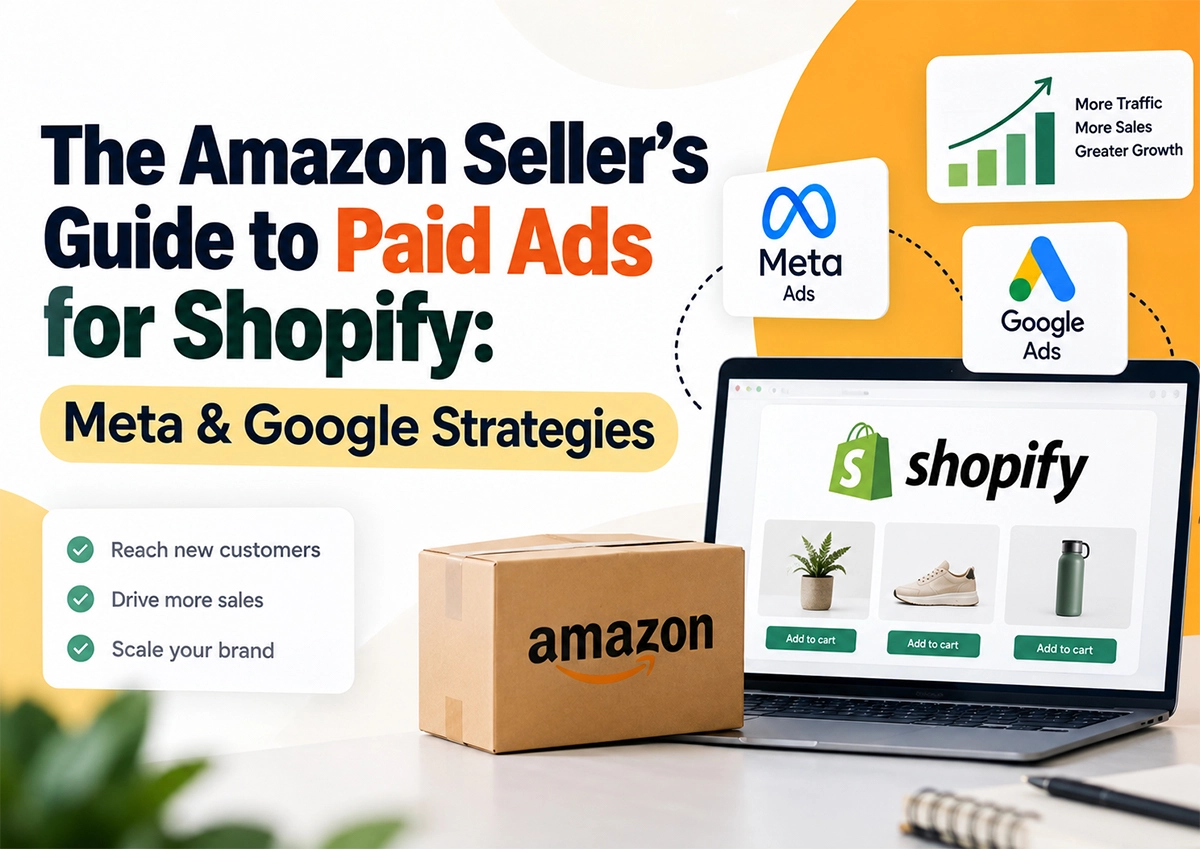
Amazon Seller’s Guide to Shopify Ads: Meta, Google & Shopping Strategies Selling on Amazon gets you visibility; selling on Shopify…

Selling on Amazon gets you visibility; selling on Shopify gives you ownership. But launching a Shopify store doesn’t automatically bring traffic.
That’s where paid ads come in.
Many Amazon sellers build a Shopify website expecting existing customers to find it; they don’t. Without the right Shopify ads strategy, even a beautifully designed store struggles to generate sales.
The good news? You already have customer insights from Amazon. Now it’s about using those insights across Meta Ads, Google Ads for Shopify, and Google Shopping to build a profitable direct-to-consumer channel.
This guide explains how Amazon sellers can build a Shopify marketing strategy using Meta and Google, improve Shopify conversion rate optimization, and scale paid campaigns without wasting budget.
Paid advertising helps Amazon sellers drive qualified traffic to Shopify while building a brand beyond the marketplace. A balanced mix of Shopify Facebook advertising, Google Shopping Ads Shopify, and conversion optimization creates a stronger DTC growth engine.
The key isn’t spending more, but sending the right audience into a Shopify sales funnel that converts.
Use customer behavior, product winners, and search intent from Amazon to build smarter Shopify campaigns.
Google captures buying intent; Meta creates demand and drives discovery.
Traffic without conversion wastes ad spend.
Campaigns, landing pages, tracking, and retargeting should work together.
Amazon is great for acquiring customers, but it’s not built for owning them.
You don’t control customer emails, loyalty programs, or remarketing lists. Shopify changes that. A strong Shopify marketing strategy helps brands build repeat purchases through paid ads, email marketing, and customer retention.
Instead of depending on Amazon traffic forever, brands start creating their own audience.
One mistake we often see is sellers launching Shopify and waiting for organic traffic. Paid ads usually become the fastest way to validate products and build momentum.
Customers don’t always search for your product first. Sometimes they discover it while scrolling Instagram or Facebook. That’s exactly where Shopify Facebook advertising fits.
Meta Ads work well for:
A successful Facebook advertising strategy for Shopify usually starts with awareness campaigns before moving customers into retargeting campaigns.
Someone visits your Shopify store but leaves without buying. A Meta retargeting campaign reminds them about the product a day later. That’s often where conversions happen.
Meta can help generate demand, while Google can capture shoppers who are actively searching for products or solutions. Customers searching for “ceramic meal prep containers” or “BPA-free food storage containers” are already looking to buy. Google Ads place your Shopify products in front of those searches.
The biggest advantage? You’re reaching customers when purchase intent is already high.
Don’t copy Amazon PPC keywords directly into Shopify PPC campaigns. Search behavior on Google is usually broader and more conversational.
Before running Google Shopping Ads on Shopify, you need accurate product data.
That’s where Google Merchant Center for Shopify becomes essential.
It syncs your Shopify catalog with Google, making products eligible for Shopping listings and Performance Max campaigns. A healthy feed should include:
A broken feed means broken campaigns.
Shopify Google Shopping puts product images, prices, and ratings directly into Google search.
Customers see products before clicking traditional search results.
That usually improves click-through rates for ecommerce brands selling physical products.
Shopping Ads work best when products have:
Small feed improvements often outperform increasing ad budgets.
Reach the right customers with Google, Meta, and Shopify paid ad strategies designed to drive traffic, conversions, and growth.
Ads don’t sell products; funnels do. A Shopify sales funnel guides visitors from discovery to purchase through multiple touchpoints. A simple funnel looks like this:
Every step affects conversions.
Traffic becomes much more valuable when the funnel is optimized.
Driving traffic is expensive. Losing customers after they click is even more expensive.
Shopify conversion rate optimization focuses on improving the percentage of visitors who complete a purchase. Simple improvements include:
Most mistakes happen after campaigns go live. Avoid these common ones:
Paid traffic exposes weaknesses in your Shopify store faster than organic traffic does.
Expanding from Amazon to Shopify isn’t just about launching a website. It’s about building a profitable DTC acquisition engine.
At Krolog, we help brands create paid advertising systems that connect Amazon insights with Shopify growth.
Our team helps with:
The goal is simple: better traffic; better conversions; better ROAS.
Amazon helps customers discover your products; Shopify helps you build a brand customers remember.
A successful Shopify advertising strategy doesn’t rely on one platform. It combines Meta Ads for demand generation, Google Ads for purchase intent, Google Shopping for product visibility, and Shopify conversion rate optimization to turn traffic into sales.
Build the funnel first, then scale the ads.
Start with Meta Ads for awareness and retargeting, then use Google Ads for Shopify and Google Shopping campaigns to capture high-intent buyers.
Yes, Google Merchant Center for Shopify is required to sync product data and make products eligible for Shopping campaigns.
Amazon PPC targets shoppers already inside Amazon, while Shopify PPC targets customers across Google, Meta, and other advertising platforms before they reach your store.
It improves landing pages, checkout flow, product messaging, and page speed so more visitors convert without increasing ad spend.
Yes, Meta creates demand and retargets visitors, while Google captures customers actively searching for products. Together, they create a stronger Shopify marketing strategy.
Start with a manageable test budget across Meta and Google, monitor ROAS and conversion data, then scale campaigns that consistently deliver profitable sales.
Connect your Shopify store to Google Merchant Center, sync your product feed, verify your domain, enable shipping and tax settings, and review your feed for product errors before launching campaigns.
Sandeep K., Founder and CEO of Krolog Inc., has over 10 years of experience helping ecommerce brands grow through Amazon PPC, Shopify advertising, conversion optimization, and multichannel marketing strategies.
Whether you’re expanding from Amazon to Shopify or improving an existing DTC store, Krolog helps brands build profitable Meta and Google advertising strategies that increase traffic, conversions, and long-term customer value.
Amazon Seller’s Guide to Shopify Ads: Meta, Google & Shopping Strategies Selling on Amazon gets you visibility; selling on Shopify…

Amazon Section 3 Violations: What They Actually Mean and How to Appeal One An Amazon Section 3 violation email usually…
Selling on Shopify and Amazon: How to Manage Both Channels Simultaneously in 2026 Selling on Shopify and Amazon sounds like…
Krolog was born from a simple yet powerful idea: to empower businesses with the tools and strategies needed to thrive in the ever-evolving digital marketplace. Our journey is a testament to the transformative impact of strategic E-commerce solutions.


Copyright Β© 2026 All Right ReservedΒ