
Best AI Tool for Amazon Advertising Optimization: What Sellers Should Know
Best AI Tool for Amazon Advertising Optimization: What Sellers Should Know Choosing the best AI tool for Amazon advertising optimization…
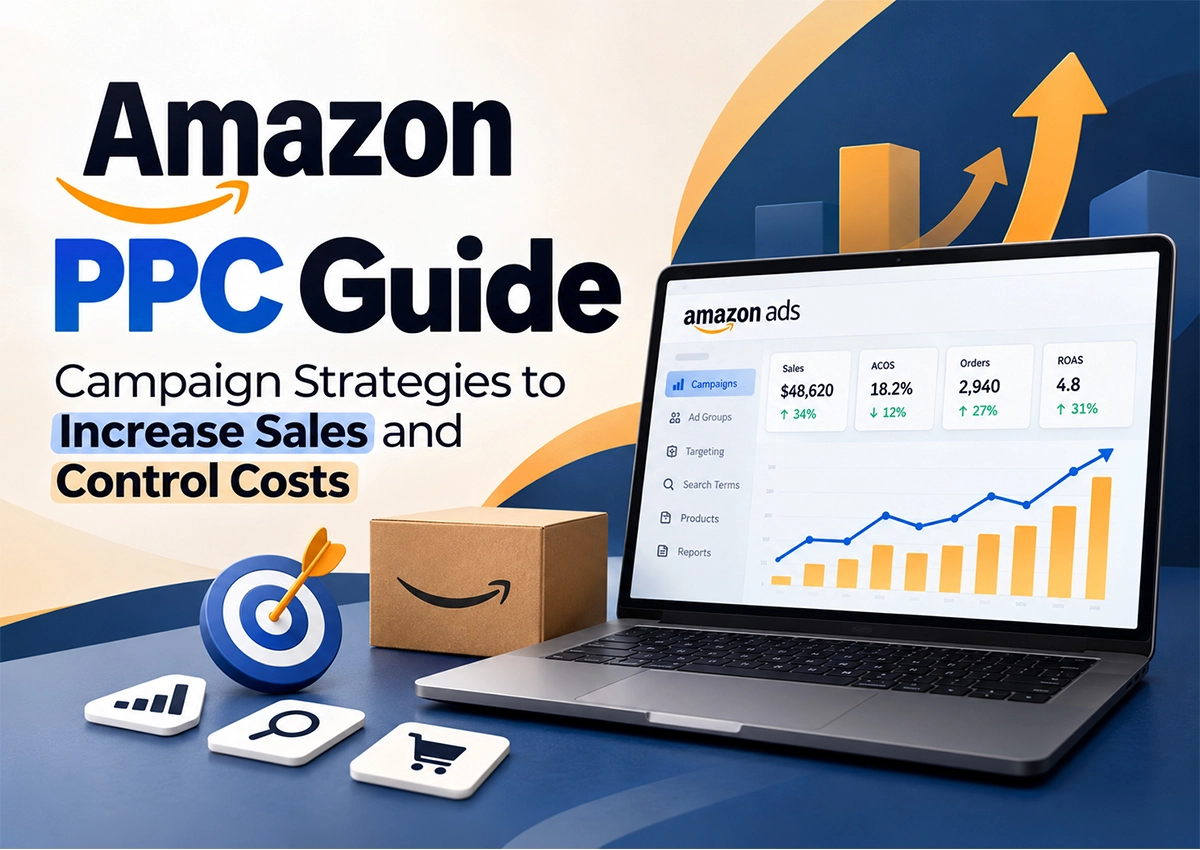
Amazon PPC can bring shoppers to your listing. But getting clicks is the easy part. Turning those clicks into profitable sales? That’s where the strategy matters.
This Amazon PPC Guide breaks down how sellers can build smarter campaigns, find valuable search terms, control Amazon advertising costs, and improve return on ad spend. We’ll cover campaign structure, bidding, keyword discovery, optimization, and peak-season planning with practical recommendations for sellers who want growth without letting ad spend run wild.
Amazon PPC advertising puts your products in front of shoppers. Yet more clicks don’t always mean more profit.
A practical Amazon PPC strategy connects keyword targeting, campaign structure, bids, budgets and listing conversion. Sellers need to know where their ad spend goes and which searches actually bring sales.
This guide explains how to build campaigns, improve efficiency and make smarter optimization decisions.
Structure all campaigns around clear goals. Separate discovery, proven keywords and product targeting.
Use search term data. Promote converting queries. Exclude irrelevant ones.
Optimize for profit, not clicks. ACoS matters, but so does total business performance.
Protect winning campaigns. Don’t cut productive targets just because one week looks weaker.
Review listings, inventory and ads together. PPC can’t fix a product page that fails to convert.
Amazon PPC (pay-per-click) lets sellers advertise products and pay when shoppers click their ads. Sponsored Products, Sponsored Brands and Display advertising offer different ways to reach shoppers.
Here’s the catch. Advertising can generate traffic, but the product still has to earn the sale.
Imagine a seller advertising a collapsible food container. The ad gets clicks for “leakproof lunch container.” But the listing doesn’t clearly explain its leak-resistant design. Shoppers leave.
The campaign may look like a keyword problem. In reality, the listing could be the issue.
Before increasing bids, check the product page, price, reviews, availability and Featured Offer eligibility. Amazon also notes that products need to be in stock and competitively priced to advertise effectively.
A clear Amazon PPC campaign structure makes optimization easier. It also helps sellers understand which targeting approach is working.
Start with three campaign groups:
For example, an automatic campaign might discover a “collapsible food storage container.” If that query produces profitable sales, test it in a dedicated exact-match campaign.
Amazon recommends combining automatic and manual targeting to discover search terms and apply more control. See its Sponsored Products targeting guide.
From keyword targeting and bid optimization to campaign structure and performance tracking, Krolog helps you optimize Amazon PPC campaigns to reduce wasted spend and drive more profitable sales.
Don’t launch every keyword in one campaign. Group related targets. Keep branded searches separate from generic category searches where that separation supports your reporting and budget decisions.
Also, avoid creating dozens of campaigns with tiny budgets. Too much fragmentation makes results harder to read.
Keyword research is only the starting point. Search term performance tells you what shoppers actually typed and what happened afterward. Review your search term report regularly.
Look for:
Then act. Add successful queries to manual campaigns. Consider negative keywords for irrelevant or consistently unproductive traffic.
Don’t block a keyword after two clicks just because it hasn’t been converted. Give it enough data to make a sensible decision. Amazon’s search term report can help identify both high-performing searches and candidates for negative targeting.
A common mistake is treating high click-through rate as proof of campaign success.
A shopper may click an attractive ad and still decide the product isn’t worth buying. Check conversion rate, order volume, CPC and ACoS together.
Start with your break-even ACoS. Estimate the contribution margin available to cover advertising after product costs and other variable expenses.
If your margin is tight, a high ACoS may leave little profit. If you’re launching a product, you may temporarily accept a higher ACoS to gather data or build visibility. The decision should be deliberate.
Use this practical review:
| Metric | What it tells you |
|---|---|
| ACoS | Ad spend as a share of attributed sales |
| ROAS | Attributed sales generated per advertising dollar |
| CPC | Average cost per click |
| Conversion Rate | How effectively clicks become orders |
| TACoS | Ad spend relative to total sales |
TACoS adds useful context. Advertising may help organic sales grow, so looking only at attributed ad sales can miss part of the picture.
Don’t lower every bid when costs rise. Identify which targets are overspending. Reduce bids or add negatives where the data supports it. Preserve profitable traffic.
Campaign optimization isn’t a one-time task. Review performance, make controlled changes, then allow enough time for results to become meaningful.
A practical routine:
Change one meaningful variable at a time where possible. Otherwise, it’s hard to tell what caused the improvement or decline.
Amazon advertising continues to expand beyond standard product ads. Sponsored Brands offers video and brand-focused creative. Display advertising can reach shoppers across different placements and audiences, depending on campaign availability.
Meanwhile, stronger reporting and targeting options make it easier to identify relevant searches and refine campaigns. But automation isn’t a replacement for judgment.
During peak season, plan budgets ahead of demand. Review historical sales, inventory and campaign performance. Increase investment in proven targets not every campaign at once.
Successful Amazon PPC isn’t about spending more. It’s about knowing where each advertising dollar goes.
At Krolog, our Amazon PPC management approach connects campaign data with practical decisions so sellers can work toward stronger sales and more efficient ad spend.
Need a clearer view of your campaigns? Request a free Amazon account audit from Krolog. Identify wasted spend, missed keyword opportunities and areas where your advertising strategy can improve.
There's no universal target. A good ACoS depends on product margins, growth goals and whether the campaign supports launch, sales or profitability.
Both can work together. Automatic campaigns help discover relevant searches. Manual campaigns give you greater control over selected keywords and product targets.
Check for urgent issues daily. Review search terms and bids weekly, then assess broader profitability monthly. Avoid reacting to small, short-term fluctuations.
Focus on relevant targeting, conversion-ready listings, disciplined bidding and profitable sales. Track both ad-attributed results and overall business performance.
Start with a budget based on your margins, sales goals, and competitive landscape. Increase spend on campaigns that deliver results.
Check your listing quality, pricing, reviews, keyword relevance, and product availability.
ACoS measures ad spend as a percentage of ad sales. ROAS measures the revenue generated for every dollar spent on ads.
Consider pausing keywords that spend consistently without conversions, after reviewing click volume, relevance, and your target ACoS.
PPC can generate sales and visibility that may support organic performance, but it does not guarantee higher organic rankings.
Negative keywords prevent ads from showing for irrelevant search terms, helping reduce wasted ad spend.
Refine targeting, add relevant negative keywords, adjust bids carefully, and protect campaigns that consistently drive profitable sales.
Sandeep K., Founder and CEO of Krolog Inc., is an Amazon marketplace consultant with over 10 years of experience in Amazon SEO, PPC, keyword strategy and marketplace growth. Krolog works with brands to improve advertising performance, strengthen product visibility and build sustainable marketplace strategies.
More clicks don’t always mean more sales, and more sales don’t always mean more profit.
Krolog helps Amazon sellers identify wasted ad spend, improve campaign structure and make data-backed advertising decisions.
Whether you need Amazon PPC management, campaign optimization or a complete marketplace growth strategy, our team can help you understand what’s working and where your budget could work harder.
Request a free Amazon account audit to uncover missed opportunities and get practical recommendations for your campaigns.
Best AI Tool for Amazon Advertising Optimization: What Sellers Should Know Choosing the best AI tool for Amazon advertising optimization…

Amazon Black Friday Deals: How to Qualify, Submit, and Choose Between Lightning Deals and Best Deals Black Friday can bring…
WooCommerce to Shopify Migration: Step-by-Step Guide Planning a WooCommerce to Shopify migration? Moving your store isn’t just about transferring products.…
Krolog was born from a simple yet powerful idea: to empower businesses with the tools and strategies needed to thrive in the ever-evolving digital marketplace. Our journey is a testament to the transformative impact of strategic E-commerce solutions.


Copyright Β© 2026 All Right ReservedΒ