
Best AI Tool for Amazon Advertising Optimization: What Sellers Should Know
Best AI Tool for Amazon Advertising Optimization: What Sellers Should Know Choosing the best AI tool for Amazon advertising optimization…
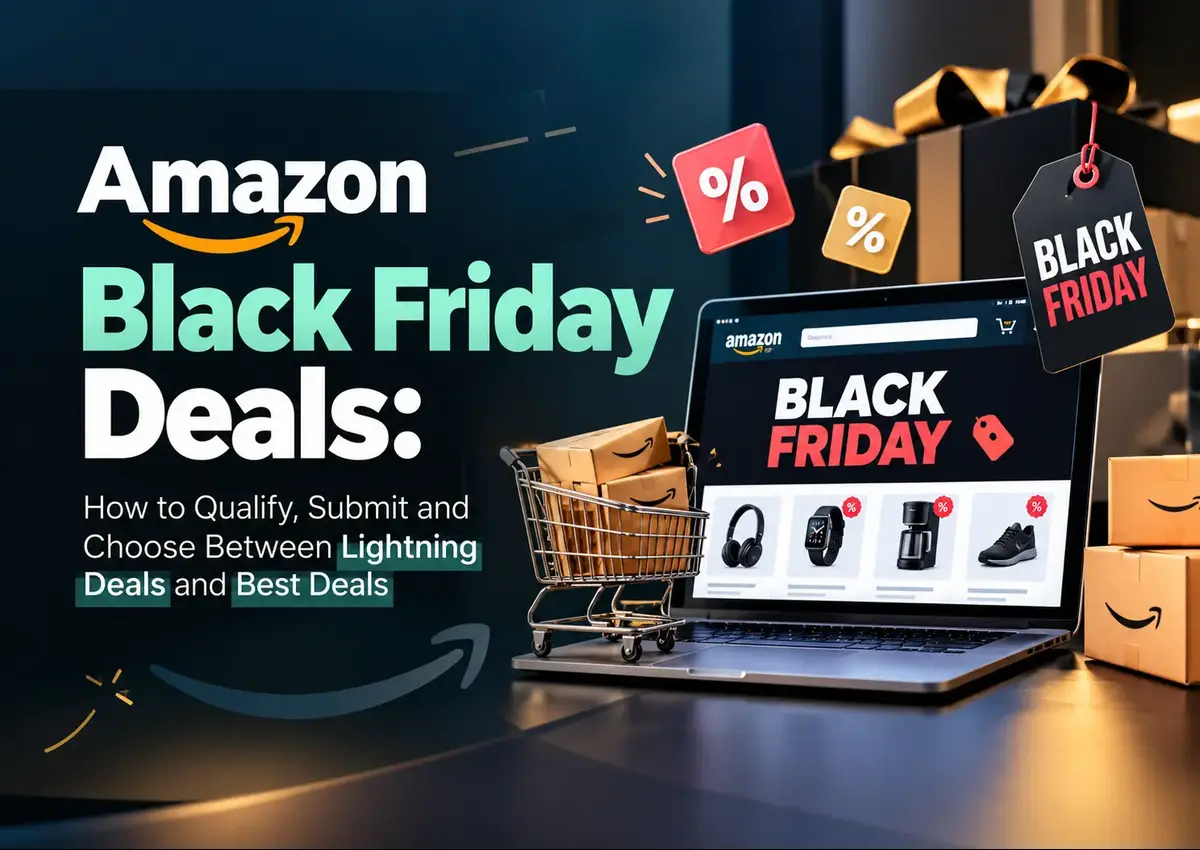
Black Friday can bring a surge of shoppers to Amazon. But more traffic doesn’t automatically mean more profit. Your product needs the right offer, enough inventory, and a listing that converts.
This guide to Amazon Black Friday Deals explains how sellers can check eligibility, submit deals through Seller Central, and choose between Lightning Deals and Best Deals. You’ll also learn how to plan pricing, advertising, and inventory before the peak season Amazon shopping rush begins.
Amazon Lightning Deals offer a short promotional window, while Best Deals provide a longer deal period. The right choice depends on product demand, margins, inventory, and campaign goals. Sellers should check eligibility and fees in Seller Central before committing.
Confirm ASIN eligibility before planning your promotion.
Evaluate deal fees and discounts against expected profit, not revenue alone.
Use Lightning Deals for short-term impact and Best Deals for longer visibility.
Align inventory, listing optimization, and advertising before Black Friday.
Black Friday falls on November 27, 2026. Amazon’s US event announcement says Black Friday Week starts November 21, with deals continuing through November 29, followed by Cyber Monday promotions.Β
However, shoppers may see promotions before Black Friday itself. So, when do sales start on Black Friday? For Amazon sellers, the better question is when their eligible deals will run.Β
Check your marketplace’s event calendar and Seller Central dashboard for confirmed dates.
Amazon offers eligible sellers promotional formats that can feature products with deal badges. Two common options are Lightning Deals and Best Deals.
| Feature | Lightning Deals | Best Deals |
|---|---|---|
| Duration | Usually a few hours | Usually multiple days |
| Best suited for | Short, concentrated sales activity | Longer promotional visibility |
| Scheduling | Amazon determines the event slot | Options depend on event and availability |
| Main consideration | Can you convert demand quickly? | Can your margin support a longer offer? |
Both can help attract deal-seeking customers, but neither guarantees sales.
First, open Advertising and then Deals in Seller Central and review eligible ASINs. Amazon determines eligibility based on factors that can include product rating, sales history, inventory, fulfilment, condition, and variation availability. Requirements vary by marketplace and product category.Β
Before submitting, check:
Sellers focus on getting the badge but forget to calculate what remains after costs. A promotion that increases orders while losing money isn’t a win.
Wondering how to create Black Friday deals on Amazon? Follow this process:
Submit early whenever the event calendar allows it. Amazon’s 2026 US guidance originally listed October 20 as the submission deadline for Black Friday Week and Cyber Monday deals, with early-bird savings available for qualifying submissions by September 5. Deadlines can change, so verify the latest status in Seller Central.Β
Prepare your listings, choose the right deals, and maximize seasonal sales with expert Amazon strategy.
Picture a seller with two products: a popular kitchen gadget and a slower-moving accessory.
The gadget already converts well and has enough stock for a sharp burst of demand. A Lightning Deal may suit it. The accessory needs a longer window to attract shoppers. A Best Deal may be worth evaluating instead.
That’s the principle: match the format to the product.
Before deciding, estimate the sales needed to cover the discount and deal fees. Amazon’s published US peak-event fee structure for 2026 lists a $100 upfront fee plus 1.5% of promotional sales, capped at $5,000.Β
Confirm the current fee shown for your marketplace and promotion before submitting.Β
An Amazon brand approached Krolog with high advertising costs and an under-optimized product listing. Krolog refined the listing content, improved keyword targeting, and restructured its PPC campaigns. The team also incorporated promotional opportunities into the broader growth strategy.
The results? Sales increased by 147%, while ACoS dropped from 75% to 37% within 3 months of time.
The takeaway for Black Friday sellers is simple: promotions work best when supported byΒ
optimized listings and well-managed advertising.
A deal is only one part of the campaign. Additionally, sellers should:
At Krolog, we recommend treating Black Friday as a coordinated growth campaign, not a last-minute discount. Our Amazon PPC management and full account management services help sellers connect advertising, listing optimization, and account performance.
Above all, use historical performance to guide your decision. Don’t choose a deal format just because competitors use it.
Amazon Black Friday deals can create a valuable sales opportunity, but the discount alone won’t carry your campaign. Choose the deal format carefully, protect your margins, and prepare your listing, inventory, and advertising in advance.
Need a stronger Black Friday strategy? Contact Krolog to discuss Amazon PPC, listing optimization, and marketplace growth support.
The shopping event can extend beyond Black Friday itself. Amazon's 2026 US announcement lists Black Friday Week from November 21-29, followed by Cyber Monday deals.
No, sellers and products must meet Amazon's eligibility requirements, and deal recommendations may not be available for every ASIN.
Neither is universally better. Choose based on product demand, inventory, promotion duration, fees, and profit margins.
Amazon offers other promotion types, including percentage-off and social media promo codes. Availability and setup depend on the promotion and marketplace. Check Seller Central before creating one.
Submit as early as your marketplace's event calendar permits. Check Seller Central for current deadlines, fees, and any extensions.
Deal visibility can help attract shoppers, but results depend on price, demand, listing quality, stock, competition, and advertising.
PPC can help drive relevant traffic to eligible products. Set budgets and bids according to expected demand and acceptable acquisition costs.
Consider other available options, such as coupons or price discounts. Confirm their eligibility, fees, and terms in Seller Central.
Sandeep K., Founder and CEO of Krolog, is an ecommerce growth strategist with extensive experience in Amazon marketplace management, advertising, SEO, and product listing optimization. He works with brands to identify growth opportunities, improve advertising efficiency, strengthen product visibility, and build sustainable marketplace strategies.
Best AI Tool for Amazon Advertising Optimization: What Sellers Should Know Choosing the best AI tool for Amazon advertising optimization…

Amazon Black Friday Deals: How to Qualify, Submit, and Choose Between Lightning Deals and Best Deals Black Friday can bring…
WooCommerce to Shopify Migration: Step-by-Step Guide Planning a WooCommerce to Shopify migration? Moving your store isn’t just about transferring products.…
Krolog was born from a simple yet powerful idea: to empower businesses with the tools and strategies needed to thrive in the ever-evolving digital marketplace. Our journey is a testament to the transformative impact of strategic E-commerce solutions.


Copyright Β© 2026 All Right ReservedΒ