Amazon Tariffs: How to Adjust Your Pricing, Sourcing, and PPC Strategy
Amazon Tariffs: How to Adjust Your Pricing, Sourcing, and PPC Strategy Amazon tariffs can change the economics of selling online.…
Your Shopify store is growing. Orders are coming in, your customer base is expanding, and the occasional traffic spike is becoming a regular thing. But now, you’re running into limitations.
Is it time to upgrade?
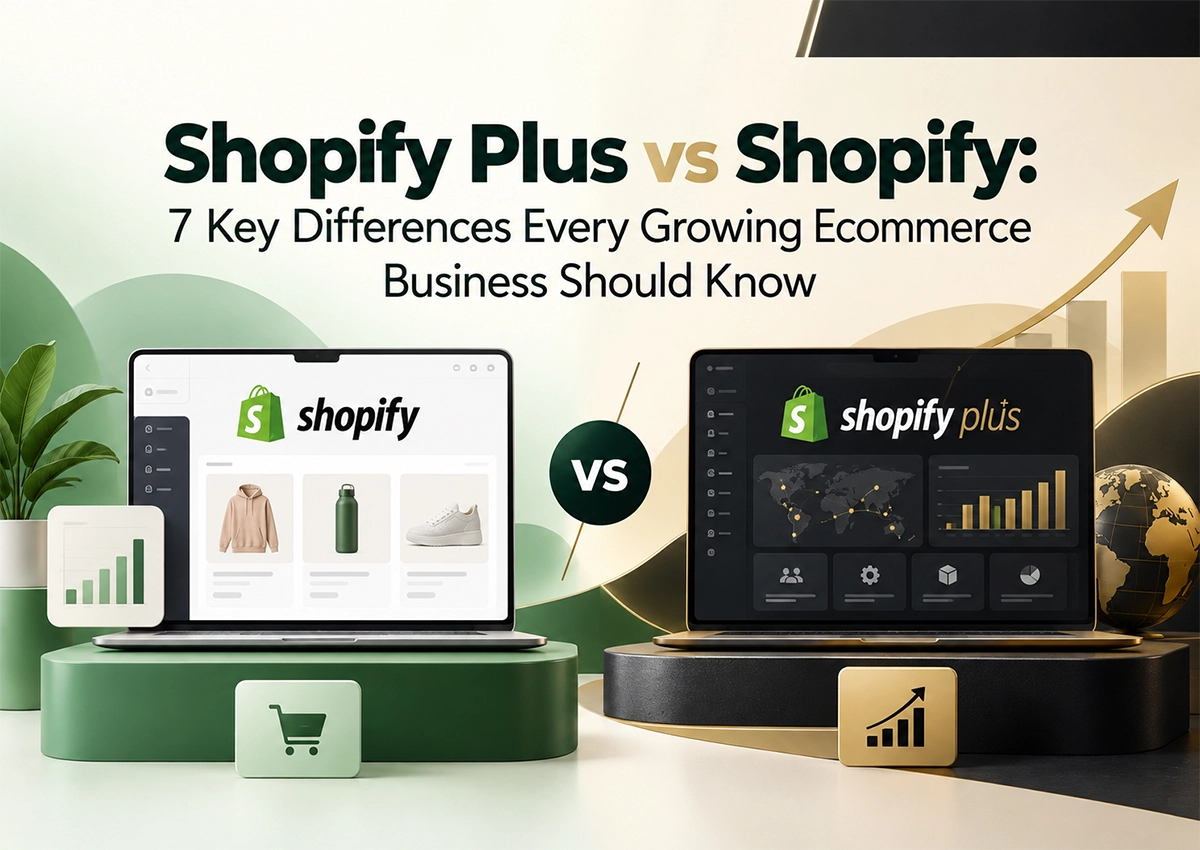
The Shopify Plus vs Shopify decision comes down to more than store size. It involves checkout control, B2B operations, automation, international expansion, and the complexity of your business.
Let’s break down seven differences to help you decide whether Shopify Plus is worth the investment.
Shopify and Shopify Plus use the same core commerce platform, but they serve different business needs. Standard Shopify plans suit most small and growing stores. Shopify Plus adds advanced checkout customization, expanded B2B capabilities, higher operational limits, and tools for managing complex commerce operations.
The right choice depends on whether these features solve real business problems, not simply whether your sales are increasing.
Standard Shopify works for most growing stores.
Shopify Plus requires a significantly higher investment.
Plus offers greater control over checkout experiences.
Advanced wholesale features support complex business needs.
Plus offers greater flexibility for complex workflows.
Manage multiple storefronts and international markets.
Move to Plus when your current plan limits growth.
Think of Shopify as the foundation and Shopify Plus as the expanded setup for more complex operations.
Shopify offers Basic, Grow, and Advanced plans. Shopify Plus builds on these with additional enterprise-focused capabilities. Both use the same core platform, but Plus gives larger businesses more control over how they sell and operate.
The first difference is the investment.
Shopify’s annual-billing plans start at around $29 USD per month for Basic, $79 for Grow, and $299 for Advanced.
Shopify Plus starts at approximately $2,300 per month on a three-year term or $2,500 on a one-year term.
However, Shopify Plus isn’t just about the subscription. Factor in development, integrations, apps, and migration costs too. Check Shopify’s current pricing here.
Standard Shopify plans offer checkout customization with certain limitations. Plus gives businesses full checkout customization through supported extensions and APIs.
For brands running complex promotions or tailored checkout journeys, that extra control can make a real difference.
Shopify B2B is available on standard plans too. However, Plus supports unlimited B2B catalogs and direct catalog assignment to individual companies and locations.
Additionally, advanced payment options such as deposits and partial payments are exclusive to Plus. This matters when wholesale and DTC sales operate together.
Growing teams need better access control. Shopify Plus offers unlimited staff accounts, compared with plan-based limits on standard Shopify subscriptions.
It also supports up to 200 inventory locations, compared with 10 on standard plans. That can help businesses managing multiple warehouses or retail locations.
Shopify Flow is available across standard plans, so automation isn’t exclusive to Plus.
The difference comes from the broader operational capabilities, custom functions, and expanded API limits available with Plus.
For businesses handling complex workflows, these capabilities can reduce manual work.
Standard Shopify plans already support Shopify Markets, localized selling, currencies, and international checkout features.
Shopify Plus adds expansion-store capabilities. Eligible Plus contracts include a main store and up to nine expansion stores, making it easier to manage separate storefront experiences.
This is particularly useful for brands targeting different regions through Shopify Plus international operations.
Both Shopify and Plus provide reporting and analytics. Plus adds advanced reporting capabilities, higher API limits, and infrastructure designed for high-volume commerce.
For brands preparing for major product launches or peak season Amazon-level traffic across multiple sales channels, this extra capacity can be valuable. Still, don’t upgrade based on traffic alone. Evaluate your actual operational requirements.

Find the right Shopify solution to scale your store and grow your business.
Not automatically.
A store generating strong revenue may still operate comfortably on Advanced. Meanwhile, a business with complicated wholesale operations, multiple storefronts, and custom checkout requirements may benefit from Plus sooner.
Consider Shopify Plus when:
Look at the problems your current plan creates. If your team constantly relies on workarounds, manual processes, or multiple apps to manage essential operations, it’s worth reviewing the upgrade.
At Krolog, we recommend auditing your storefront, integrations, customer journey, and growth roadmap before making the move. Sometimes better Shopify development and optimization can solve the problem without an enterprise subscription.
A growing business needs more than a good-looking storefront. It needs a smooth customer journey, clear navigation, fast-loading pages, and a checkout experience that makes purchasing easy.
For example, Krolog worked with Cantoocity, migrating its store from GoDaddy Website Builder to Shopify. The project took four weeks. Following launch, the portfolio reports a 178% increase in listing signups and a reduction in load time from 4.3 seconds to 1.0 second.
These results demonstrate the impact of a better Shopify storefront, not a Shopify Plus upgrade.
The Shopify Plus vs Shopify decision isn’t about choosing the biggest plan. It’s about choosing the right infrastructure for your next stage of growth.
Standard Shopify plans offer plenty of flexibility. Plus makes sense when advanced checkout, B2B requirements, multiple stores, or operational complexity demand more.
Before you upgrade, identify the limitations you’re trying to solve. Then compare the cost against the value those features can deliver.
Shopify Plus offers advanced checkout customization, expanded B2B features, higher API limits, and more operational flexibility.
Pricing starts at approximately $2,300 USD monthly on a three-year term. Regional pricing and business complexity can affect the final fee.
Usually, standard Shopify plans are sufficient for small businesses. Plus is better suited to businesses with complex operational requirements.
Yes, you can upgrade your existing Shopify store without rebuilding it from scratch, although customizations and integrations may need adjustments.
Not automatically, store performance also depends on theme quality, apps, scripts, images, and development practices.
Standard plans have limits around checkout customization, staff accounts, B2B catalogs, and certain API capabilities.
It offers additional expansion-store capabilities, but standard Shopify plans already support international selling through Shopify Markets.
Both platforms offer scalable commerce capabilities. The better choice depends on customization needs, integrations, B2B requirements, and total cost of ownership.
Yes, Krolog provides Shopify development, design, migration, and optimization services to help businesses build and scale their ecommerce stores.
Sandeep K., Founder and CEO of Krolog Inc., has over 10 years of experience in ecommerce strategy, website development, Amazon marketplace growth, and digital marketing.
He works with brands to build stronger online experiences and scalable growth strategies.
Not sure whether standard Shopify or Plus is the right fit?
Krolog can help assess your current store, identify performance gaps, and recommend a practical development roadmap.
Amazon Tariffs: How to Adjust Your Pricing, Sourcing, and PPC Strategy Amazon tariffs can change the economics of selling online.…
Shopify Plus vs Shopify: 7 Key Differences Every Growing Ecommerce Business Should Know Your Shopify store is growing. Orders are…
Amazon Sponsored Display Strategy: How to Reach the Right Shoppers and Drive More Sales Your product gets clicks. Shoppers browse…
Krolog was born from a simple yet powerful idea: to empower businesses with the tools and strategies needed to thrive in the ever-evolving digital marketplace. Our journey is a testament to the transformative impact of strategic E-commerce solutions.


Copyright © 2026 All Right Reserved