
Amazon Tariffs: How to Adjust Your Pricing, Sourcing, and PPC Strategy
Amazon Tariffs: How to Adjust Your Pricing, Sourcing, and PPC Strategy Amazon tariffs can change the economics of selling online.…
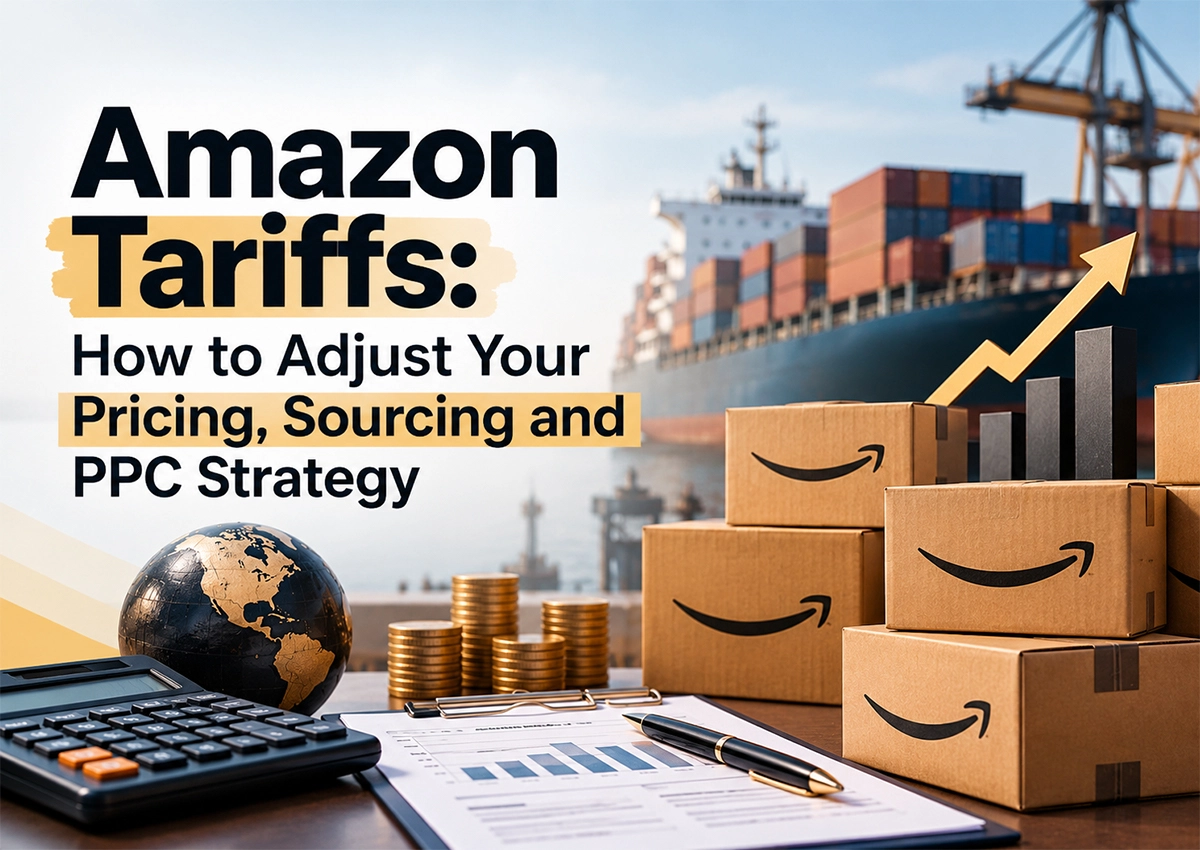
Amazon tariffs can change the economics of selling online. A product that delivered healthy margins last quarter might suddenly become less profitable due to higher import costs, supplier adjustments, or pricing pressure.
For Amazon sellers, reacting with a quick price increase isn’t always the answer. You need to rethink sourcing, protect margins, and make advertising budgets work harder.
This guide explains how to adjust your Amazon pricing, sourcing, and PPC strategy while navigating tariff-related uncertainty.
Amazon tariffs affect more than product costs. They influence pricing decisions, sourcing strategies, inventory planning, and advertising profitability. Sellers should review landed costs, diversify suppliers, monitor tariff refund eligibility, and optimize PPC around contribution margins rather than sales volume alone.
Include duties, freight, and landed costs before changing prices.
Explore alternative sourcing without compromising quality.
Prioritize profitable campaigns and search terms.
Only qualifying importers can claim applicable tariff refunds.
Build flexibility into inventory and peak season Amazon strategies.
Tariffs increase the cost of importing certain products into the US. Consequently, sellers may face higher landed costs, tighter margins, and difficult pricing decisions.
Consider a kitchenware seller importing products from overseas. If duties increase, the seller must decide whether to absorb the additional expense, negotiate with suppliers, or adjust retail prices.
Meanwhile, customers still compare prices. A sudden increase can affect conversion rates, especially in competitive categories.
The impact of Trump tariffs on Amazon prices depends on product origin, tariff classification, importer responsibilities, and applicable trade rules.
Start with actual product economics, not competitor prices.
For example, if your landed cost increases from $10 to $12, your previous selling price may no longer deliver the same margin.
Before changing prices:
A common mistake: Increasing prices across the entire catalog without checking product-level profitability.
Depending on your supply chain, consider alternative suppliers, negotiate better purchasing terms, and evaluate sourcing from different countries.
However, switching suppliers purely to avoid tariffs can create compliance and quality risks. Country-of-origin rules and tariff classifications matter. Consult a qualified customs professional before making sourcing decisions.
Also, review inventory forecasts before Amazon peak season demand increases. Strategic purchasing can help reduce exposure to unexpected cost changes.
Adapt your pricing, sourcing, and PPC strategies to protect margins and stay competitive in a changing marketplace.
When margins shrink, inefficient advertising becomes even more expensive.
Review campaigns for:
For example, a campaign with a 35% ACoS may appear successful, but not if the product’s post-tariff margin is only 20%.
Tariff-driven cost increases make PPC efficiency even more important. Sellers need to protect their margins by identifying wasted spend and allocating budgets to campaigns that generate profitable sales.
The refund situation needs careful attention. On February 20, 2026, the US Supreme Court ruled that tariffs imposed under IEEPA were unlawful. CBP subsequently developed its CAPE refund process for eligible import entries.
However, not every tariff qualifies. Refund eligibility depends on the duty’s legal basis, import documentation, entry status, and importer-of-record details.
Amazon also disclosed approximately $600 million in tariff refunds during Q2 2026. It said it would automatically reimburse shoppers in limited circumstances where it could trace specific import charges passed on to them.
Important: Amazon customer refunds and seller tariff refund eligibility are different issues. Sellers should review their own import records with a customs broker or trade counsel.
Krolog’s work with Kuiziin demonstrates how strategic campaign optimization can improve returns without relying solely on higher ad spend.
Kuiziin is an online retailer selling parchment paper on Amazon. Its campaigns were spending heavily without delivering satisfactory returns. The account also had weak campaign structures and poorly optimized listings.
Krolog restructured the existing campaigns, refined keyword targeting, optimized bids, and paused inefficient campaigns.
The results were measurable:
At Krolog, we recommend evaluating PPC alongside product profitability, not in isolation. Our Amazon PPC management and Amazon SEO services help sellers improve targeting, visibility, and advertising efficiency.
Amazon tariffs make margin management more important than ever. Sellers need to rethink pricing, sourcing, inventory, and advertising together.
A better strategy starts with accurate cost data. Then comes smarter sourcing and disciplined PPC optimization.
At Krolog, we help Amazon brands strengthen marketplace performance through PPC management, SEO, and full-account optimization.
Want to make your Amazon advertising work harder? Request a free Amazon account audit.
Amazon does not apply one universal tariff to every product. Import duties depend on product classification, origin, and the importer responsible for the shipment.
They can increase import costs, which may influence seller pricing, product availability, and marketplace competition.
Amazon reported receiving about $600 million in tariff refunds in Q2 2026, related to eligible IEEPA duties.
Amazon said only certain shoppers would receive automatic reimbursements where specific tariff charges could be traced. Seller eligibility follows separate customs rules.
Review import entries, duty payments, and importer-of-record information with your customs broker. Not all tariff categories qualify.
Not automatically; first calculate landed costs, contribution margins, competitor pricing, and customer demand, then do the needful.
Potentially, but applicable duties depend on the country of origin and classification. Changing shipping routes alone does not change origin.
PPC optimization can reduce wasted spend, improve targeting, and prioritize campaigns that contribute to profitability.
Amazon Haul does not create a universal exemption from import duties. Applicable customs rules still depend on the shipment and product.
Sandeep K., Founder and CEO of Krolog Inc., is an Amazon marketplace consultant with over 10 years of experience in Amazon SEO, PPC, listing optimization, and marketplace growth. He helps ecommerce brands build data-driven strategies for sustainable performance.
Amazon Tariffs: How to Adjust Your Pricing, Sourcing, and PPC Strategy Amazon tariffs can change the economics of selling online.…

Shopify Plus vs Shopify: 7 Key Differences Every Growing Ecommerce Business Should Know Your Shopify store is growing. Orders are…
Amazon Sponsored Display Strategy: How to Reach the Right Shoppers and Drive More Sales Your product gets clicks. Shoppers browse…
Krolog was born from a simple yet powerful idea: to empower businesses with the tools and strategies needed to thrive in the ever-evolving digital marketplace. Our journey is a testament to the transformative impact of strategic E-commerce solutions.


Copyright © 2026 All Right Reserved