
Nav Preview

Amazon Account Deactivated vs. Suspended: Why the Difference Changes Your Appeal

You log in to Seller Central, expecting another day of orders. Instead, there’s a notice about your selling privileges. Your listings are inactive, sales have stopped, and you’re left wondering what went wrong.

When an Amazon account is deactivated, sellers often assume the same recovery process applies to every enforcement action.ย 

A suspended Amazon seller account, a deactivated account, and an individual listing restriction can involve different issues and appeal requirements.

Understanding the exact action Amazon has taken is the first step toward building the right appeal.ย 

Here’s what sellers need to know.

Amazon Product Video
Amazon Advertising Video
Amazon Sponsored Brand Video

Amazon ACoS Strategies

PPC Performance

Higher ROAS

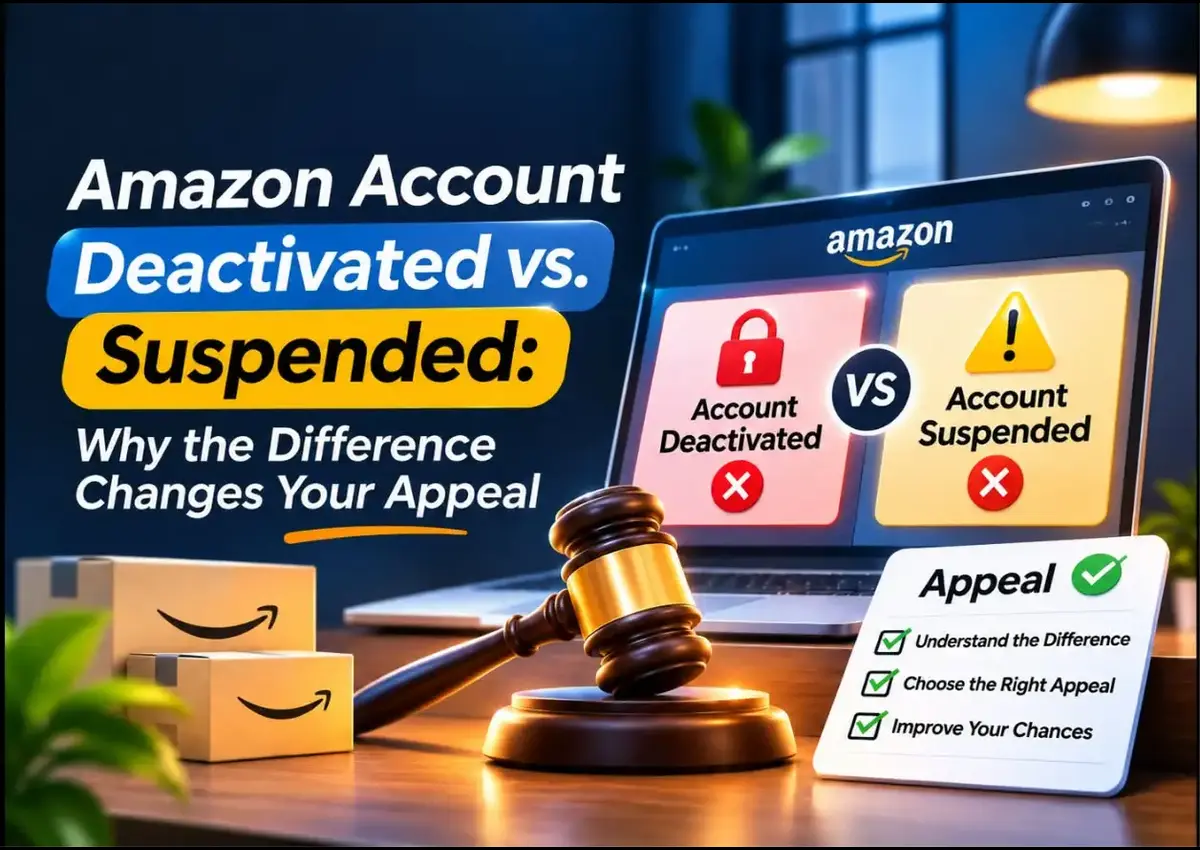
Amazon account deactivated vs suspended graphic explaining the difference between account deactivation and suspension and the importance of choosing the right appeal strategy.

Summary

Amazon account deactivation and suspension are related enforcement terms, but sellers should not treat them as interchangeable. The notification, affected privileges, policy concern, and appeal instructions determine the next step.ย 

A strong Amazon Plan of Action (POA) must address the actual issue, provide evidence, and explain how the seller will prevent it from happening again.

Key Takeaways

Know the Difference

Identify whether Amazon restricted your account, selling privileges, or an individual listing.

Find the Root Cause

ย Review the enforcement notice before preparing your appeal.

Build a Strong POA

ย Address the issue with clear corrective and preventive actions.

Back Claims With Evidence

Submit relevant invoices, certificates, and supporting documents.

Avoid Generic Appeals

Tailor every response to Amazon’s specific concerns.

Protect Account Health

Monitor compliance and performance to prevent repeat violations.

What Does Deactivation of An Amazon Account Mean?

When Amazon deactivates an account, access to certain selling functions or privileges may be restricted. The exact impact depends on the notice Amazon sends.

For sellers, this can mean inactive listings, restricted selling privileges, or an account-level enforcement action requiring further review.

However, don’t confuse seller account deactivation with choosing to close your account.ย 

Suspended vs. Deactivated: What's the Difference?

The distinction isn’t always a simple technical label. Amazon’s notification and appeal instructions are more important than the wording sellers use informally.

Situation What It May Mean What to Review
Account suspended Selling privileges restricted following an enforcement action Suspension notice and appeal requirements
Account deactivated Account or specific functions made inactive Exact deactivation reason and reinstatement instructions
Listing deactivated An individual ASIN is no longer active Listing policy, compliance documents, and product information

Expert observation

We often see sellers jump straight into writing an Amazon appeal letter. That’s impulsive. First, establish what Amazon restricted and why. Otherwise, even a well-written appeal can miss the point.

Why Does Amazon Deactivate Seller Accounts?

The deactivation of an account can follow several types of policy or operational concerns, including:

  • Product authenticity or sourcing complaints.
  • Intellectual property violations.
  • Product safety and compliance issues.
  • Inaccurate business verification documents.
  • Order defect or fulfillment performance concerns.
  • Restricted product or listing policy violations.

Your Amazon Account Health Rating can help identify policy and performance risks. Still, it shouldn’t replace a careful review of the enforcement notification itself.

An Amazon account deactivated for no apparent reason may have a documentation mismatch, an unresolved complaint, or an issue linked to another account.ย 

Investigate before assuming the action was a mistake.

How Should You Appeal an Amazon Account Deactivation Notice?

A successful appeal starts with evidence, not persuasive language.

  1. Identify the root cause: Review the performance notification, Account Health dashboard, affected ASINs, and supporting records.
  2. Explain corrective actions: Show what you’ve already changed. For example, if supplier invoices triggered an authenticity concern, explain how you’ve reviewed the supply chain and corrected documentation gaps.
  3. Establish preventive measures: Describe the checks, ownership, and procedures you’ll use to prevent a repeat issue.
  4. Attach relevant evidence: Include invoices, authorization letters, compliance certificates, or shipment records when Amazon requests them.
  5. Submit through the specified channel: Follow the instructions in Seller Central. Avoid sending unrelated or duplicate appeals.

This is the foundation of a useful Amazon Plan of Action: root cause, corrective action, and preventive action.

Need Help With Your Amazon Account Appeal?

A suspended or deactivated Amazon account requires the right response. Get expert guidance to identify the issue, build a clear appeal, and work toward reinstatement.

Common Mistakes That Delay Amazon Account Reinstatement

  • Sending emotional appeals: Explain the issue factually. Avoid blaming Amazon or customers.
  • Using generic POAs: Your appeal must address the specific violation.
  • Ignoring supporting documents: Claims without evidence are difficult to verify.
  • Submitting repeated appeals: A new appeal should address the gaps in the previous response.
  • Overlooking related ASINs: Check whether the same issue affects other products or listings.

How Is Amazon Account Reinstatement Changing?

Amazon continues to strengthen marketplace compliance and verification processes. Sellers should expect closer scrutiny of documentation, product safety, supply-chain traceability, and listing accuracy.

During Amazon peak season, these issues can become even more disruptive. A deactivated account during a high-demand period can mean missed sales and delayed inventory movement.

The practical response?ย 

Maintain supplier records, review Account Health regularly, and establish compliance checks before problems escalate.

What Should You Do If Amazon Rejects Your Appeal?

An appeal rejection doesn’t always mean the end of your reinstatement efforts. But submitting the same appeal again rarely helps. Take these steps instead:

  1. Review Amazon’s response: Identify what information or evidence Amazon found insufficient.
  2. Revisit the root cause: Check whether your original appeal addressed the actual policy violation.
  3. Strengthen your evidence: Add relevant invoices, compliance documents, supplier records, or corrective-action proof.
  4. Revise your Plan of Action: Make your corrective and preventive measures specific, practical, and verifiable.
  5. Resubmit carefully: Follow Amazon’s instructions and use the appropriate appeal channel.

If repeated appeals fail, consider getting an expert account review before submitting another response. At Krolog, we assess rejected appeals, identify gaps in the original POA, and help sellers develop a more focused Amazon account reinstatement strategy.

How Krolog Approaches Amazon Seller Account Reinstatement

At Krolog, we don’t start with a template. We start with the enforcement notice.

Our team reviews the account, identifies the underlying policy concern, checks supporting documentation, and develops an appeal strategy. Our Amazon seller account reinstatement services include account health audits, root-cause analysis, POA development, evidence preparation, and post-reinstatement guidance.

Practical Example

Krolog has documented reinstatement work for Lex Tec, following product compliance issues, and Sow Foods, following intellectual property complaints.ย 

These cases demonstrate why the appeal must reflect the actual violation rather than rely on a universal response.

Final Verdict

An Amazon account deactivated notice is not the moment to send a rushed appeal. Pause, read the notice, and identify the actual enforcement action.

A suspension, deactivation, and listing restriction can require different responses. Getting that distinction right helps you build a focused appeal instead of wasting time on generic explanations.

Need help understanding your notice?ย 

Krolog’s Amazon reinstatement specialists can review the issue and help you prepare a policy-aligned recovery strategy.

Frequently Asked Questions

About the Author

Sandeep K., Founder and CEO of Krolog Inc., has over 10 years of experience in Amazon marketplace strategy, account management, SEO, PPC, and seller compliance.ย 

He works with brands to address marketplace challenges, strengthen account health, and build sustainable growth strategies.

Need Help With Amazon Account Reinstatement?

A weak appeal can cost more than time. It can delay your return to the marketplace.

Get expert support from Krolog for account audits, Amazon Plan of Action development, and reinstatement strategy.

Related Article

Amazon Backend Keywords: Where to Put Them and What to Never Include

Amazon Backend Keywords: Where to Put Them and What to Never Include

Amazon Backend Keywords: Where to Put Them and What to Never Include Your product listing looks good. The title is…

Amazon Account Deactivated vs. Suspended: Why the Difference Changes Your Appeal

Amazon Account Deactivated vs. Suspended: Why the Difference Changes Your Appeal

Amazon Account Deactivated vs. Suspended: Why the Difference Changes Your Appeal You log in to Seller Central, expecting another day…

Shopify App Development: Costs, Process, and When Your Store Actually Needs a Custom App

Shopify App Development: Costs, Process, and When Your Store Actually Needs a Custom App

Shopify App Development: Costs, Process, and When Your Store Actually Needs a Custom App Your Shopify store is growing. Orders…

Scroll to Top