Nav Preview

Amazon Listing Optimization Tips for New Sellers: A Step-by-Step Guide

Your product is live on Amazon. But the sales aren’t coming in. Sound familiar?

For new sellers, publishing a product listing is only the beginning. Shoppers need to find it, understand its value, and feel confident enough to buy. That’s where these Amazon listing optimization tips come in.

From keyword research to product images and conversion-focused copy, this step-by-step guide explains how to optimize your Amazon listing, avoid common mistakes, and build a stronger foundation for long-term growth.

Amazon Product Video
Amazon Advertising Video
Amazon Sponsored Brand Video

Amazon ACoS Strategies

PPC Performance

Higher ROAS

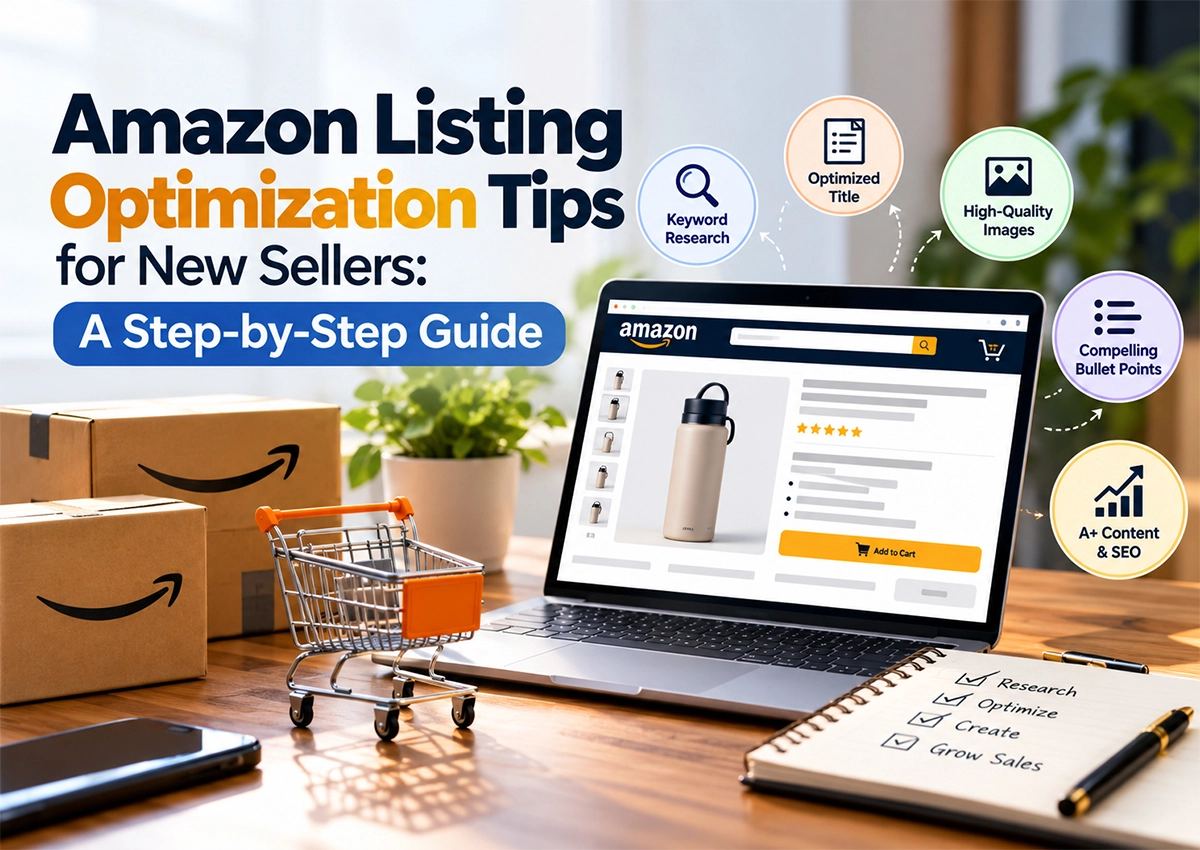
Amazon listing optimization tips for new sellers featuring keyword research, optimized titles, product images, bullet points, and A+ Content.

Summary

Amazon listing optimization helps sellers improve product discoverability, communicate value, and convert relevant traffic into sales. The process includes keyword research, title optimization, persuasive bullet points, high-quality images, backend search terms, and ongoing performance analysis.

For new sellers, the goal isn’t to stuff every keyword into a listing, but to create a product page that answers shopper questions and makes buying easier.

Key Takeaways

Start with search intent

Choose relevant keywords, not just high-volume terms.

Make every element count

Titles, bullets, images, and descriptions should work together.

Write for shoppers

Clear benefits beat repetitive keyword stuffing.

Keep testing

Use performance data to identify what needs improvement.

What Is Amazon Listing Optimization, and Why Does It Matter?

Amazon listing optimization improves a product detail page so shoppers can discover, understand, and buy the product more easily.

Think of a shopper searching for a leakproof lunch container. Your product might be a perfect fit. But if your title is vague, your images don’t show the seal, and your bullets skip capacity details, shoppers may choose a competitor instead.

Effective Amazon product listing optimization addresses both sides: relevance in search and confidence at purchase.

How to Optimize an Amazon Listing: 7 Practical Steps

1. Search Keywords Before Writing

Start by identifying how customers describe the product and what they want it to do.

Use Amazon search suggestions, competitor listings, Brand Analytics if eligible, and keyword research tools to find relevant search terms.

For example, a lunch container might target phrases such as:

  • Leakproof lunch container
  • Reusable food storage container
  • BPA-free meal prep container

Choose one primary keyword and supporting terms that accurately describe the product. These Amazon keyword tips help you prioritize relevance over search volume alone.

2. Optimize Your Product Title

Your title should tell shoppers what the product is and highlight its most useful differentiators.

  • Include the product type, brand, and relevant attributes.Β 
  • Follow Amazon’s current category-specific title requirements and character limits.Β 
  • Avoid unnecessary repetition, promotional claims, and awkward keyword strings.

This is the heart of Amazon product title optimization: make the title useful first, searchable second, and readable throughout.

3. Write Bullets That Answer Buying Questions

Shoppers scan. They don’t want to decode vague marketing language.

Use bullet points to explain benefits, specifications, compatibility, dimensions, materials, and usage instructions where relevant.

Instead of writing β€œPremium quality design,” explain what the product offers and why it matters. If it’s dishwasher-safe, state that only when verified. If compatibility is limited, make it clear.

Strong Amazon content optimization reduces uncertainty and helps shoppers decide.

4. Use Product Images to Demonstrate Value

Your main image should meet Amazon’s image requirements. Supporting images can show product dimensions, features, use cases, and what’s included.

For instance, a cutting board listing could include a dimension graphic, a close-up of its surface, and an image showing it in a real kitchen setting.

Don’t make shoppers guess; demonstrate clearly.

5. Optimize Your Listing with A+ Content

Eligible brand owners can use A+ Content to enhance product pages with visual storytelling by including visuals and interactive graphics to demonstrate product information.

  • Use lifestyle images to highlight product benefits.
  • Add comparison charts to help shoppers evaluate products in your catalog.
  • Highlight key features, specifications, and use cases.
  • Keep layouts clear, concise, and easy to scan.

A+ Content helps shoppers make informed decisions and understand what sets your product apart.

6. Add Backend Search Terms Carefully

Backend search terms can capture relevant phrases that don’t fit naturally into visible copy.

  • Use relevant synonyms and alternate terminology.Β 
  • Avoid repeating existing terms unnecessarily, adding competitor brand names, or including unrelated keywords.Β 
  • Follow Amazon’s current field limits and search-term policies. This part of Amazon listing keyword optimization supports discoverability without cluttering the customer-facing page.

7. Monitor Performance and Improve

Publishing the listing isn’t the finish line.

  • Review impressions, click-through rate, conversion rate, search query performance where available, and advertising data.Β 
  • Low impressions may indicate a relevance or discoverability issue.Β 
  • Strong traffic but weak conversions could point to pricing, images, reviews, or unclear product information.
  • Change one or two elements at a time where possible. Then assess the results.

What Are the Most Common Amazon Listing Optimization Mistakes?

New sellers often make these avoidable errors:

  • Keyword stuffing: Repetition makes copy awkward and may violate listing requirements.
  • Generic images: Shoppers can’t see what sets the product apart.
  • Unsupported claims: Unverified benefits can undermine trust and create compliance risks.
  • Ignoring mobile shoppers: Long, dense copy becomes difficult to scan.
  • Never updating listings: Customer needs and competitive conditions change.

During peak season, these issues become even more costly. Prepare listings, inventory, and advertising well before demand rises.

Ready to Optimize Your Amazon Listings?

Get expert help to improve your listings and boost conversions.
Explore Listing Optimization Services

How Is AI Changing Amazon Product Page Optimization?

Shopping experiences increasingly help customers compare products and ask natural-language questions. That makes clear product attributes, accurate descriptions, and helpful content more important.

Write to answer real questions:Β 

  • What fits?Β 
  • What comes in the box?Β 
  • How is it used?Β 
  • What makes it different?

No optimization method guarantees a specific ranking or AI recommendation. Still, accurate, detailed product information gives shoppers and search systems more useful context.

How Krolog Helps Sellers Optimize Amazon Listings

A listing can have the right keywords and still struggle to convert. Often, the problem sits elsewhere: weak images, unclear benefits, poor competitor positioning, or a mismatch between ad traffic and the product page.

Krolog helps sellers connect keyword research with Amazon product listing optimization, SEO, A+ Content, and PPC strategy. Instead of treating each element separately, we look at how the full product page supports discovery and conversion.

Want a clearer picture of what’s holding your listings back? Explore Krolog’s Amazon Listing Optimization Services or request an account review.

Final Takeaway

Successful Amazon listing optimization isn’t about adding more keywords. It’s about making the right product easier to find, understand, and buy.

Start with relevant search terms; build a clear title; show the product honestly; answer buying questions. Then use performance data to improve what isn’t working.

Small, informed changes can make a meaningful difference over time.

Frequently Asked Questions

About the Author

Sandeep K is the founder of Krolog, an ecommerce growth agency helping brands navigate Amazon and other online marketplaces. His work focuses on marketplace growth strategies, Amazon SEO, PPC management, product listing optimization, and ecommerce expansion. Through Krolog, he helps sellers identify opportunities to improve product visibility, strengthen listings, and build sustainable growth strategies.

Ready to Improve Your Amazon Listings?

A well-optimized listing does more than add keywords to a product page. It helps shoppers find your product, understand its value, and make an informed purchase decision.

If your listings aren’t getting the visibility or conversions you expect, it may be time to review your strategy.

Explore Krolog’s Amazon Listing Optimization Services or contact our team to discuss your Amazon growth goals.

Related Article

How Krolog Helped Prima Hardware Launch and Grow on Walmart Marketplace

How Krolog Helped Prima Hardware Launch and Grow on Walmart Marketplace

How Krolog helped Toner Pros establish its Walmart Marketplace presence from scratch, navigate complex approvals, and generate over $28,500 in…

How to Optimize Your Amazon Listings to Rank Higher and Convert Better

How to Optimize Your Amazon Listings to Rank Higher and Convert Better

How to Optimize Your Amazon Listings to Rank Higher and Convert Better A product can have strong demand and still…

From Account Setup to $3.9K in Monthly Sales: How Krolog Built Toner Pros on Walmart Marketplace

From Account Setup to $3.9K in Monthly Sales: How Krolog Built Toner Pros on Walmart Marketplace

How Krolog helped Toner Pros establish its Walmart Marketplace presence from scratch, navigate complex approvals, and generate over $28,500 in…

Scroll to Top