Nav Preview
  • Cantoocity Shopify Case Study: A Handmade Brand's Journey to a Scalable Shopify Store

    A handmade product tells a story. Your website should too.

    That’s where many growing brands struggle. They create products customers genuinely love, yet their online store doesn’t reflect the same experience.Β 

    • Navigation feels confusing.Β 
    • Pages load slowly.Β 
    • Conversions stay flat.Β 
    • Growth becomes harder than it should be.

    This Shopify Case Study follows Cantoocity’s journey from a handcrafted business with big ambitions to a scalable ecommerce brand. Through strategic Shopify website development, thoughtful user experience improvements, and continuous Shopify conversion optimization, the brand built a store designed not just to sell products but to support long-term growth.

    Shopify Case Study
    Shopify Website Development
    Ecommerce Website Development

    Amazon ACoS Strategies

    PPC Performance

    Higher ROAS

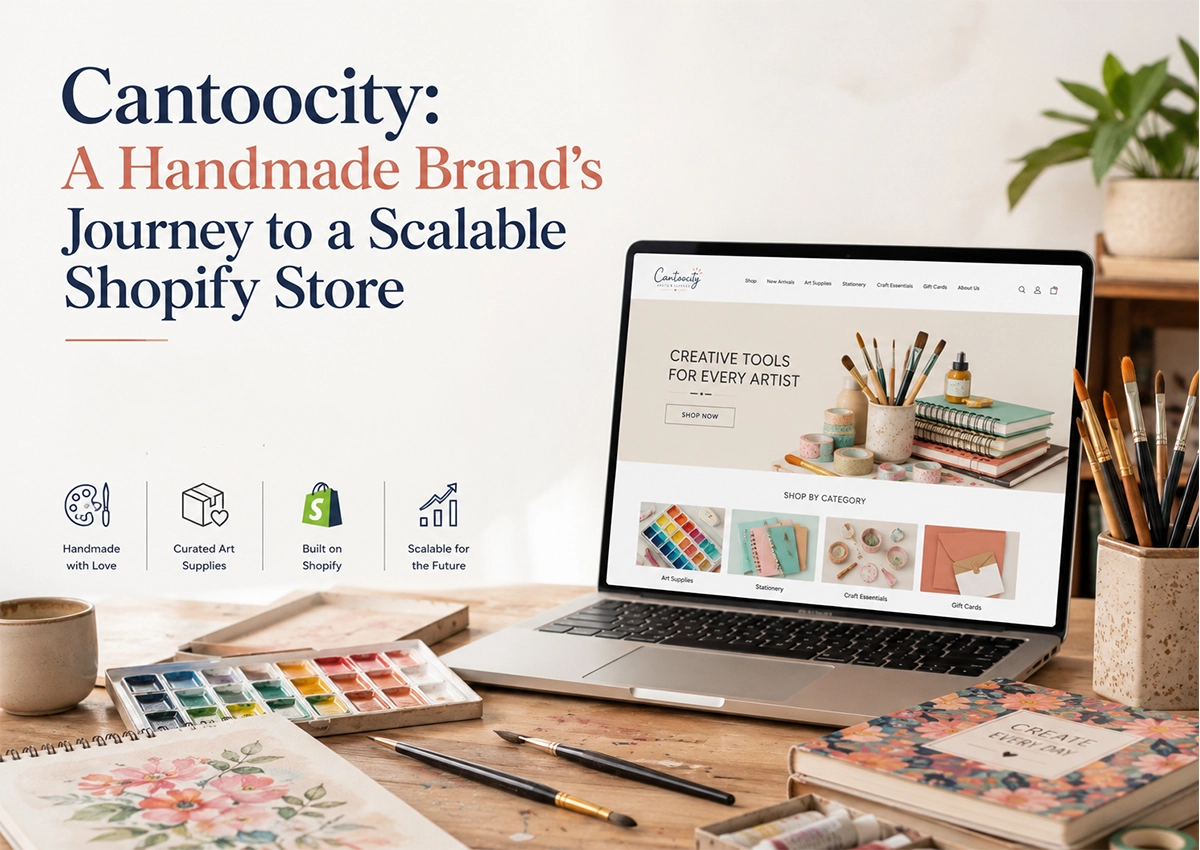
    Cantoocity handmade brand Shopify store development case study

    Summary

    Every successful ecommerce brand reaches a turning point. For Cantoocity, it wasn’t the products that needed improvement.Β 

    Customers already appreciated the craftsmanship behind every handmade piece. The real challenge was creating an online shopping experience that matched the quality of those products.

    This Shopify Case Study explores how strategic Shopify store development, better site architecture, conversion-focused design, and a clear ecommerce strategy plan helped transform the brand into a stronger direct-to-consumer business.

    Rather than relying on quick fixes, the project focused on building a scalable foundation, one that improves customer experience today while supporting future growth tomorrow.

    Whether you’re exploring Shopify store optimization, comparing the best Shopify development company for your business, or simply looking for inspiration before launching your own store, the lessons inside this guide offer practical insights backed by real implementation.

    Key Takeaways

    Every Great Handmade Brand Deserves a Better Store

    Beautiful products alone rarely guarantee online success. Strategic Shopify website development helps customers discover, trust, and purchase with confidence.

    User Experience Drives Conversions

    Clean navigation, faster load times, mobile responsiveness, and thoughtful design work together to improve Shopify conversion optimization and reduce friction throughout the buying journey.

    Growth Starts with the Right Foundation

    A scalable ecommerce business isn’t built overnight. It begins with a clear ecommerce strategy, flexible store architecture, and continuous Shopify store optimization.

    Design Should Support Business Goals

    Great ecommerce websites don’t just look attractive; they guide visitors toward action. Every page, collection, and product layout should contribute to higher engagement and stronger conversion rates.

    Strategy Always Outperforms Guesswork

    At Krolog, we’ve learned that successful ecommerce website development isn’t about adding more features. It’s about solving the right problems, simplifying the customer journey, and building a store that’s ready to grow alongside the brand.

    Entity Overview

    Category: Shopify Case Study | Handmade Ecommerce Brand | Shopify Store Development

    Related Entities:

    • Shopify
    • Shopify Plus
    • Ecommerce Website Development
    • Shopify Website Development
    • Shopify Store Optimization
    • Shopify Conversion Optimization
    • Ecommerce Strategy
    • Ecommerce Scaling Strategy
    • Custom Shopify Development
    • Shopify Theme Customization
    • Shopify Apps
    • Shopify Payments
    • Shopify Checkout
    • Klaviyo
    • Google Analytics 4 (GA4)
    • Meta Pixel
    • Google Search Console
    • Β 

    From Handmade Passion to a Store That Could Finally Scale

    Every handmade business starts with a story.

    Cantoocity wasn’t struggling because the products lacked quality, in fact, quite the opposite.Β 

    Customers loved the craftsmanship. The challenge was everything happening after someone discovered the brand.

    • The website looked dated.Β 
    • Navigation felt confusing.Β 
    • Mobile shoppers dropped off halfway through the journey.Β 

    Every new collection meant more manual work. Scaling wasn’t impossible; it just felt exhausting.

    That’s when the team decided it wasn’t time for another quick redesign. It was time to rebuild the business around a stronger ecommerce strategy.

    Instead of patching small issues, they invested in complete Shopify website development,Β  focused on performance, customer experience, and future growth. The objective wasn’t simply launching another online store. It was creating a platform that could support increasing traffic, higher order volumes, and long-term expansion without breaking every few months.

    Why Handmade Brands Eventually Outgrow Basic Ecommerce Solutions?

    Many handmade sellers begin with marketplaces or template-based websites.

    It may work temporarily, but eventually whenΒ 

    • Orders increase.
    • Product catalogs expand.
    • Customers expect faster experiences.
    • Marketing becomes more sophisticated,

    Small limitations begin affecting revenue. Common challenges include:

    • Slow-loading product pages.
    • Difficult product management.
    • Limited customization
    • Poor mobile shopping experience.
    • Low conversion rates.
    • Weak search visibility.
    • Manual backend operations.

    Most growing brands don’t need more products; they need better infrastructure.

    That’s exactly where professional Shopify store development creates measurable business value.

    Expert Observation

    One pattern stands out across almost every successful ecommerce project we’ve delivered.

    Businesses rarely lose customers because of their products; they lose them during the buying experience.

    • A customer who can’t find the right category.
    • Waits too long for a page to load.
    • or encounters friction during checkout.

    They usually don’t complain; they simply leave.

    That’s why successful Shopify conversion optimization begins long before checkout. It starts with thoughtful site architecture, intuitive navigation, fast page speed, and clear product storytelling. Small improvements across the customer journey often outperform one large redesign.

    Ready to Build a Shopify Store That Can Scale With Your Brand?

    Build a high-performing Shopify store designed for growth and conversions.

    What Changed During the CantooCity Shopify Website Development Process?

    The Cantoocity project wasn’t about changing colors or adding flashy animations.

    Every improvement solved a real business problem.

    Instead of asking, “How can we make the website prettier?” we asked,

    “How can we make buying easier?”

    That changed everything.

    1. Rebuilt the Store Architecture

    • Customers can now reach products in fewer clicks.
    • Categories became clearer.
    • Collections were organized around how shoppers actually browse, not how products were internally managed.
    • Navigation feels natural now.Β 

    Small changes; huge difference.

    2. Improved Mobile Shopping Experience

    More than half of ecommerce traffic comes from mobile devices. Yet many handmade brands still build stores with desktop users in mind.

    Cantoocity flipped that approach.

    • Pages became responsive.
    • Buttons became easier to tap.
    • Product images loaded faster.
    • Checkout required fewer unnecessary steps.
    • Customers stopped fighting the website and started focusing on the products.

    3. Optimized Product Pages for Conversions

    Beautiful products deserve equally compelling product pages. Each listing was redesigned to answer customer questions before they asked them.

    That meant:

    • Cleaner product layouts
    • Better image hierarchy
    • Stronger product storytelling
    • Clear pricing visibility
    • Trust-building elements
    • Simplified purchase options

    This wasn’t only Shopify store optimization; it was understanding customer psychology to persuade them better.

    Β 

    4. Built for Future Growth, Not Just Today’s Traffic

    One mistake businesses make? They build stores for where they are today.

    Not where they’ll be next year. Cantoocity needed room to grow. The new architecture supports:

    • Larger product catalogs
    • Seasonal collections
    • Promotional campaigns
    • International expansion
    • Future app integrations
    • Marketing automation

    That’s what a long-term ecommerce scaling strategy actually looks like.

    Not reacting to growth, but preparing for it.

    Expert Observation

    Many businesses think scaling begins after sales increase. It actually starts months earlier.

    The brands that scale smoothly build flexible systems before they need them.

    Those that wait until traffic explodes usually spend more money fixing problems they could’ve avoided. That’s a pattern we’ve seen across countless ecommerce projects at Krolog.

    Shopify Store Optimization Doesn't End After Launch

    Launching the new website was only the beginning. Many brands assume development is the finish line.

    It isn’t. The best-performing Shopify stores improve every single month.

    • Customer behavior changes.
    • Search trends evolve.
    • New competitors enter the market.

    Your store has to keep up. That’s why ongoing Shopify store optimization became part of the growth strategy. The team focused on:

    • Improving page speed regularly.
    • Testing product page layouts.
    • Monitoring customer behavior.
    • Simplifying checkout wherever possible.
    • Updating collections based on buying patterns.
    • Refining navigation as the catalog expanded

    When small improvements are repeated consistently, those outperform single massive redesigns implemented every few years.

    Why Ecommerce Strategy Matters More Than Store Design?

    A beautiful website can still underperform. We’ve seen stunning Shopify stores that barely converted.

    We’ve also seen simple-looking stores generate millions in sales.Β 

    The difference? Strategy.

    Every page on Cantoocity’s website was designed with a purpose; every click had a destination, and every section answered a customer question.

    Instead of asking, “What looks good?”; the project focused on, “What helps shoppers buy faster?”

    That’s the difference between design and an effective ecommerce strategy.

    Common Mistakes Handmade Brands Make Before Scaling

    Growing brands often repeat the same mistakes. Not because they’re inexperienced, but because they’re busy.

    Some of the most common ones include:

    1. Waiting Too Long to Upgrade: Many businesses continue patching an outdated store until performance starts affecting revenue. By then, recovery takes longer.
    2. Focusing Only on Visual Design: A prettier homepage won’t fix slow loading speeds or poor navigation. Customer experience always comes first.
    3. Ignoring Mobile Buyers: Most customers shop on their phones. If your mobile experience feels frustrating, conversions usually suffer.
    4. Building Without a Growth Plan: Launching a store without an ecommerce strategy often leads to expensive redesigns later. Planning ahead saves both time and money.

    Expert Observation

    One thing we’ve noticed over the years; the stores that grow consistently aren’t always the most expensive, they’re simply easier to shop from. Customers shouldn’t have to think about where to click next.Β 

    When buying feels effortless, conversions usually follow.

    Ready to Build a Shopify Store That Can Scale With Your Brand?

    Build a high-performing Shopify store designed for growth and conversions.

    Emerging Ecommerce Trends Handmade Brands Should Watch in 2026

    The ecommerce landscape keeps changing. Customer expectations are rising even faster.

    The brands growing today aren’t necessarily adding more products. They’re creating better buying experiences.

    Some of the biggest trends shaping Shopify website development include:

    1. AI-Powered Personalization: Customers now expect personalized product recommendations, smarter search, and tailored shopping experiences. Stores that deliver relevant suggestions often see higher average order values and better customer retention.
    2. Mobile-First Commerce: Mobile traffic continues to dominate ecommerce. Fast-loading pages, thumb-friendly navigation, and streamlined checkout aren’t optional anymore. They’re expected.
    3. First-Party Data Becomes More Valuable: With third-party tracking becoming less reliable, successful brands are investing in email marketing, loyalty programs, and customer accounts. Owning customer relationships is becoming a competitive advantage.
    4. Conversion Optimization Never Stops: Winning stores constantly test.
    • Product pages
    • Collections
    • Navigation
    • Checkout

    Tiny improvements add up surprisingly fast. That’s why Shopify conversion optimization has become an ongoing process rather than a one-time project.

    Why Brands Choose Krolog for Shopify Development?

    Building a Shopify store is easy. Building one that consistently drives sales is something else.

    At Krolog, we don’t just design websites. We create ecommerce experiences built around customer behavior, performance, and long-term growth.

    Our team combines:

    • Shopify website development
    • Custom Shopify development
    • Shopify Plus development
    • Conversion rate optimization
    • Technical SEO
    • Performance optimization
    • Ecommerce management services
    • Ongoing growth consulting

    Every recommendation starts with business goals; not templates or trends.

    Strategy comes first; technology follows.

    Final Thoughts

    Cantoocity’s journey wasn’t about launching another Shopify store. It was about creating a stronger foundation for the business.

    • Better navigation.
    • Smarter customer journeys.
    • Faster performance.
    • A store built to handle growth instead of slowing it down.

    That’s what successful ecommerce brands eventually realize: growth rarely comes from working harder; it comes from building better systems.

    Whether you’re selling handmade products, launching your first collection, or preparing for Shopify Plus, the right strategy makes all the difference.

    Because in ecommerce, your website isn’t just where people buy; it’s where your brand earns trust.

    Frequently Asked Questions

    About the Author

    Sandeep K., Founder & CEO of Krolog Inc., has spent over a decade helping ecommerce brands build, optimize, and scale their online stores across Shopify, Amazon, Walmart, and other digital marketplaces.

    His expertise spans Shopify website development, ecommerce strategy, conversion optimization, marketplace growth, and digital commerce consulting. Over the years, he has partnered with startups, handmade brands, and established businesses to create scalable ecommerce ecosystems that drive sustainable revenue growth.

    Ready to Build a Shopify Store That Grows With Your Business?

    A Shopify store isn’t just another website; it’s the engine behind your ecommerce growth.

    Whether you’re launching your first handmade brand, migrating from another platform, or looking to improve conversions, success comes from combining the right technology with the right strategy.

    At Krolog, we help businesses move beyond basic storefronts through Shopify website development, Shopify store optimization, conversion rate optimization, and long-term ecommerce growth strategies tailored to every stage of the journey.

    Request a free Shopify store audit today and discover opportunities to improve customer experience, increase conversions, and build an ecommerce business that’s ready to scale.

    Related Article

    Cantoocity Shopify Case Study: A Handmade Brand’s Journey to a Scalable Shopify Store

    Cantoocity Shopify Case Study: A Handmade Brand’s Journey to a Scalable Shopify Store

    Cantoocity Shopify Case Study: A Handmade Brand’s Journey to a Scalable Shopify Store A handmade product tells a story. Your…

    How to Choose the Right Amazon Seller Consulting Service for Your Business in 2026

    How to Choose the Right Amazon Seller Consulting Service for Your Business in 2026

    How to Choose the Right Amazon Seller Consulting Service for Your Business in 2026 Choosing the right Amazon seller consulting…

    How to Write an Amazon Plan of Action (POA) in 2026 That Actually Gets Approved

    How to Write an Amazon Plan of Action (POA) in 2026 That Actually Gets Approved

    How to Write an Amazon Plan of Action (POA) in 2026 That Actually Gets Approved Account suspended? Few things stress…

    Scroll to Top