
Nav Preview

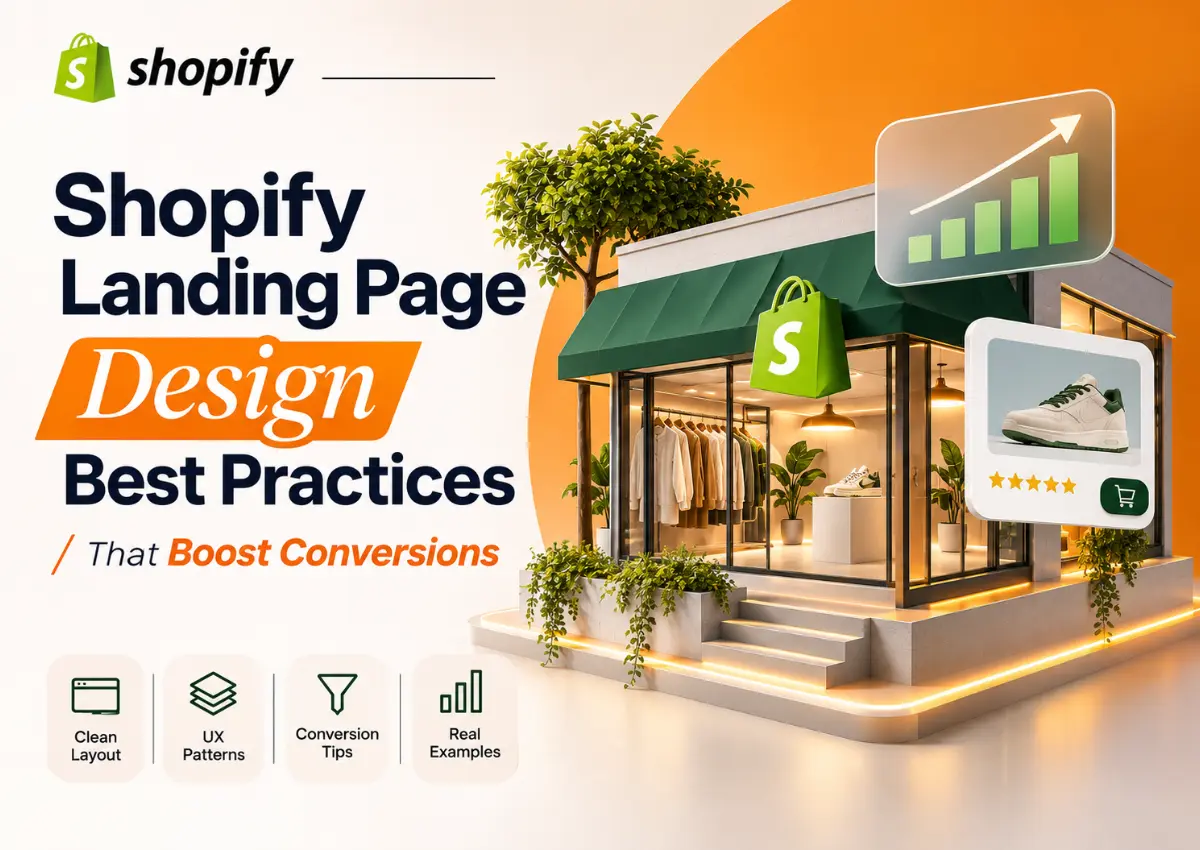
Shopify Landing Page Design Best Practices That Boost Conversions

A visitor clicks your Shopify ad. The page loads. They look around for a few seconds and leave without buying. Sound familiar?

Good Shopify landing page design is about preventing that moment. A visually attractive page helps, but it won’t convert visitors if the offer is unclear, navigation feels confusing, or checkout takes too much effort.

The goal is simple: make every click count. Let’s explore practical design strategies, Shopify CRO techniques, and optimization tips that help turn more visitors into customers.

Amazon Product Video
Amazon Advertising Video
Amazon Sponsored Brand Video

Amazon ACoS Strategies

PPC Performance

Higher ROAS

Shopify landing page design best practices to boost ecommerce conversions

Summary

Effective Shopify landing page optimization combines clear messaging, compelling visuals, mobile-first design, trust signals, and a frictionless checkout. With regular testing and data-driven improvements, brands can improve customer experience and get more value from existing traffic.

Key Takeaways

Lead with one clear offer and a strong CTA.

Design for mobile before desktop.

Match landing page messaging with the ad or campaign.

Use reviews, product visuals, and transparent policies to build trust.

Apply Shopify A/B testing to validate design decisions.

Track conversions, cart activity, and checkout drop-offs.

What Makes Shopify Landing Page Design Effective?

A high-converting landing page gives visitors a reason to stay and a clear next step.

Think about a shopper looking for a skincare product. They want to know what it does, whether it suits their skin, how much it costs, and when it will arrive. 

If they need to search across five sections for these answers, you’ve already created friction.

Good eCommerce landing page optimization brings essential information together.

7 Shopify Landing Page Best Practices That Improve Conversions

1. Make Your First Screen Count

Your headline should explain the offer immediately. Add a relevant hero image, one supporting benefit, and a visible CTA.

Avoid vague headlines like “Discover Something New.” 

Tell shoppers what makes the product worth exploring.

2. Use Visual Merchandising to Guide Decisions

High-quality product photography, lifestyle images, short demonstrations, and clear product variations help customers imagine ownership.

This is where Shopify visual merchandising matters. Arrange products logically. 

Highlight bestsellers and seasonal collections without overwhelming visitors.

3. Design Mobile-First

A landing page that looks great on a desktop can feel cramped on a phone.

Use readable text, compressed images, tap-friendly buttons, and simple navigation. 

Test the complete journey on an actual mobile device.

4. Improve Page Speed

Large images and too many apps can slow down your Shopify store.

  • Compress Images: Resize images and use WebP formats to reduce file size without compromising quality.
  • Avoid Unnecessary Apps: Remove unused apps and scripts. Check whether existing Shopify features can do the job before installing new ones.

A faster storefront creates a smoother shopping experience and supports better conversions.

5. Strengthen Product Pages and Trust Signals

Your landing page should lead naturally into detailed product information.

Apply Shopify product page optimization with clear descriptions, benefits, reviews, shipping details, return policies, and product specifications. Answer buying questions before customers reach checkout.

6. Simplify the Path to Purchase

Every unnecessary step creates another opportunity to lose a buyer.

Use clear cart actions, transparent pricing, familiar payment methods, and fewer distractions. Effective Shopify checkout optimization reduces uncertainty at the final stage.

7. Match Ads With Landing Page Content

If your ad promotes a holiday bundle, the landing page should feature that exact offer. Don’t send visitors to a generic homepage.

This connection strengthens Shopify sales funnel optimization and keeps the shopping experience consistent.

8. Test, Measure, and Improve

Don’t redesign everything based on assumptions.

Use Shopify A/B testing to compare headlines, CTA placement, hero images, and page layouts. Track conversion rate, add-to-cart activity, average order value, and checkout completion.

Change one major variable at a time. Otherwise, it becomes difficult to identify what actually worked.

How Can AI Improve Shopify Landing Page Conversions?

AI-powered landing page design can help teams analyze customer behavior, generate content variations, and identify personalization opportunities.

For example, AI conversion rate optimization tools can help segment visitors, recommend relevant products, and identify friction points. However, recommendations still need human review and testing.

Personalization can increase relevance by showing shoppers products, offers, or content aligned with their browsing behavior. The key is to make the experience useful, not intrusive.

Common Shopify Landing Page Design Mistakes

  • Too many competing CTAs.
  • Large images that slow down page loading.
  • Generic product descriptions.
  • Hidden shipping costs.
  • Poor mobile layouts.
  • Pop-ups that interrupt browsing.
  • No conversion tracking or testing.

Avoid these issues before investing in another expensive redesign.

Turn Your Shopify Landing Page Into a Conversion Tool

Turn Your Shopify Landing Page Into a Conversion Tool

How Krolog Approaches Shopify Store Design: The Cantoocity Example

Consider Cantoocity, a Canadian arts and crafts brand that partnered with Krolog for Shopify store development.

Krolog migrated the store from GoDaddy Website Builder to Shopify in four weeks. The project included a responsive storefront, interactive product pages, checkout-flow improvements, SEO, and marketplace integrations.

The work focused on making product discovery easier and building a more scalable shopping experience. It was a full Shopify development and migration project, not a standalone landing page redesign.

Explore the Cantoocity case study.

Final Verdict: Design for the Customer, Optimize for the Sale

The best Shopify landing page design for higher conversions isn’t necessarily the most complicated one.

It is the page that answers questions quickly, builds trust, and makes purchasing easy. Start with the biggest friction points;  test improvements; keep refining.

At Krolog, we combine Shopify design, development, SEO, and conversion-focused optimization to help ecommerce brands build better shopping experiences.

Need a Shopify landing page that does more than look good? 

Talk to Krolog about building a store designed to convert.

Frequently Asked Questions

About the Author

Sandeep K., Founder and CEO of Krolog, brings over 10 years of experience in ecommerce strategy, digital marketing, and marketplace growth. He works with brands to improve online visibility, customer experience, and long-term business performance.

Related Article

Shopify Landing Page Design Best Practices That Boost Conversions

Shopify Landing Page Design Best Practices That Boost Conversions

Shopify Landing Page Design Best Practices That Boost Conversions A visitor clicks your Shopify ad. The page loads. They look…

Sell on Amazon Internationally Without Leaving Your Home Country

Sell on Amazon Internationally Without Leaving Your Home Country

Sell on Amazon Internationally Without Leaving Your Home Country You don’t need to relocate to build an international Amazon business.…

7 Proven Ways to Win the Amazon’s Choice Badge for Your Product

7 Proven Ways to Win the Amazon’s Choice Badge for Your Product

7 Proven Ways to Win the Amazon’s Choice Badge for Your Product You’ve probably noticed it while shopping on Amazon.…

Scroll to Top